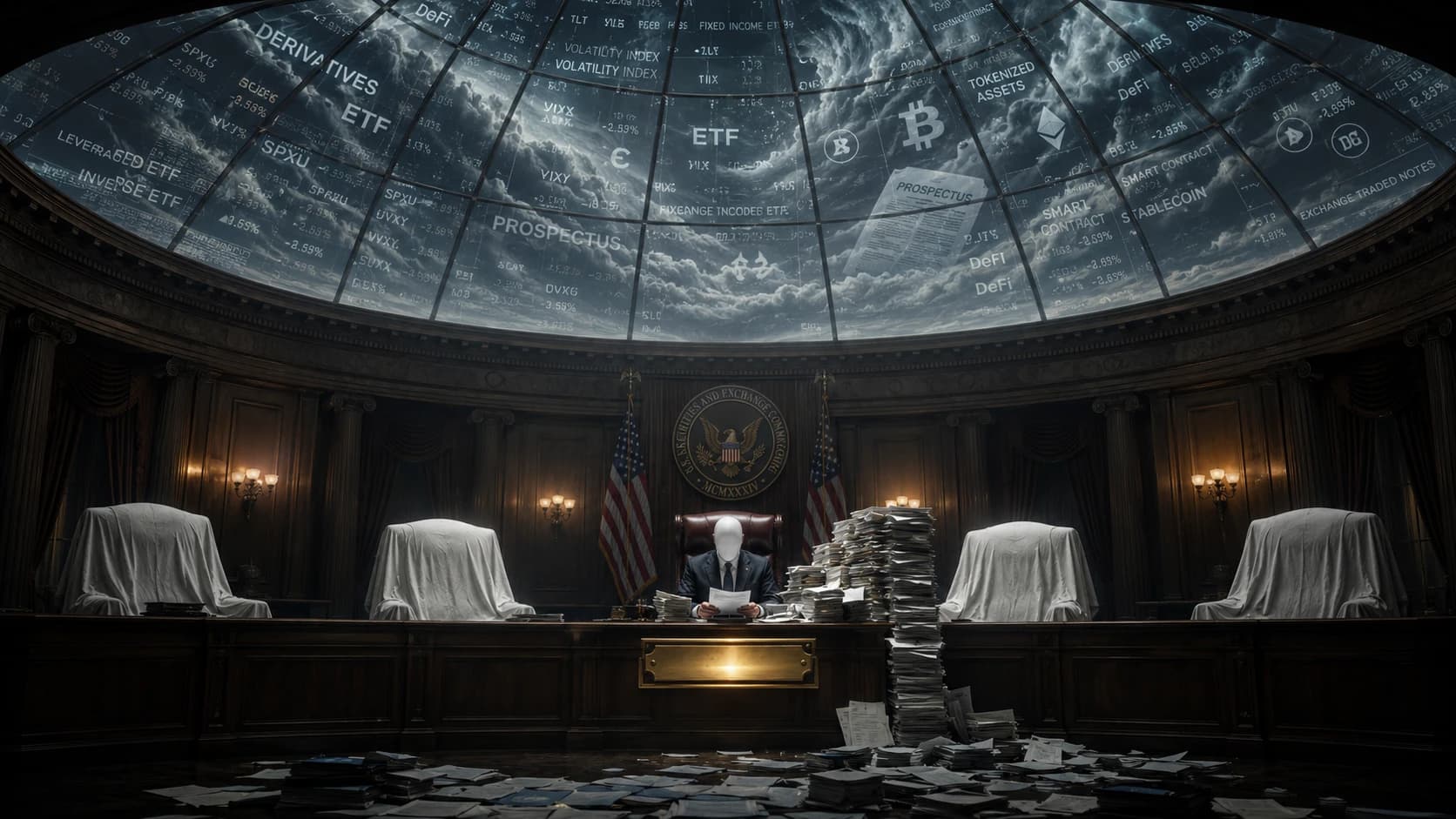
House Agriculture Committee leaders sent a public letter to President Trump on May 17 urging him to nominate commissioners for four vacant seats on the Commodity Futures Trading Commission, CoinMarketCap reported on May 18. The letter cited the "urgent regulatory challenges" facing the agency and warned that the commission cannot do its job with a single seated commissioner.
The CFTC is one of two federal agencies with primary jurisdiction over crypto derivatives, prediction markets, and a growing list of spot commodity questions tied to digital assets. With four of five seats empty, the commission has been operating well below the threshold most agency watchers consider functional, even though acting Chair Caroline Pham has kept rulemakings moving.
A One-Person Commission Is Pushing Crypto Files
The CFTC's five-seat structure assumes a quorum of three for most formal commission actions. Acting chair Pham has used delegated authority and staff-level guidance to keep work moving, but several pending items, including derivatives rules touching tokenized collateral, exemptive relief for prediction markets, and oversight coordination with the SEC, are widely understood to need a fuller commission before they can be finalized.
The House Agriculture Committee, which has direct jurisdiction over the CFTC, has been pressing this point for months. Today's letter from committee leaders escalates that pressure by making the staffing gap a public ask of the White House rather than an internal complaint.
CLARITY Act Hands the CFTC More Work
The timing matters because of the CLARITY Act fight on Capitol Hill. The bill, which cleared the Senate Banking Committee in markup earlier this month, would shift the bulk of spot crypto market oversight to the CFTC and leave the SEC with a narrower lane focused on securities-like tokens.
If CLARITY becomes law in something close to its current shape, the agency that gains the most authority is also the one with the most empty chairs. Industry lobbyists, exchanges, and trade groups have already signaled that a half-staffed CFTC cannot absorb a full new mandate over spot Bitcoin and Ether markets, custody rules, and registration for crypto trading venues.
Senator Cynthia Lummis has separately argued that the US dollar would qualify as a digital asset under the CLARITY framework, expanding the surface area the agency may need to regulate further still.
Stablecoins, ETFs, and Prediction Markets Are All Waiting
Several active dossiers sit in front of the commission. Prediction markets, including Polymarket, depend on CFTC rulemaking and no-action positions. The agency has open questions on event contracts, sports-related markets, and the boundary between commodity and securities treatment that practitioners say have stalled without a full commission to vote them through.
ETF issuers are also watching. While the SEC is the primary gatekeeper for spot crypto ETFs, the CFTC supervises the futures markets that underpin index methodology and authorized participant hedging. CME's plan to launch Nasdaq Crypto Index futures on June 8 is one example of a product that lives in CFTC-regulated territory.
Stablecoin policy is a third front. The Bank of England recently signaled it would revisit cap restrictions on stablecoins after industry pushback, and US regulators are facing similar pressure. Coordination between the CFTC, SEC, Treasury, and banking regulators on stablecoin issuance is harder to run from one commissioner's office.
Nominations Are a Senate-Calendar Problem
Even if the White House moves quickly on nominees, getting commissioners seated takes time. Each nominee must clear the Senate Agriculture Committee and then a floor vote. The Senate calendar this year is already packed with confirmations, the CLARITY Act, and unrelated appropriations work.
Practitioners who track CFTC nominations say a realistic timeline for filling all four seats stretches into late 2026, assuming bipartisan picks. If the slate is more contested, the wait could be longer. The House Ag letter is effectively an attempt to shorten that calendar.
Crypto Markets Were Already Defensive
The signal lands as crypto markets sit on the back foot. Bitcoin traded at $76,843 as of May 18, down 1.5% on the day and roughly 4.9% over the past week. Ether was at $2,117, down 3% in 24 hours, and the broader Fear and Greed index sat at 39, labeled "Fear" by CoinMarketCap. Long crypto positions lost $563 million in liquidations over the past 24 hours, the largest single-day wipeout since February.
Regulatory uncertainty is not the cause of this selloff, but the staffing question feeds into the same backdrop. A market that wants clearer rules is looking at a regulator that does not currently have the votes to write them.
Overview
House Agriculture Committee leaders publicly asked the Trump White House to nominate commissioners for four of five vacant CFTC seats, warning that the agency cannot meet its workload with only one seated commissioner. The pressure comes as the CLARITY Act, prediction market rulemakings, stablecoin coordination, and crypto-related futures products all queue up in front of the commission. Filling the seats is a Senate-calendar problem as much as a White House one, and a market already sitting in Fear territory has another reason to watch the regulatory pipeline closely.