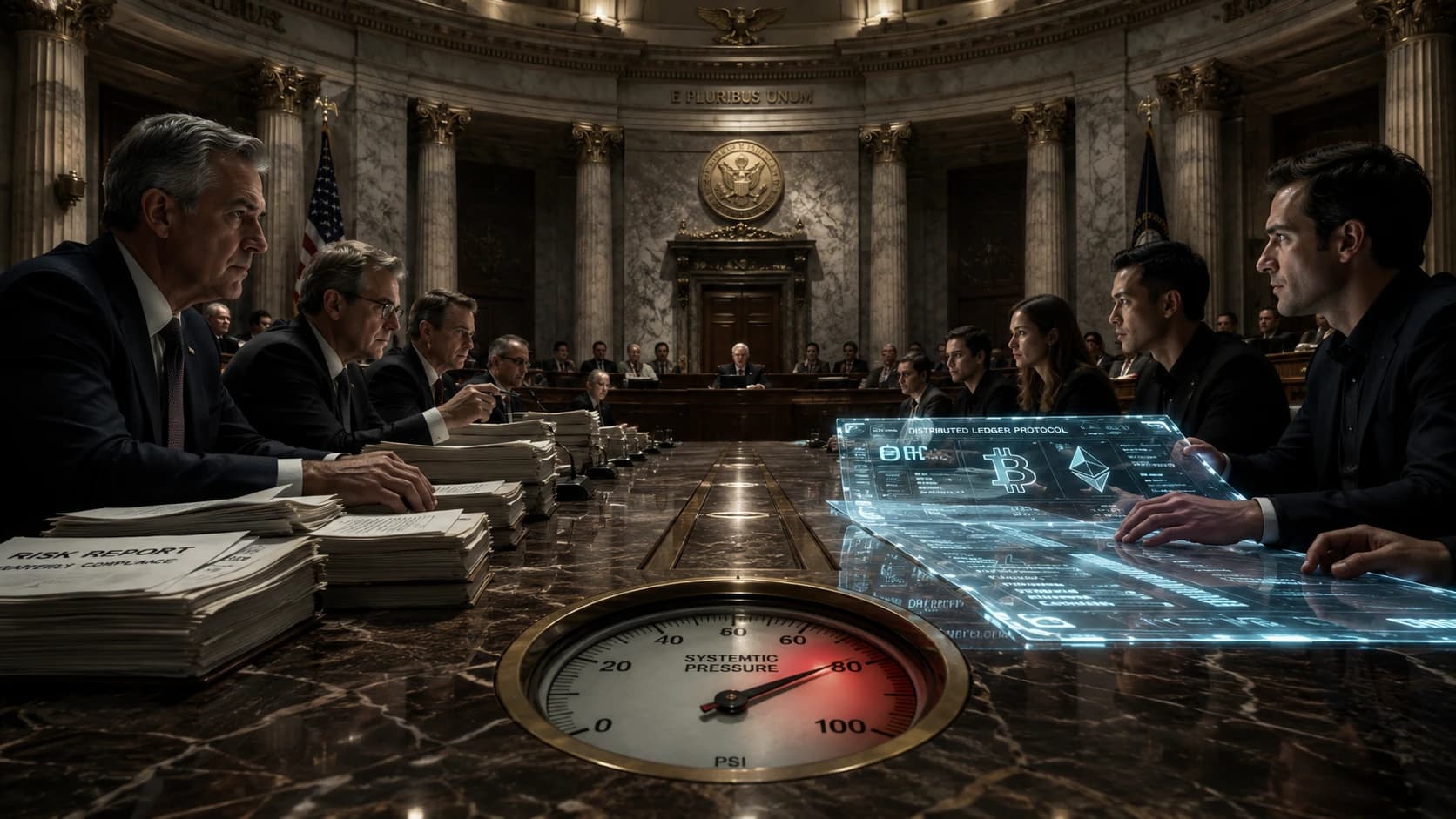
The CLARITY Act has cleared the Senate Banking Committee, and industry advocates now expect traditional banks to intensify their lobbying effort before a possible full Senate floor vote within weeks, according to a CoinMarketCap update posted on May 17, 2026.
The bill is the most consequential piece of US crypto market structure legislation since the GENIUS stablecoin law passed last year. With committee passage behind it, the political center of gravity shifts to the Senate floor, where banking trade groups have more room to push amendments than in the narrower committee setting.
Committee Win, Floor Battle
Senate Banking Committee passage clears a procedural hurdle that has held back every previous attempt at crypto market structure reform. The committee vote, covered in our earlier report on the markup, pulled together a coalition of senators from both parties who wanted to separate digital asset commodities from securities under a clearer statutory framework.
But the version that came out of committee is not the version that will go to the floor. Senate procedure allows further amendments before final passage, and that window is exactly where bank trade associations historically apply the most pressure. The American Bankers Association, Bank Policy Institute, and Independent Community Bankers of America have all filed comment letters on prior versions of the bill.
Three Areas Banks Lobby Hardest
Three areas tend to draw the heaviest bank lobbying on crypto bills like this one.
The first is custody. CLARITY draws lines around which institutions can hold digital assets for clients and under what supervisory regime. Banks want any custody activity outside their charter perimeter to face matching capital and disclosure rules. Crypto-native custodians want the inverse, a path to operate at parity without converting into bank holding companies.
The second is the definition of what counts as a digital commodity versus a security. Banks tend to favor narrower commodity definitions, which keep more tokens inside the SEC's reach and inside the existing broker-dealer framework where banks already have infrastructure. Crypto firms want broader commodity classification, which moves more activity to the CFTC and out of bank-adjacent compliance regimes.
The third is the treatment of stablecoins and tokenized deposits inside the bill. The recent Bank of England review of stablecoin caps showed how quickly the bank lobby can move when reserve and issuance rules feel restrictive. US banks have made similar arguments about CLARITY's interaction with the existing stablecoin law.
Timing Pressure From Both Sides
A floor vote within weeks is fast by Senate standards on legislation of this scope. The chamber's calendar is already tight, with appropriations work and other priorities competing for time. Leadership would need to clear floor time, which means the bank lobby has a narrow window to either delay the schedule or extract concessions in exchange for not blocking unanimous consent agreements.
On the crypto side, the industry is moving in the opposite direction. Coinbase CEO Brian Armstrong publicly cheered the committee markup, and several major exchanges have shifted lobbying budgets toward this single fight. Senator Cynthia Lummis has been previewing how CLARITY will interact with the dollar's status as a digital asset, framed in her recent comments about the bank permissibility regime.
Not every member of Congress is supportive. Senator Elizabeth Warren has argued the CLARITY Act will "blow up the economy", giving opponents a rhetorical anchor heading into floor debate.
Market Reaction So Far
Crypto markets have absorbed the committee vote without a clear directional move. As of May 17, 2026, Bitcoin trades at $78,368, up 0.4% in the past 24 hours, with Ether at $2,194 and the Fear & Greed Index sitting at 42 (Neutral). The market is not pricing CLARITY passage as imminent or guaranteed.
The muted price action is consistent with how traders typically handle US legislative milestones. Committee passage is a necessary but not sufficient signal. A floor vote schedule, the text of any manager's amendment, and the final whip count usually have to land before crypto desks meaningfully reprice regulatory probability.
Stakes for Crypto Companies
For exchanges, custodians, and stablecoin issuers, the difference between the committee version and the final floor version of CLARITY could decide which agency supervises them, what capital they hold against tokenized assets, and whether they can compete directly with banks for institutional client mandates. That is why both sides are spending real money on this fight, and why the next few weeks will matter more than the broader six-month arc that came before.
Overview
The CLARITY Act passed Senate Banking Committee and is expected to face intensified bank lobbying before a possible Senate floor vote within weeks. The fight will concentrate on custody rules, commodity-versus-security definitions, and the bill's interaction with the existing stablecoin regime. Crypto markets are neutral on the news so far, with BTC at $78,368 and ETH at $2,194 as of May 17, 2026.