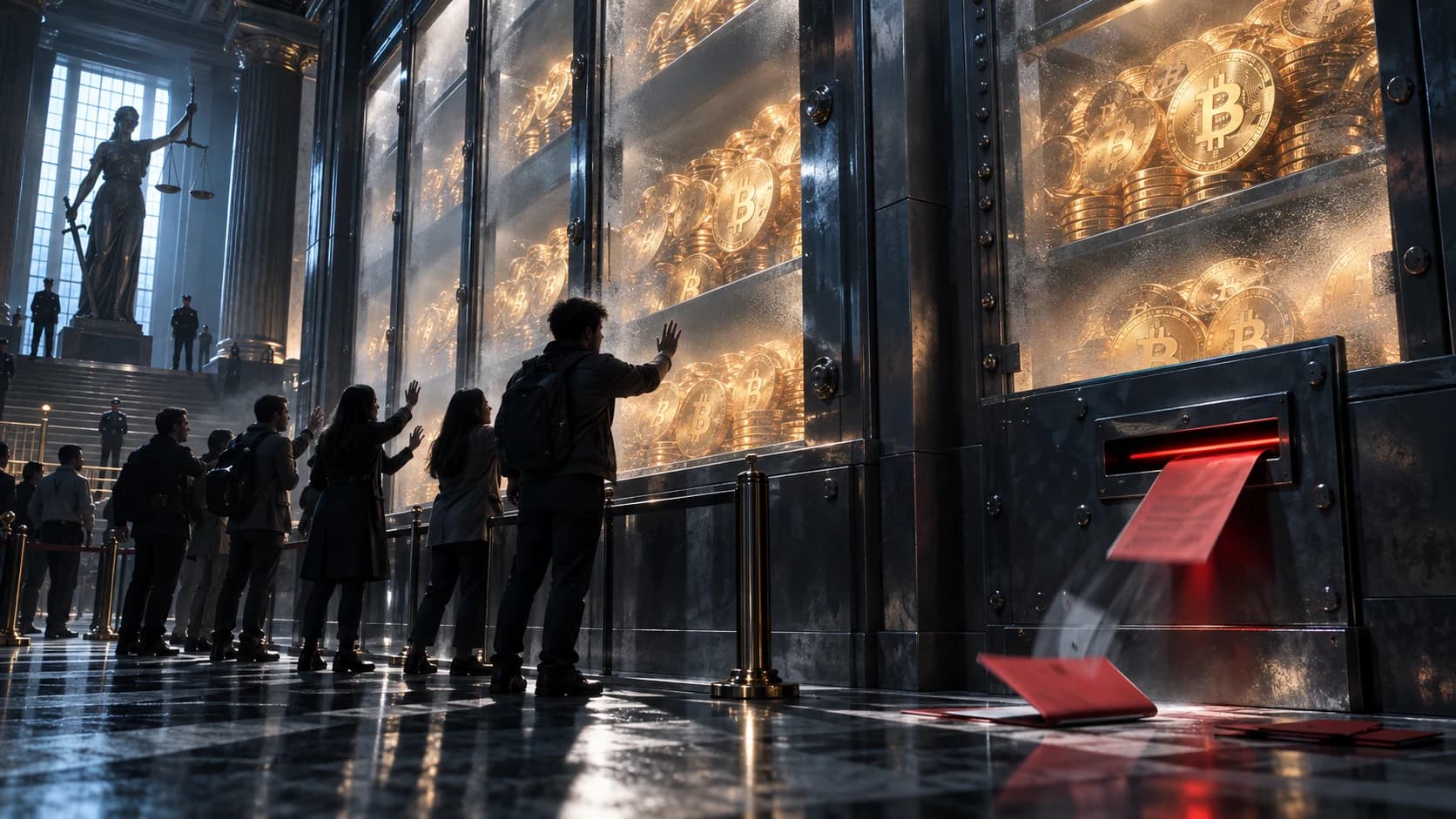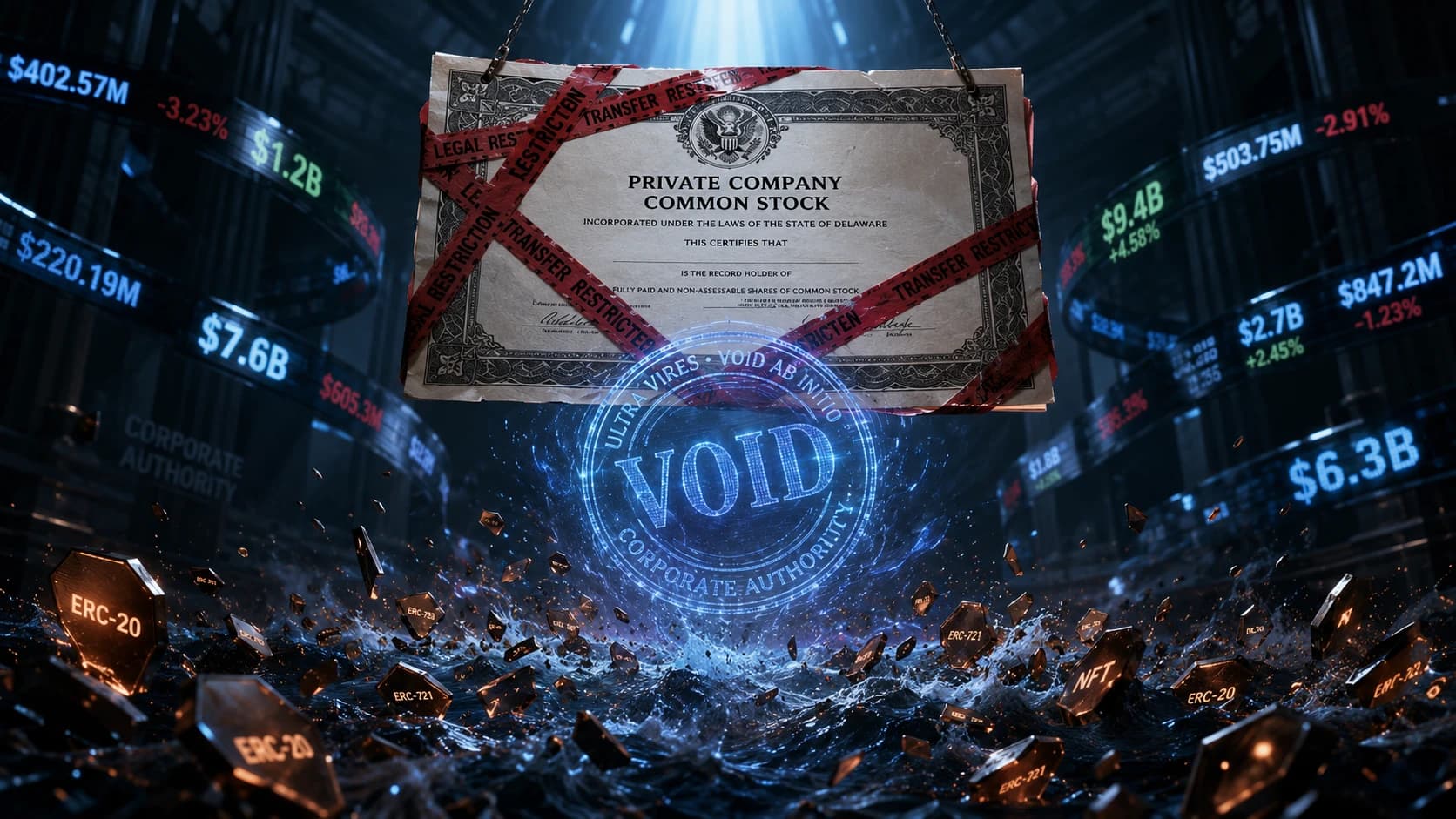
Anthropic has told the market that tokenized representations of its private stock circulating on-chain are not valid claims on the company, according to a statement amplified by CoinMarketCap on May 19, 2026. The notice followed days of on-chain price discovery that pushed implied valuations past $1B per tokenized unit, with no corresponding entries on Anthropic's official capitalization table.
The move is one of the first public rebukes by a private AI company of a token wrapper minted without its consent. It lands at a moment when US regulators are actively shaping the legal contours of tokenized equities, and it gives the industry a real-world case to argue over.
The notice and what it actually says
Per the public statement, Anthropic considers the tokenized instruments "void" because the company has not authorized any third party to issue digital representations of its shares, and the tokens do not confer any economic, voting, or informational rights tied to the underlying equity. Anthropic remains a private company, and its shares trade on a controlled basis through tender offers and secondary platforms, not via permissionless on-chain markets.
The trigger for the statement was a swing in on-chain implied valuations that crossed the $1B-per-unit mark for at least one tokenized wrapper. That kind of price action, untethered from a transfer in Anthropic's cap table, created a gap between what holders thought they owned and what Anthropic was prepared to recognize.
On-chain replicas without issuer consent
Tokenized stock wrappers usually work in one of two ways. A licensed broker or special-purpose vehicle buys the underlying equity, locks it, and mints tokens against it. Or a permissionless project mints synthetic exposure based on price oracles, without any underlying security held in escrow.
The first path requires the issuer's cooperation or at least a transferable security under local law. The second path does not require either, but it produces tokens that look like shares without conferring any legal claim. The Anthropic tokens, based on the company's response, sit closer to the second category. There is no record of Anthropic authorizing a custodian, transfer agent, or broker to mint these tokens against locked stock.
Tokenization framework still being written
The timing matters. Last week, the SEC said it is preparing an innovation exemption that would let crypto platforms list tokenized stocks under a tailored rule set, as covered in our earlier piece on the SEC's tokenized stocks exemption. That framework is aimed at public equities and at issuers willing to participate. It is not designed to bless permissionless wrappers of private companies that have not opted in.
The White House is also reviewing other parts of equity market rulebooks, including the best-execution rule for stock trading, raising broader questions about how tokenized markets should interact with existing investor protections. Anthropic's response slots into that policy debate as a clean example of where the gaps still are.
Practical effect on token holders
For anyone holding the tokenized Anthropic instruments, the issuer notice is unlikely to change their on-chain position. The tokens will keep trading on whatever venues list them. What changes is the legal posture. If Anthropic does not recognize the tokens, holders cannot expect dividends, voting rights, information rights, or any payout tied to an IPO or acquisition. The instrument trades as a price wrapper, not as a share.
That gap also matters for any platform that markets these tokens to retail. Listing a synthetic claim on a private company while the company itself has publicly disowned it raises disclosure questions, especially in jurisdictions that treat unauthorized representations of securities as actionable.
Read-through for the wider tokenization push
Tokenization of equities is one of the more aggressive growth bets in crypto for 2026. Several venues have moved on tokenized US equities, and US legislators are actively negotiating the CLARITY Act framework that would shape how digital asset securities are classified. Anthropic's notice is a reminder that issuer cooperation is the load-bearing assumption in any serious tokenization stack. Without it, tokenized equity is a price feed wearing a security's clothes.
Overview
Anthropic has declared tokenized versions of its private shares void after on-chain valuations swung past $1B per implied unit. The company says no third party was authorized to mint digital claims on its equity, and the tokens carry no rights. The statement lands as the SEC drafts a tokenization exemption aimed at willing issuers, leaving permissionless wrappers of private companies in a legal gray zone.