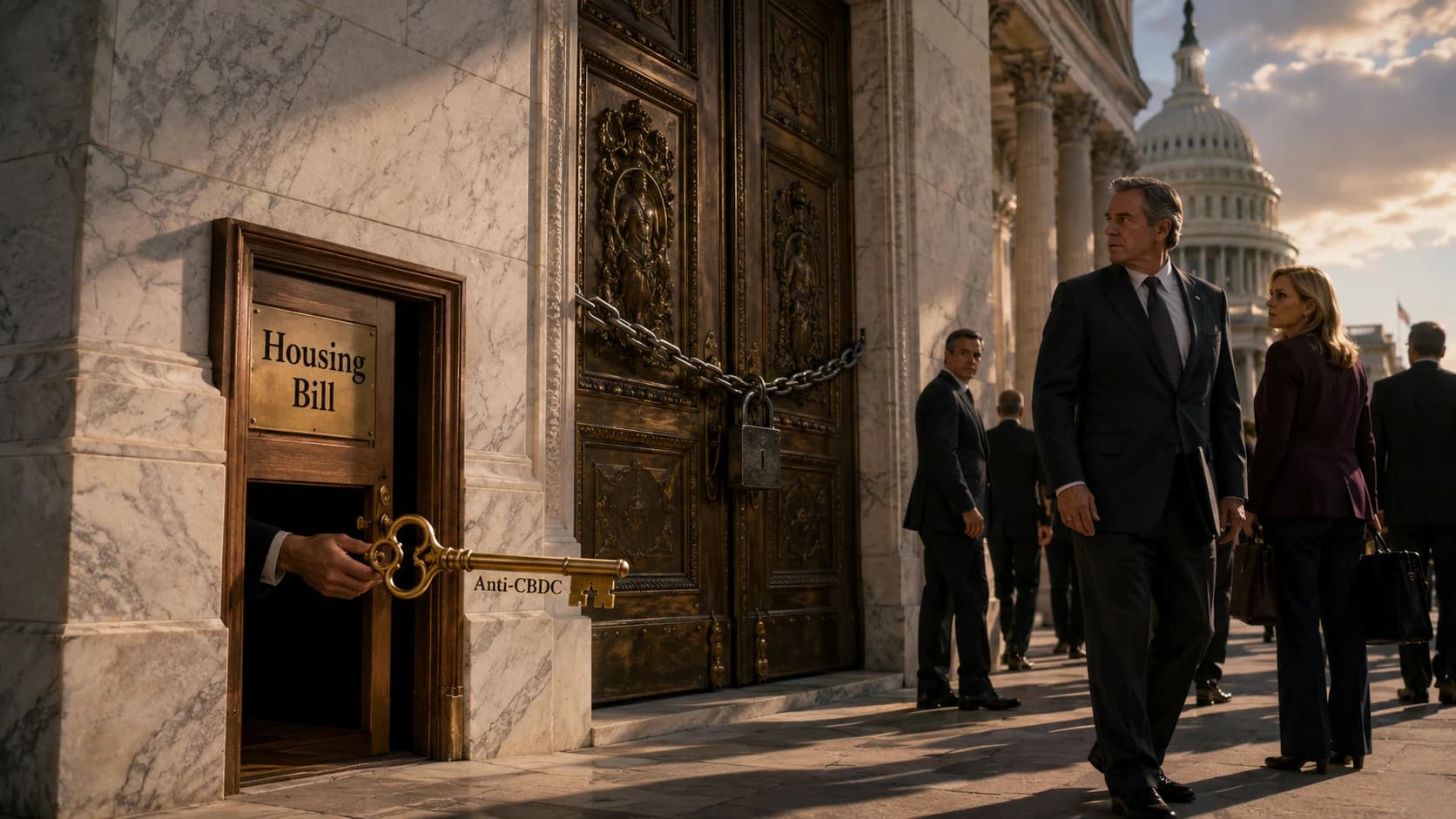
House Republicans are moving to lock a permanent ban on a US central bank digital currency into the 21st Century ROAD to Housing Act, according to a Cointelegraph report circulated on May 19, 2026. A floor vote on the broader housing package is expected this week, and the CBDC language would ride along if it survives the Rules Committee process.
The vehicle is unusual. Anti-CBDC measures have previously moved through standalone bills or financial-services markups. Folding the ban into a housing reform package keeps the prohibition out of any standalone Senate negotiation and ties it to legislation the majority already wants to pass.
Emmer leads the surveillance framing
House Majority Whip Tom Emmer is the public face of the effort. He is also continuing to advocate for his Anti-CBDC Surveillance State Act, which would bar the Federal Reserve from issuing a retail digital dollar directly or through intermediaries. Emmer has argued that a programmable Fed-issued currency could be used to track or restrict spending, and he has tied the campaign to broader concerns about financial privacy in the dollar system.
The standalone Anti-CBDC Surveillance State Act has cleared the House before but stalled in the Senate. Tucking the prohibition into a must-move housing bill is a procedural workaround: it raises the cost of stripping the language, because Senate Democrats would have to either accept the ban or sink a housing package they otherwise want to negotiate.
The 21st Century ROAD to Housing Act
The 21st Century ROAD to Housing Act covers federal housing supply, financing rules, and regional housing programs. It is not a financial-services bill, and the CBDC language sits awkwardly against the rest of the text. That awkwardness is the point. Riders attached to popular bills are a standard tool for forcing a vote on policies that would not pass on their own, and the Republican leadership appears willing to use that path here.
If the rider survives the House Rules process and passes the floor, it would set up a direct fight with the Senate, where any CBDC ban needs at least seven Democratic votes to clear a filibuster. The Biden-era Federal Reserve research on a digital dollar already cooled after the 2024 election, and the current Fed leadership has signaled no near-term plans to issue one, so the ban is partly pre-emptive.
Stakes for crypto users
A permanent statutory CBDC ban would lock in the current US posture: no retail Fed digital dollar, with private-sector stablecoins as the de facto digital settlement layer for dollar-denominated payments. That is the world most US crypto users already operate in, but legislation makes it harder for a future administration to change direction.
The market has not reacted in a meaningful way. As of May 19, 2026, BTC is trading at $77,082 (+0.2% on 24 hours), ETH at $2,137 (+1.0%), with the Crypto Fear and Greed Index at 40 ("Neutral"). The numbers reflect Iran-related risk-off sentiment rather than US legislation. A CBDC ban is a long-running policy debate, not a price catalyst, and traders already assumed no Fed-issued retail digital dollar in the current administration.
For stablecoin issuers, the ban removes a tail risk: a future Fed-issued retail dollar that could undercut Tether, USDC, and tokenized deposit competitors. For privacy-focused crypto users, the rider codifies a position they have been arguing for years. For everyone else, the legislative mechanics matter more than the policy outcome: this is the first time the CBDC ban has been attached to a vehicle the majority is committed to pass.
Signals to track this week
Three signals are worth tracking. First, whether the Rules Committee allows the CBDC language to stay in the manager's amendment when the bill reaches the floor. Second, whether any Republican members try to strip it (unlikely, but worth checking). Third, how the Senate responds: a clean reject of the CBDC rider could send the whole housing package back to conference, which raises the procedural stakes.
The Anti-CBDC Surveillance State Act has been a recurring item in Emmer's legislative agenda since the previous Congress. Attaching it to a housing bill is not the cleanest path to law, but it is the one Republican leadership has chosen this week.
Overview
House Republicans, led by Majority Whip Tom Emmer, are pushing to attach a permanent CBDC ban to the 21st Century ROAD to Housing Act, with a House floor vote expected this week. The rider would prohibit the Federal Reserve from issuing a retail digital dollar and is framed by sponsors as an anti-surveillance measure. Market impact is muted, but the legislative mechanics, attaching the ban to a must-move housing bill, are the most aggressive procedural step yet to lock the prohibition into US law.