Not a big launch week, but not a dead one either. Most of the movement sat around trust, product positioning, and vendors trying to explain where their cards fit.
RedotPay Adds ISO 27001 to the Trust Stack
RedotPay said it is now ISO/IEC 27001 certified, the best-known global standard for information security management systems.
No one signs up for a card because of an ISO line item alone. Still, it matters. RedotPay has spent the past few weeks adding regulatory and operating credibility. ISO 27001 gives partners, payment counterparties, and more cautious users one more reason to take the platform seriously as it expands.
For card programs, trust signals like this are not filler. They are part of what makes users comfortable loading balances and using the card for everyday spend.
Uphold Keeps Building the Exa Credit Story
Uphold kept the focus on the Exa Credit Card and its partnership with Exactly Protocol, following the launch we covered in the last roundup.
The pitch still stands out in the category: borrow against BTC, ETH, or USDC at fixed rates instead of selling into spending. That puts Exa in a different lane from standard prepaid cards and even from most exchange cards. It is a credit product built around preserving the underlying position.
Uphold also kept promoting the simpler consumer-facing angle around the existing debit card, including fuel cashback and "stop selling, start spending" messaging. The company is clearly trying to connect the higher-level credit model to an everyday-use story.
Wirex and Crossmint Move Stablecoin Cards Closer to Plug-and-Play
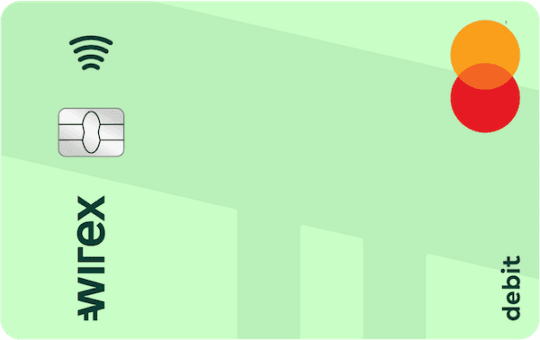
Wirex used the week to announce a more concrete infrastructure story than the usual card marketing copy. In the new thread, the company says fintechs building on Crossmint can now plug Crossmint wallets into Wirex card issuance, banking accounts, and payment rails, turning stablecoin wallets into spendable debit-card products without stitching the whole stack together themselves.
The core pitch is simple. Crossmint handles smart wallets and stablecoin orchestration. Wirex handles card issuance, banking, and payment infrastructure. Instead of pulling in separate wallet, card, and compliance pieces, fintechs get one connected setup.
Wirex says that setup supports virtual and physical cards, Apple Pay and Google Pay, and spending at 80M+ merchants worldwide. There is also a developer demo showing how Wirex cards work with Crossmint wallets. Cards are the starting point, but the thread makes clear that Wirex sees the bigger opportunity in giving fintechs a shorter path from stablecoin wallet to real-world payments.
Crypto.com Keeps the Card in the Rewards and Off-Ramp Conversation
Crypto.com launched AVAX Flash Rewards, while a separate post pushed a simpler consumer message: one of the easiest off-ramps is often just spending directly with the card.
Neither is a giant standalone story, but together they show where Crypto.com still sees its edge. The card still has mass-market recognition, deep tiering, and a constant flow of reward campaigns meant to keep users active inside the app.
That matters because Crypto.com is not competing only on raw cashback anymore. It is competing on habit: off-ramp, spend, rewards, repeat.
Avici Sharpens the No-Hidden-Fees Pitch
Avici made a clean positioning push around one of the category's most effective lines: no spread, no low-auth traps, and no declined-spend fees.
It is not a product launch, but it is a useful reminder of where Avici is trying to differentiate. A lot of crypto card marketing still hides real cost in spread, conversion friction, or transaction edge cases. Avici is going the other way and making predictability part of the pitch.
If more vendors start competing on transparent funding and spend mechanics instead of just headline rewards, the category gets better fast.
Quick Hits
- KAST posted a stablecoin deposit walkthrough, continuing the push to make onboarding and funding feel simpler for new users.
- KAST also kept promoting the Pengu Card, showing the brand is still leaning into collectible-style card identity rather than just payments utility.
- Gnosis Pay said it is heading to WalletCon and EthCC, another sign that the team is positioning the product as infrastructure for wallet-native payments, not just one more card.
- Bleap tied its card to AI-subscription cashback with a Claude Max giveaway. Light promo, but on-brand for a card that has been leaning hard into subscription categories.
- COCA kept the focus on rewards economics with a post asking how much cashback users can earn in a year.
- Ledger rolled out institutional-grade onchain investing inside Ledger Wallet, which is more wallet than card news, but still relevant to the broader "hold, manage, and eventually spend" stack.
- Nexo kept pushing the credit-line value proposition, reminding users they can borrow from 1.9% annually with 100+ assets behind one line.
Overview
This was a positioning week more than a launch week.
RedotPay pushed trust. Uphold kept explaining fixed-rate crypto credit. Wirex moved deeper into infrastructure with Crossmint. Crypto.com stayed focused on rewards and off-ramping. Avici pushed the case for cleaner spending mechanics.
If a vendor you follow shipped something we missed, let us know.