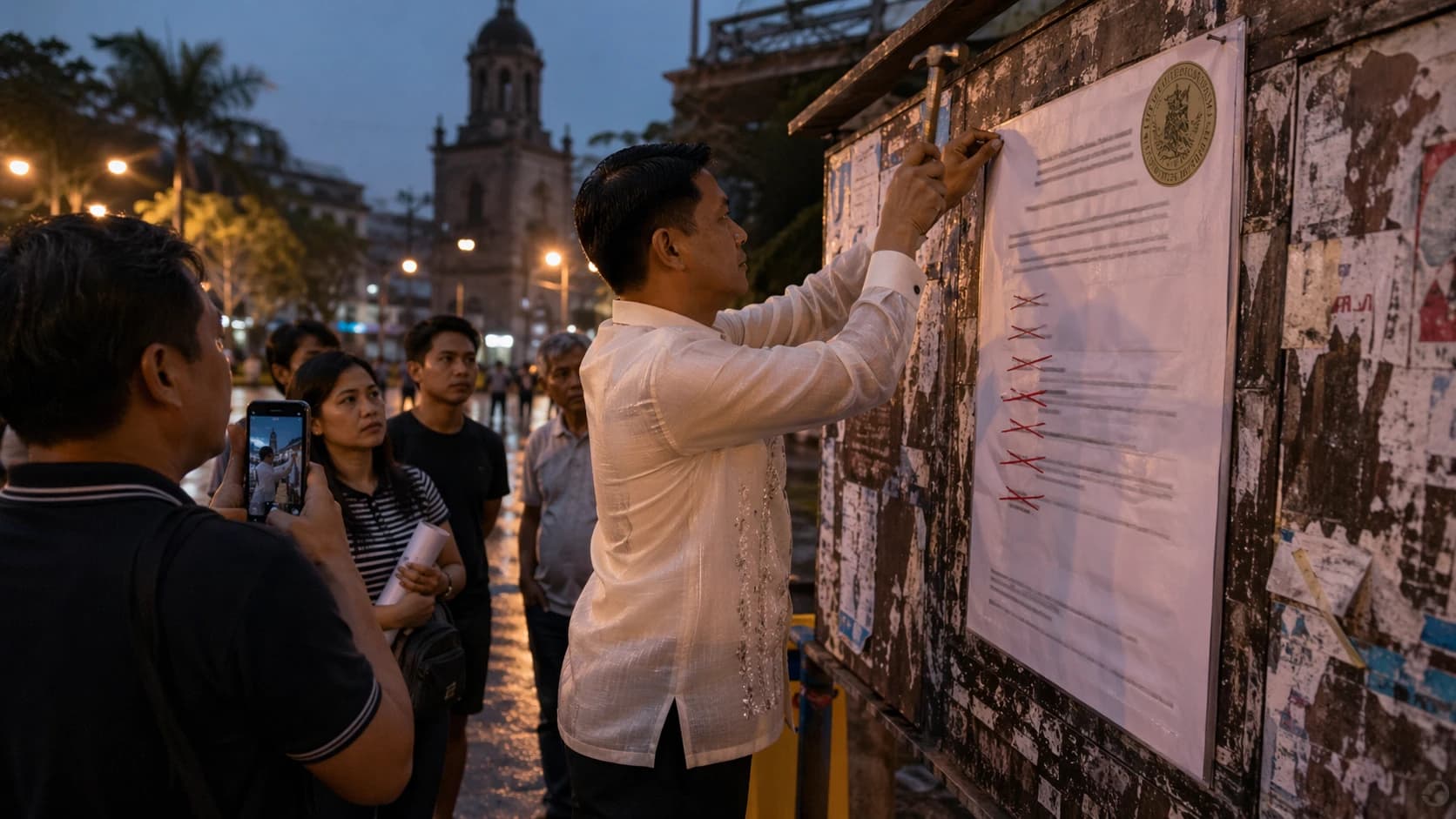
The Philippine Securities and Exchange Commission has issued a public advisory naming dYdX and six other crypto platforms that, according to the regulator, are not registered or authorized to solicit investments from Filipino residents. The warning was circulated by Cointelegraph on April 21 and is addressed to the general public rather than to the platforms themselves, which matches the SEC's standard playbook for flagging offshore crypto venues operating outside its licensing perimeter.
The advisory does not allege fraud or order a shutdown. It tells Philippine residents that these platforms do not have the legal authorization to offer investment products inside the country, which in practice means users who deposit funds and later face disputes cannot rely on local investor protection mechanisms.
The advisory is a public notice, not a criminal filing
Philippine SEC advisories of this type are a middle step between ignoring an unlicensed venue and bringing an enforcement action. The regulator publishes them to shift the burden of due diligence onto retail users and to give itself a documented record if the platform later becomes the subject of a complaint. The legal weight sits on the word "unauthorized." In the Philippines, entities that solicit investments from the public must be registered with the SEC and hold the relevant secondary licenses under the Securities Regulation Code.
Offshore derivatives venues like dYdX fall in a harder-to-police zone because they are decentralized front ends built around smart contracts rather than local subsidiaries. The SEC's tool in those cases is usually public warning, followed by engagement with local ISPs and app stores if the advisory is ignored. That escalation has happened before in the Philippines, most notably with a 2023 advisory against Binance that eventually led to Google and Apple removing the app from Filipino stores in 2024.
Seven platforms in one notice signals a sweep
Two things mark this advisory as a step up from past rounds.
First, the breadth. Seven named platforms in a single notice is a bigger batch than the SEC has typically published in one go, and it signals a sweep rather than a one-off complaint. The regulator appears to be working through a list of venues flagged during ongoing market monitoring.
Second, the timing. The Philippine SEC has been layering rules on virtual asset service providers over the past year, culminating in the Securities Regulation Code implementing rules for crypto assets released in late 2025. Platforms that want to serve Filipino users through a compliant local entity now have a defined application path. An unregistered platform that remains active after that path is available faces a weaker public interest defense than one operating before the rules existed.
Custodial users carry the local enforcement risk
For Filipinos holding funds on any of the named platforms, the advisory is not an instruction to withdraw immediately. It is a notification that, if the platform becomes unreachable or restricts withdrawals, the local SEC has no seat at the table. That matters more for users relying on an exchange or perpetuals venue to hold balances than for self-custodial users who simply route trades through a DEX.
The distinction between custodial and non-custodial exposure is practical here. A user who deposits USDC to a custodial account faces counterparty risk. A user who trades through a wallet-connected front end keeps keys and funds on their own device, which is why self-custody options have held up as a preference among users in jurisdictions with unpredictable enforcement timelines.
For users who want to spend crypto in-country without leaning on a flagged venue, several regional card providers offer local onboarding. RedotPay has been active in Southeast Asia and recently expanded SUI and USDC-Sui spending to over 100 countries, and KAST operates on a self-custody spend model that avoids the custodial exposure the SEC advisory is implicitly highlighting.
The regional context
The Philippine move lines up with a broader regional pattern. The Monetary Authority of Singapore has ruled out local marketing by offshore venues since 2024. Thailand's SEC blocked several derivatives front ends in 2025. Malaysia has taken similar steps. The Philippines is now moving its enforcement line in the same direction, which narrows the legal space for offshore perpetuals venues that market to retail anywhere in ASEAN.
Whether dYdX or any of the six other named platforms will respond with a local subsidiary, a geoblock, or continued operation and a regulatory fight is unclear. The advisory itself does not demand a response. It shifts the risk.
Overview
The Philippine SEC published a public advisory on April 21 naming dYdX and six other crypto platforms as unauthorized to solicit investments locally. The notice does not seize funds or bar access, but it gives the regulator a documented basis for future escalation and transfers due-diligence risk onto Filipino users. The move fits a broader 2025 to 2026 trend across ASEAN regulators who are moving from passive tolerance to active listing of offshore venues.