The International Monetary Fund reported that more than half of tokenized stock trading takes place outside regular US market hours, according to a summary shared by Cointelegraph on October 9, 2026. The finding points to a structural gap between how traditional equities trade and how their blockchain-based versions behave once they are put on-chain.
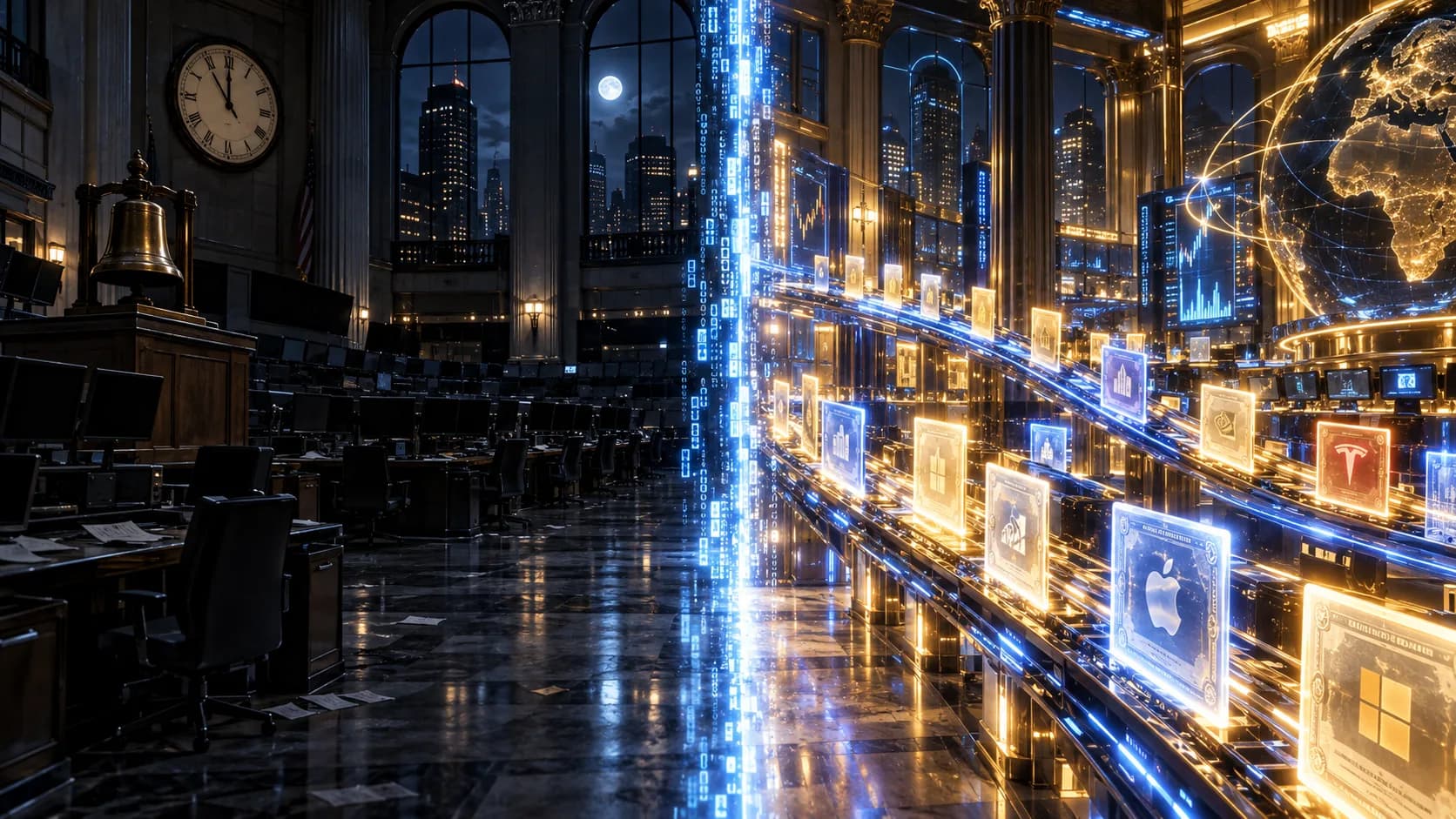
Tokenized stocks are blockchain representations of shares in companies like Apple, Tesla, or Nvidia. Unlike the underlying equities, which clear through venues such as the NYSE and Nasdaq during a fixed session, the tokenized versions can change hands at any hour because the settlement rail never closes. The IMF data suggests users are taking advantage of that difference rather than treating it as a novelty.
A trading pattern the old rails can't produce
US equity markets run a regular session from 9:30 a.m. to 4:00 p.m. Eastern, with limited pre-market and after-hours windows that carry thinner liquidity and wider spreads. That schedule is a product of how the traditional system settles trades, not a reflection of when global demand actually peaks.
If more than half of tokenized stock activity happens while that session is dark, it tells you something the legacy tape cannot: a large share of the people trading these instruments are not sitting at US desks during US hours. They are trading on weekends, overnight, and across time zones where a New York closing bell is irrelevant. The blockchain version simply records what the regulated session was never built to capture.
This is the part worth sitting with. The off-hours skew is not a quirk of low volume filling the gaps. The IMF framed it as the majority of trading, which reframes tokenized equities less as a wrapper on US stocks and more as a parallel venue with its own rhythm.
The price-discovery problem when the underlying market is dark
Price discovery is the obvious tension. When the underlying stock is not trading, a tokenized version still prints prices, but those prices reference an asset that is frozen until the next session opens. A weekend move in a tokenized Nvidia position has no live equity market to arbitrage against in real time, which can let gaps build until Monday.
That gap is where both the opportunity and the risk live. Traders get access they never had, including the ability to react to news that breaks after the bell. They also inherit a market that can drift from its reference asset during the hours no regulated exchange is open to anchor it.
The IMF's interest here is institutional, not promotional. A multilateral body documenting where and when tokenized trading concentrates is a sign that round-the-clock on-chain equities have moved from pilot projects into something supervisors now measure. It lands in the same week that regulated players have been formalizing this category, including OKX and the NYSE's parent filing with the SEC to tokenize dozens of US stocks and South Korea's new rules for putting stocks, bonds, and funds on-chain.
The settlement layer sitting underneath
Most of this activity settles in stablecoins. A tokenized share bought at 2 a.m. is typically paid for with a dollar-pegged token, not a wire that waits for a bank to open. The 24/7 behavior the IMF measured is only possible because the money leg already runs on the same always-on rails as the asset leg.
That connection is why tokenization keeps pulling in the same infrastructure crypto users already touch. The dollar stablecoins that settle these trades are the same instruments showing up in spending products, lending vaults, and cross-border transfers. Equities are just the latest asset class to be pinned to them.
None of this removes the underlying caveats. A tokenized stock's value still depends on the issuer actually holding or hedging the real shares, and off-hours pricing can diverge from where the stock reopens. The IMF summary documents a behavior, not a verdict on whether that behavior is safe for retail traders chasing a weekend move.
Overview
The IMF found that more than half of tokenized stock trading happens when Wall Street is closed, based on the figure reported by Cointelegraph on October 9, 2026. The pattern shows demand for around-the-clock equity access that the traditional session cannot serve, raises real price-discovery questions when the underlying market is dark, and confirms that dollar stablecoins are the settlement layer making 24/7 equity trading work. For now it is a snapshot of where tokenized trading concentrates, documented by the institution most likely to shape how it gets supervised next.