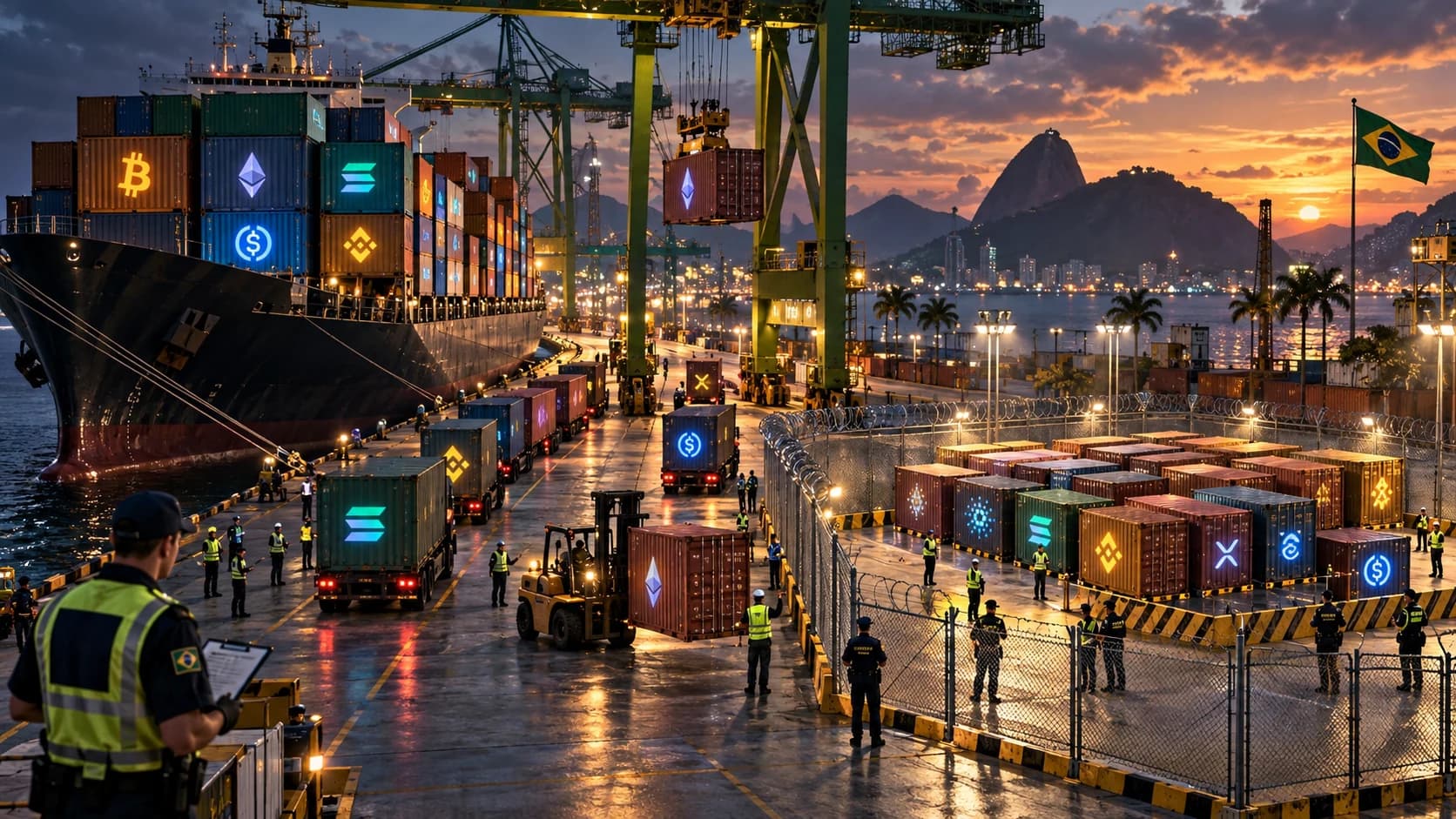
Binance said it will restrict eight services and remove 22 tokens from its platform in Brazil to comply with new regulatory requirements in the country, according to a report from crypto news tracker WuBlockchain posted on October 9, 2026. The move trims the exchange's local product set rather than withdrawing from the market, and it lands as one of the largest exchanges adjusts to a tighter rulebook in Latin America's biggest economy.
The changes come as crypto markets sit in a soft patch. Bitcoin traded at about $81,666, down 2.0% over 24 hours as of October 9, 2026, while Ether was near $2,474, down 4.1%, per CoinMarketCap data in our market snapshot. The Fear and Greed Index read 54, a neutral posture. None of that is tied directly to the Brazil decision, but it is the backdrop against which users in the country are reading the news.
A product cut, not an exit
The headline detail is the scale of the pullback inside a single market. Eight services and 22 tokens is a meaningful trim for any exchange, and it points to compliance work rather than a commercial retreat. Exchanges that stay in a jurisdiction under new rules typically do this: keep the core spot and custody business, then pare back the features and listings that are hardest to square with local law.
The underlying report describes the reason as compliance with new regulatory requirements. We are treating the WuBlockchain post as the primary source here. Beyond the count of eight services and 22 tokens, the specific list of affected services, the exact tokens, and the effective dates were not detailed in the signal available at the time of writing, so we are not naming them. Users in Brazil should check the official Binance announcement and in-app notices for the precise scope and timelines before moving funds.
Emerging-market rulebooks are getting firmer
Brazil has been building out a formal framework for crypto service providers, with the central bank taking a central role in supervision. A requirement that forces an exchange to drop services and delist tokens usually reflects rules on which assets can be offered, how custody is handled, or which activities need specific authorization. That pattern is not unique to Brazil. Regulators in several regions have pushed platforms to prune their offerings rather than operate in a gray zone.
The parallel in Europe is the clearest. Under MiCA, platforms have faced pressure to drop stablecoins and tokens that lack the right authorization, with the regional securities watchdog ordering removal of unauthorized stablecoins. The common thread is simple: the era of listing everything everywhere is closing, and the menu a user sees now depends heavily on where they live.
The user cost of a shrinking menu
For people who hold the delisted tokens or rely on the restricted services, the practical question is access. Delistings typically come with a window to trade out or withdraw, after which the pair is gone from the local platform. Anyone caught holding an affected asset has to act inside that window or move to another venue. That friction is the real-world cost of compliance, and it falls on retail users more than on the exchange.
There is a knock-on effect for how Brazilians interact with crypto spending too. When an exchange narrows what it supports locally, some users route around the limits by holding stablecoins or by spending through a card that draws on a wallet elsewhere. A fragmented local menu tends to push activity toward assets and rails that travel across borders more easily, which is part of why dollar-pegged tokens keep gaining share in markets with shifting rules.
The bigger read on Binance
Binance has spent the past two years settling with regulators and reshaping its business market by market. A compliance-driven trim in Brazil fits that arc. It is worth separating this from the exchange's balance-sheet story, where Binance's Bitcoin reserves recently hit a multi-year low as holders rotated into stablecoins. Those are different threads: one is about local rules, the other about where capital is parked. Together they sketch an exchange that is leaner and more jurisdiction-specific than the one-size-fits-all platform of a few years ago.
For now, the hard facts are the ones in the report: eight services restricted, 22 tokens delisted, and compliance with new Brazilian requirements as the stated reason.
Overview
Binance will restrict eight services and delist 22 tokens in Brazil to comply with new local regulations, per a WuBlockchain report dated October 9, 2026. The move trims the exchange's product set rather than ending its presence, and it mirrors a wider trend of regulators in the EU, Latin America, and elsewhere forcing platforms to drop unauthorized assets and features. Specific services, tokens, and dates were not detailed in the available signal, so Brazilian users should check official notices for the exact scope and any withdrawal windows.