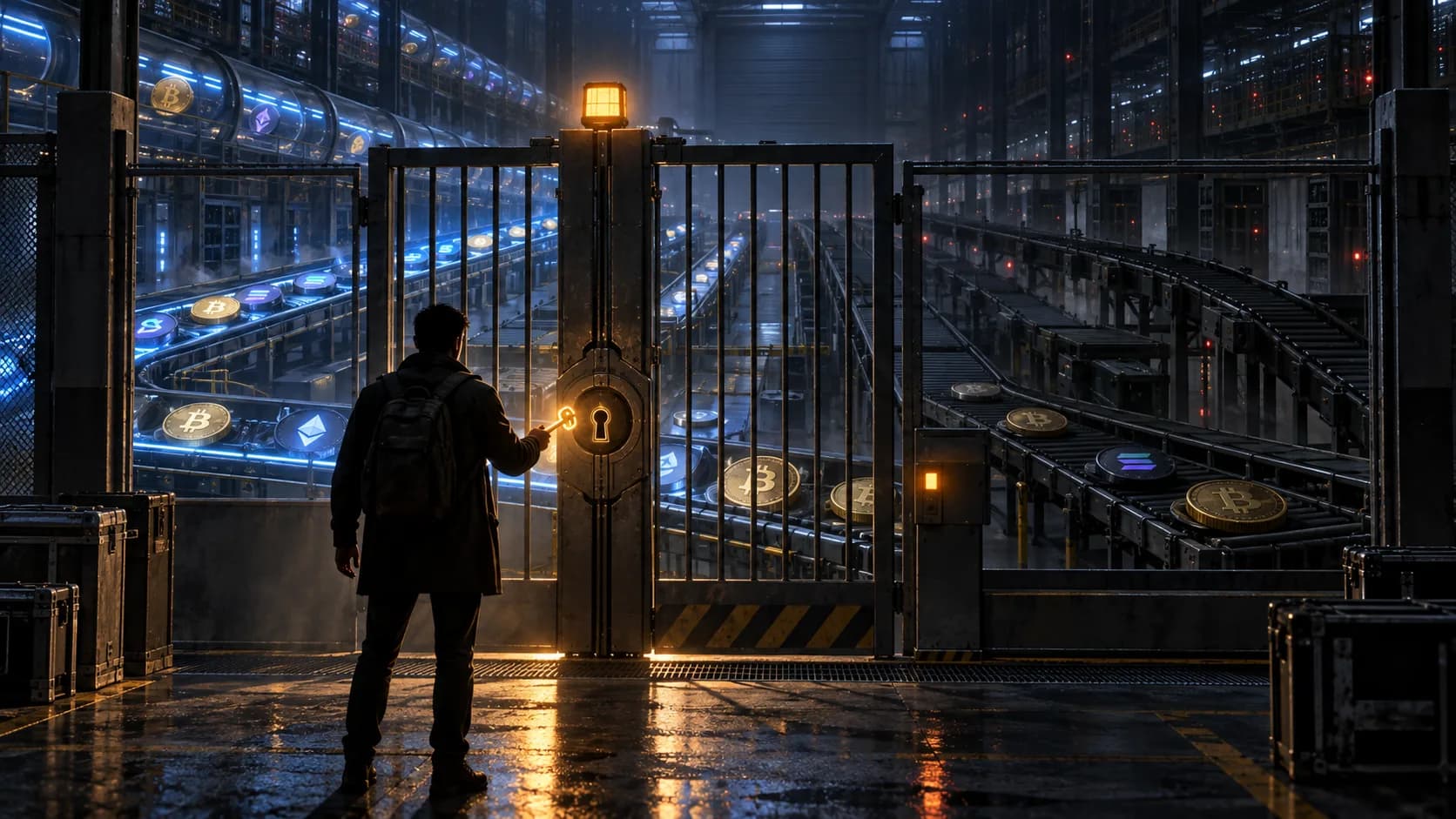
Abstract has set December 15 as its shutdown date, and the question that follows is not whether holders still control their assets but whether they can still move them. CryptoSlate reported that the wind-down could leave users able to sign transactions while lacking the services needed to execute a withdrawal. That distinction is the whole story.
Signing rights outlive the plumbing
Holding a private key means you can authorize a transaction. It does not guarantee the transaction goes anywhere. A signed message needs a live network path to reach: an RPC endpoint to broadcast it, a sequencer or validator set to include it, and a settlement or bridge route to carry value off the chain. When a project announces a shutdown, those pieces do not all switch off at the same moment, and that staggered timing is where people get stranded.
CryptoSlate framed the Abstract case around exactly this gap. Wallet access, supported routes, and settlement determine whether holders can actually get assets out, not the mere fact that a wallet still opens and still signs. A user who waits until the final days may find the signing screen works fine while the bridge that would have carried their funds is already offline.
The Dec. 15 date is getting crowded
Abstract is not the only piece of crypto infrastructure pointing at the same deadline. Google Cloud is winding down its Blockchain Node Engine and related RPC services by December 15 as well, a reminder that a chain's day-to-day usability often rests on third-party node providers rather than the protocol itself. When those providers pull back, applications that quietly depended on them can stop resolving even if the underlying ledger still exists.
For anyone with balances on Abstract, the practical takeaway is to treat the announced date as a ceiling, not a target. Exit liquidity on bridges tends to thin out before a hard cutoff, gas conditions can spike as everyone rushes the same exit at once, and support channels get slower precisely when they are needed most. Moving early is the conservative play.
Custody is more than who holds the keys
The episode is a clean illustration of a point that gets flattened in most "not your keys, not your coins" conversations. Self-custody protects you from a custodian freezing or losing your funds. It does not, on its own, protect you from the surrounding infrastructure going away. If the chain your assets live on is being retired, key ownership is necessary but not sufficient. You also need a working route to somewhere that will still exist next month.
This is the same friction that shows up elsewhere in crypto when the exit path narrows. Ethereum's validator exit queue has stretched out as more stakers try to leave at once, turning a theoretically instant right into a multi-day wait. The lesson rhymes: the ability to initiate an action is not the same as the action completing on your timeline. People who spend from their own wallet should internalize that the convenience of self-custody comes with the responsibility of tracking which rails underneath them are still being maintained.
There is also a quieter security angle. A chain in wind-down mode is a chain with fewer eyes on it. Fewer maintained node providers, thinner liquidity, and reduced developer attention can all raise the odds that something breaks at an inconvenient moment. The safest assumption is that the margin for error shrinks as the deadline approaches, so the window to act cleanly is now rather than in the final week.
Overview
Abstract set December 15 as its shutdown date, and CryptoSlate's reporting highlights that holders may retain signing ability while losing the services, RPCs, bridges, and settlement routes, that actually move assets off the chain. The same date already marks Google Cloud's retirement of its blockchain node services, underscoring how much of crypto's usability rests on infrastructure that can be switched off. For affected users, the action item is concrete: verify a working exit route and move assets well before the deadline, because signing a transaction and completing one are not the same thing.