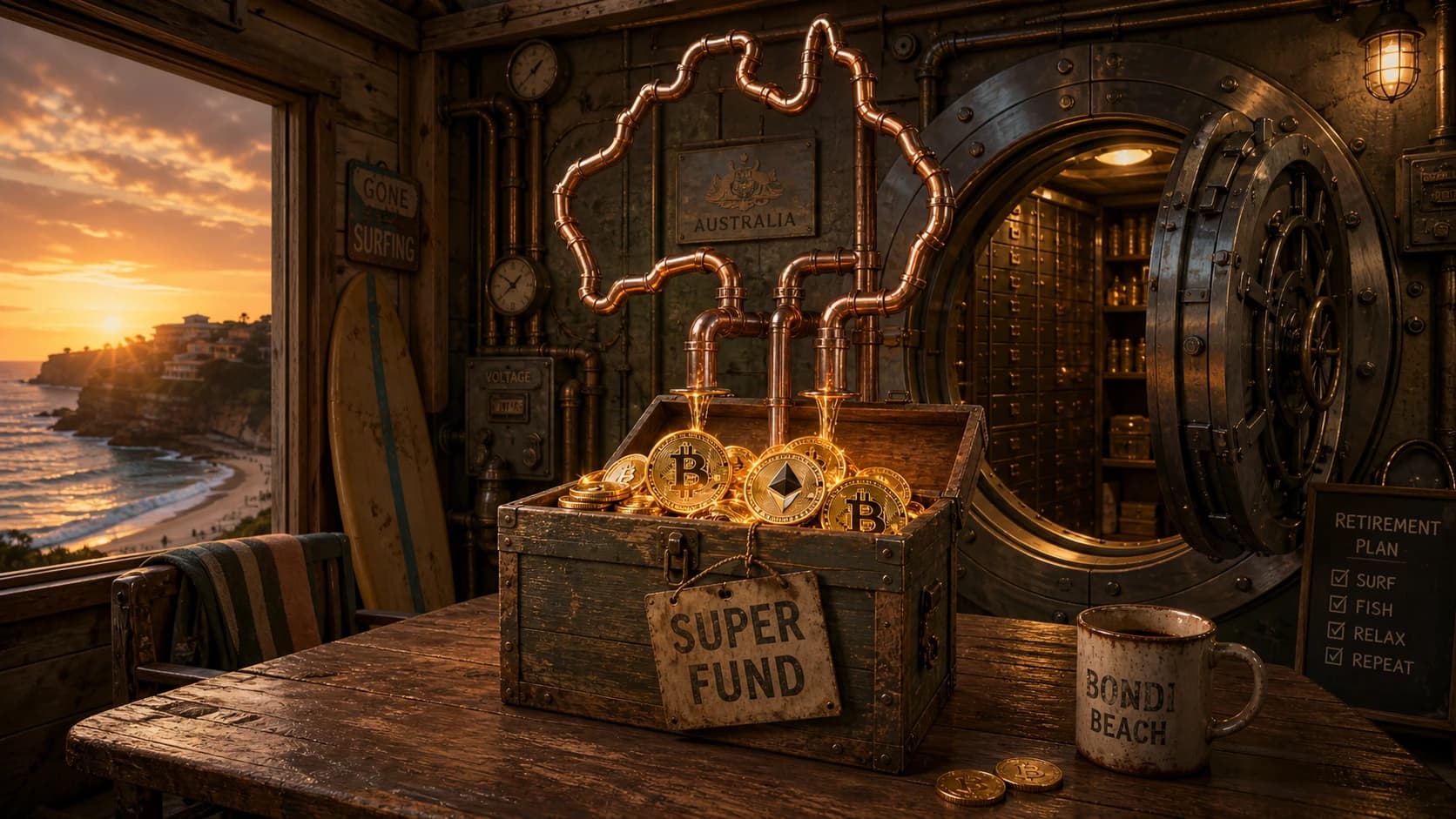
Coinbase has switched on direct support for self-managed super funds (SMSFs) in Australia, giving trustees a regulated path to hold Bitcoin, Ethereum and a list of other tokens inside their retirement structures. The change, announced via Cointelegraph on May 5, 2026, opens the exchange to a retirement pool the Australian Taxation Office tracks at more than 1 trillion AUD.
Coinbase had already operated in Australia under a registered digital currency exchange license, but SMSF trustees previously had to thread compliance through accountants, third-party custody apps, or workarounds with offshore venues. The new offering bakes the SMSF account type directly into onboarding, which is the operational shift that matters.
SMSFs are a uniquely Australian retirement vehicle
Self-managed super funds let Australian residents run their own retirement portfolio rather than handing it to a retail super fund. They are governed by the Superannuation Industry (Supervision) Act and supervised by the ATO. As of the most recent ATO snapshots, SMSFs hold roughly a quarter of the country's superannuation savings, spread across more than 600,000 active funds and around 1.1 million members.
That structure already permits crypto exposure as long as trustees meet the sole purpose test, separate fund assets from personal assets, and document an investment strategy that includes digital assets. The friction was never legal. It was operational: most exchanges did not offer entity-level accounts that satisfied auditor requirements for segregation, beneficial ownership, and clean reporting.
Trust-entity registration, TFN-mapped reports, and audit-ready segregation become native
Under the new flow, an SMSF can register with Coinbase as the trust entity, link the corporate trustee or individual trustees, and trade and custody assets in the fund's own name. Reports map to the fund's tax file number rather than a member's personal account, which is the format SMSF auditors expect at year end.
Bitcoin sat at $80,671, up 1.2% over 24 hours, with Ethereum at $2,372 and the Fear and Greed Index reading 48 (Neutral) as of May 5, 2026. Australian retirement money has historically moved into crypto in slow, tax-driven waves rather than chasing those daily moves. SMSFs that already wanted exposure now have one fewer reason to wait.
A 1% SMSF allocation across 1.1M members implies 10B AUD of incremental demand
The 1 trillion AUD figure (around 660 billion USD at current rates) is not the addressable market for crypto. Most SMSFs sit in cash, listed Australian equities, and property. The relevant question is what share of trustees decide to allocate even 1% to 5% to digital assets now that there is a clean institutional-grade path. Even a 1% average allocation across the SMSF base would imply roughly 10 billion AUD of incremental demand routed through one onshore venue.
That is the reason SMSF flow is structurally different from retail trading volumes. It is sticky retirement money, often locked in until preservation age, and it is held inside a tax-advantaged wrapper where capital gains are taxed at concessional rates. Funds rarely day-trade these positions.
Custody, audit and tax implications
Australian SMSF auditors generally insist on three things for any digital asset position: proof of beneficial ownership in the fund's name, an independent custodial wallet or exchange address controlled by the fund, and a clean valuation source as of June 30 each year. Coinbase's regulated Australian entity should clear all three for trustees who choose its custody, although nothing here removes the trustee's responsibility to document the strategy.
For trustees who want broader spending utility around their crypto holdings, the local card market is still narrow. Australia supports a handful of crypto card options, but most are personal accounts and not appropriate for fund-level spending. SMSF money should generally stay invested rather than routed through any card product, since spending fund assets on personal expenses breaches the sole purpose test.
Independent Reserve, BTC Markets, and SMSF auditor guidance are the next signals
Three things will tell us whether this becomes a real flow rather than a press release. First, whether competing local venues such as Independent Reserve and BTC Markets respond with comparable SMSF onboarding. Second, whether SMSF auditors publicly endorse the Coinbase reporting format, which would lower the practical bar for thousands of accountants who serve trustees. Third, what allocation guidance the larger SMSF accounting networks publish over the next quarter.
For now, the headline is direct: a regulated US-listed exchange has plugged itself into Australia's retirement plumbing. Whether trustees actually use it is a separate question that will play out across tax filings rather than tweets.
Overview
Coinbase has opened direct SMSF support in Australia, plugging into a retirement pool that the ATO measures at over 1 trillion AUD. The move does not change the legality of crypto in super, which was already permitted, but removes the operational friction that kept many trustees out. Expect competing local exchanges to follow, and watch SMSF auditor guidance for the real signal on adoption.