In the early days of crypto cards, users cared about two things: the plastic material and the cashback percentage. But as we move through 2026, the conversation has shifted. Following the "Great BaaS Clean-out" of 2025—where dozens of white-label card programs were frozen overnight due to the regulatory collapse of mid-tier intermediaries—custody has become the ultimate feature.
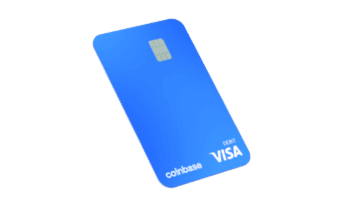
If you are using a crypto card today, you aren't just trusting a brand like Coinbase or Tria; you are trusting a multi-layered technical stack that includes network rails, issuing banks, and Banking-as-a-Service (BaaS) providers.
This "Bible" is a comprehensive guide to understanding where your money actually sits, who holds the keys, and how to audit the infrastructure of any card before you deposit a single satoshi.
1. Decoding the Crypto Card Stack
To understand custody, you first need to understand the "Stack." A crypto card is rarely a single entity. It is a vertical chain of four distinct layers:
- The Network (Visa/Mastercard): They provide the rails but never touch your crypto. They only care about the fiat settlement at the point of sale.
- The Issuer: A licensed bank or Electronic Money Institution (EMI) that has the right to put their name on the card and settle with the network.
- The BaaS Partner (Banking-as-a-Service): The "middleware" that connects the bank to the crypto world. They handle the API integrations and, crucially, often manage the regulatory reporting.
- The Program (The Brand): This is the app you downloaded. They are the marketing layer. In many cases, they don't hold any licenses themselves—they simply "rent" the stack from the layers above.
The Risk: When you see a "Crisis" in the news, it usually happens at Layer 3 (BaaS). If the BaaS partner loses its license, Layer 4 (The Brand) is paralyzed, even if their own code is perfectly fine.
The Ghosts of Wirecard and Railsr
To understand why Layer 3 is so dangerous, we have to look at history. In 2020, the collapse of Wirecard sent shockwaves through the industry, freezing cards for millions of users across the UK and Europe. In 2023, Railsr (formerly Railsbank) faced a similar liquidity crisis, leading to its sale and the disruption of dozens of fintech brands.
The lesson from these events is that your "Card Provider" is often a fragile facade. If the BaaS provider fails, the "Safeguarded" funds are legally yours, but the access to them is cut off. In 2026, we are seeing a repeat of this with the crackdowns on Monavate and Quicko. The takeaway? Never trust a card that doesn't disclose its underlying Tier-1 banking partners.
2. The Custody Spectrum: Who Holds the Keys?
In 2026, the industry has split into three distinct "Custody Tribes." Your choice determines whether your funds are recoverable by a support ticket or whether they are truly yours.
A. Custodial (The "Exchange" Model)
- The Model: "Not your keys, not your coins." The issuer (like Binance or Bybit) holds the private keys in their own institutional vaults.
- The 2026 Reality: This remains the most popular model for mass-market users. It offers "Social Recovery"—if you lose your phone, you just verify your ID and get back in.
- The Vulnerability: You are 100% exposed to platform insolvency. If the exchange goes bust or is hit with a regulatory freeze, your card balance is an "unsecured claim" in a bankruptcy court.
B. Self-Custodial (The "Web3" Model)
- The Model: "Your keys, your coins." The card is linked directly to a wallet where you hold the seed phrase or the signing authority.
- The 2026 Reality: This has exploded in popularity thanks to Account Abstraction (ERC-4337). Cards like Solflare or Gnosis Pay don't hold your funds; they simply have a "Permission to Spend" limited amount of your on-chain assets.
- The Vulnerability: If you lose your keys without a backup, the money is gone. There is no "Forgot Password" button.
C. Hybrid Models (The MPC Compromise)
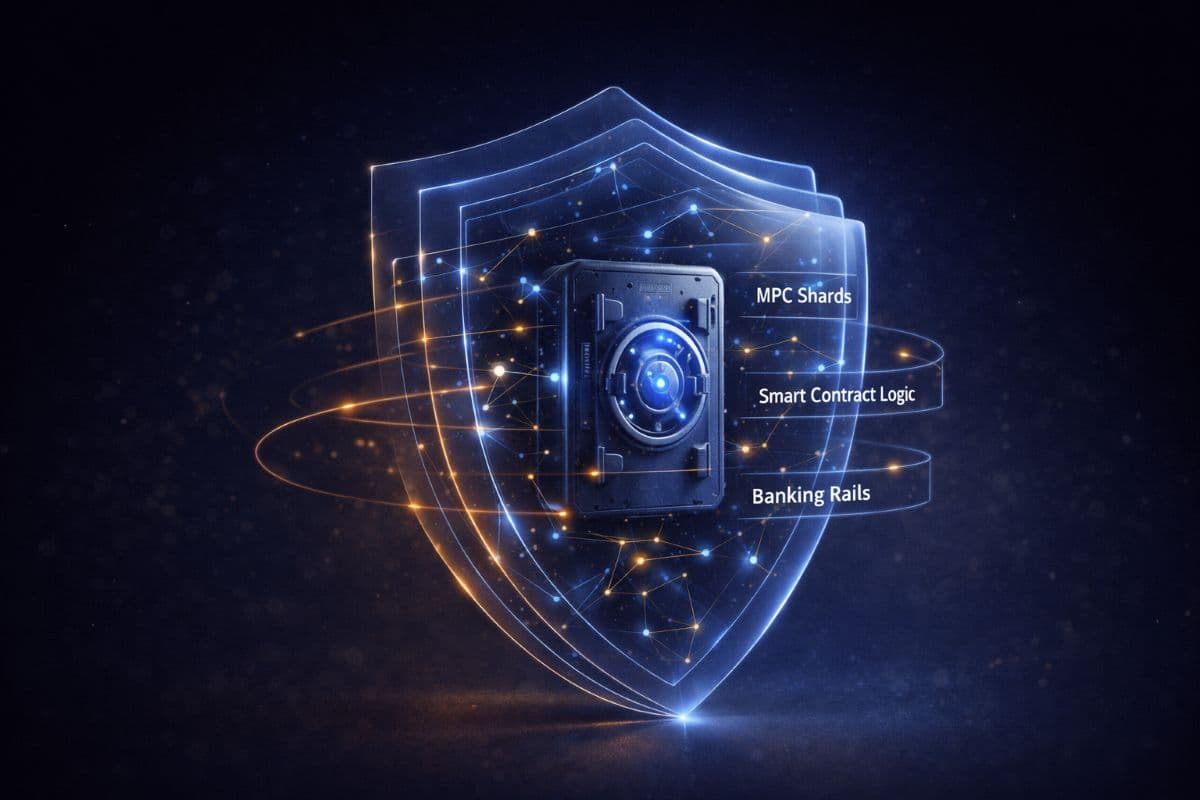
- The Model: Multi-Party Computation (MPC). The key is split into "shards." One shard stays on your phone, one stays with the issuer, and one stays with a backup provider.
- The 2026 Reality: This is the current "Gold Standard" for high-end cards like Tria. It gives you the feeling of self-custody (no one can spend without your shard) but the safety of a bank (the issuer can help you rotate shards if you lose your phone).
3. The Rise of the Smart Account (ERC-4337)
The biggest technical shift in 2026 is the death of the "Externally Owned Account" (EOA). We no longer expect users to manage 12-word seed phrases to use a debit card. Instead, we use Smart Accounts.
What is Account Abstraction?
ERC-4337 allows your wallet to be a smart contract instead of a simple key pair. For crypto card users, this unlocks three "Magic" features:
- Social Recovery: You can designate "Guardians" (like a hardware wallet or a trusted friend) who can reset your access if you lose your device.
- Sponsored Gas: The card issuer can pay your gas fees in the background. You just see a "$0.00 Fee" transaction, even though it's happening on-chain.
- Programmable Limits: You can set a rule that says: "This card can only spend $500 per day, and only at Grocery stores." If the card is stolen, the thief is physically limited by the contract code.
Paymasters and Bundlers: The Backend of 2026
Behind every ERC-4337 transaction are two new entities: Bundlers and Paymasters.
- Bundlers take your "User Operation" (a request to spend) and package it with others to save on gas.
- Paymasters are the entities that actually pay the gas fee on your behalf.
When a card like MetaMask Card offers "Gasless Spending," they are simply using a Paymaster to subsidize the on-chain cost. As a user, you must ask: "What happens if the Paymaster is empty?" A reliable card provider will always have a backup gas-funding mechanism to ensure your card doesn't decline at the checkout just because an Ethereum L2 is congested.
4. Technical Deep-Dive: MPC vs. HSM
If you are an "Analyst-Grade" user, you need to look past the marketing and ask: "How are the keys actually signed?"
Multi-Party Computation (MPC)
MPC is the 2026 baseline for enterprise-grade security. It uses a mathematical protocol to sign transactions without ever recreating the full private key in one place.
- Pro: Eliminates the "Single Point of Failure." Even if the issuer's server is hacked, the hacker only gets one shard, which is useless.
- Used By: Fireblocks, Coinbase Prime, and Tria.
Hardware Security Modules (HSM)
HSMs are physical pieces of hardware (like a super-secure USB drive inside a server) where keys are generated and stored.
- Pro: Tamper-proof. If someone tries to open the physical box, the keys self-destruct.
- Used By: Traditional banks and "Old Guard" custodial crypto cards.
The Future: Quantum-Resistant Sharding
As we look toward the 2030 horizon, the next evolution of MPC custody is Quantum-Resistant Sharding. While quantum computers are not yet powerful enough to crack 256-bit encryption, 2026 card providers like Tria are already experimenting with "Post-Quantum" algorithms for shard generation. This ensures that the shards you generate today will remain secure for the next decade, even as computational power scales exponentially.
5. Analyzing BaaS Risk: The "Solvency Audit"
The Monavate and Quicko crisis taught us that a "Licensed" provider isn't always a "Safe" provider. Regulators in 2026 are no longer looking for "The presence of a license"—they are looking for "The presence of a culture."
EMI vs. Full Banking License: The $100k Question
In 2026, most crypto cards are issued by Electronic Money Institutions (EMIs), not full banks. This is a critical distinction for your custody safety.
- Full Banks: Your funds are usually insured up to a certain limit (e.g., $250,000 via FDIC in the US or £85,000 via FSCS in the UK). If the bank fails, the government pays you back.
- EMIs: Your funds are "Safeguarded." The EMI is legally forbidden from lending your money out. They must keep it in a separate account at a full bank.
The Risk: If an EMI goes bankrupt, the money is there, but it is not insured by the government. You have to wait for a liquidator to verify the accounts and send your money back, which can take months or years. This is why SpendNode favors cards with full banking partnerships or those that use a Self-Custodial model where the "Bank" never has your money in the first place.
6. Threat Modeling for 2026: The New Attack Vectors
As our security gets better, so do the hackers. In 2026, we've seen three new types of attacks targeting crypto card users:
- MPC Shard Phishing: Hackers no longer ask for your seed phrase. They send a fake "System Update" notification asking you to "Sync your security shard." If you click it, you are handing over your half of the private key.
- Malicious Bundlers: In the world of Account Abstraction, a malicious Bundler could theoretically try to front-run your transaction or redirect it. 2026 cards protect against this by using Encrypted Mempools.
- SIM-Swap 2.0: Even with 2FA, hackers can sometimes socially engineer their way into your account. The Defense: Use a card that requires Biometric On-Chain Signing (like the Tria Signature Card) where the transaction is authorized by the Secure Enclave on your phone, making a SIM-swap useless.
7. The User's Ultimate Audit Checklist
Before committing more than $1,000 to a card balance, run this 10-step audit:
- Who is the "Safeguarding" Bank? Find the name of the Tier-1 bank holding the fiat.
- Is the Brand a Principal Member? Or just a program manager?
- Does it use ERC-4337? If yes, who is the Guardian for social recovery?
- Where are the MPC Shards held? Are they distributed across different legal jurisdictions?
- Is there a "Proof of Reserves" link? Check for real-time on-chain auditing.
- What is the "JIT" Timeout? How long does the issuer have to hold your funds during a swap? (Lower is better).
- What happens during an L2 outage? Is there a "Force Exit" to Ethereum L1?
- Is the Card EMI or Banking licensed? Know your insurance status.
- Can you set "Smart Contract Limits"? Or are you relying on the app's software?
- Who is the BaaS provider? Check if they have a history of regulatory warnings.
8. Geographic Nuances: MiCA vs. US Regulation
Custody isn't just a technical choice; it's a geographic one.
- In Europe (MiCA): The 2026 implementation of MiCA 2.0 has made the "Self-Custody" model the regulatory favorite. Because the issuer never takes your keys, they avoid many of the heavy "Custodial License" requirements, allowing them to iterate faster.
- In the USA: The regulatory environment remains "Compliance by Enforcement." This favors massive, regulated custodians like Coinbase. If you are a US resident, "True" self-custody cards are harder to find, as issuers fear being labeled as "Unlicensed Money Transmitters."
9. The 2026 Overview: How to Build Your Strategy
The "Bankless" dream isn't about choosing one card; it's about building a Redundant Custody Stack.
The most successful users in 2026 are those who have abandoned the "One Account" mentality. They treat their financial life like a castle with three rings of defense: the Outer Wall (Retail spending cards), the Inner Keep (Institutional custodial accounts), and the Secret Vault (Self-custodied cold storage).
Actionable Takeaway
- If you value security: Move to an ERC-4337 Smart Account card.
- If you value rewards: Stick to Custodial tiers, but never hold more than your "Spending Buffer."
- The 24-Hour Rule: If a card provider doesn't list their underlying BaaS and Banking partners on their website, do not fund it. Transparency is the only proxy for solvency in 2026.