
Compare Crypto Cards
Select up to 4 cards to compare side by side. See rewards, fees, custody models, and trade-offs without juggling multiple tabs.
Last modified: Mar 23, 2026
66 matching cards shown
Why We Built This Tool
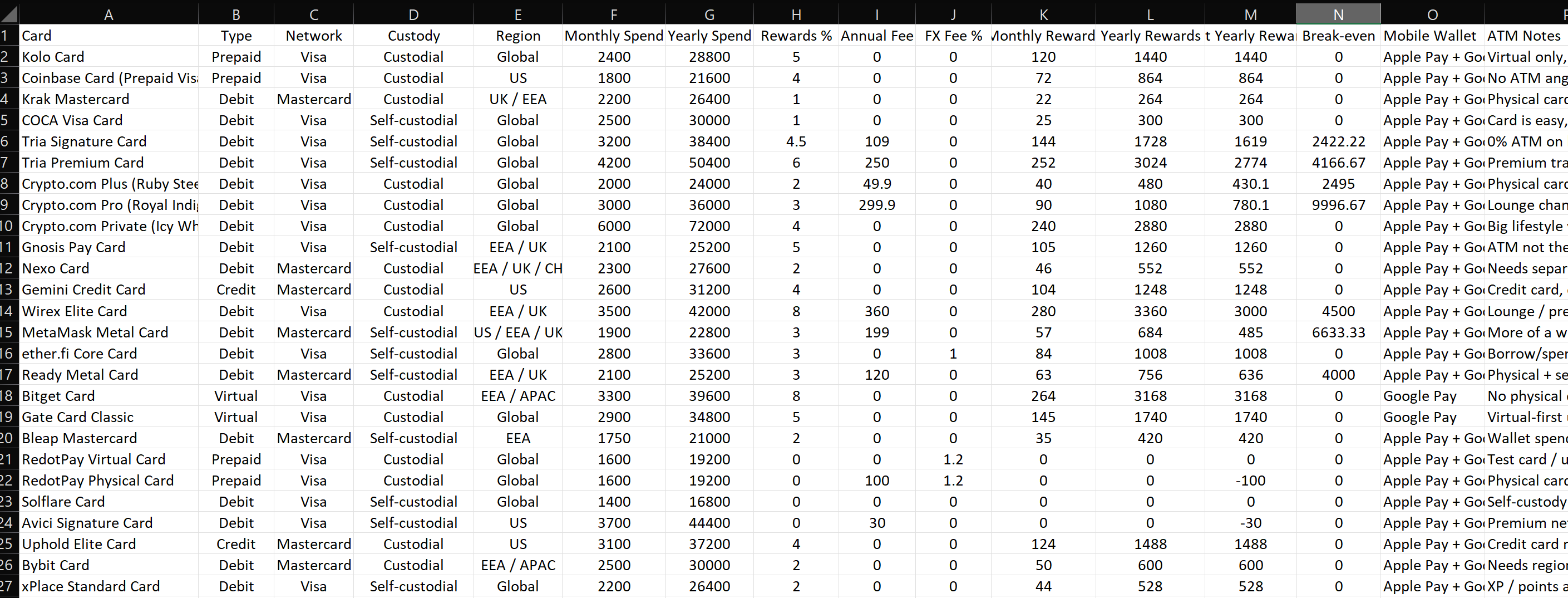
Before SpendNode existed, comparing crypto cards meant opening ten tabs, guessing which fee pages were still current, and usually ending up in a spreadsheet. That was not a serious way to make a money decision, especially once cards started adding token locks, hidden FX drag, and different custody models.
This tool exists so you can compare the important parts in one place: rewards, fees, custody, availability, and what the card is actually trying to be.
How We Use It
Start with your region. Then narrow the list to two to four cards that are actually available to you. After that, use the table to check what matters for your use case:
- rewards and whether they come with staking or fee drag
- custody model and counterparty risk
- FX and annual-fee structure
- supported assets and funding flow
- Apple Pay, Google Pay, ATM, and card-type differences
The point is not to turn every decision into a giant research project. It is to get you from a messy shortlist to a believable final choice.
What We Care About Most
We do not treat headline cashback as the whole story. A card advertising 8% back can still lose on real-world value once you factor in staking requirements, token volatility, conversion spread, monthly caps, and annual cost.
That is why the comparison is built around context:
- reward rate
- fee stack
- custody model
- regional fit
- product practicality
If two cards tie on the obvious headline metric, the next job is to show you where the real difference sits.
What Different Users Should Prioritize
For Travelers
Zero FX should mean zero FX in practice, not just in the headline. If you spend abroad often, the right card is usually the one with the cleanest total cost stack rather than the flashiest reward line.
For Cashback Chasers
Look at net value, not just the posted percentage. If a reward depends on a large token lock or disappears after a cap, that needs to show up in the decision.
For Security-Focused Users
Custody matters. If you care about keeping control of your assets, self-custodial options should be evaluated differently from exchange-linked cards, even when the latter look smoother on rewards.
For Simplicity
Sometimes the best card is not the one with the highest upside. It is the one you can actually explain, fund, and use without creating three new problems.
How to Read the Results
Use the table to eliminate weak fits first. Then click through to the full product and vendor pages for the cards that survive.
The comparison tool is the fast decision layer. The card pages are where we go deeper on:
- break-even math
- real tradeoffs
- editorial rating
- country fit
- screenshots and hands-on notes
Final Thought
There is no universal best crypto card. There is only the best card for your region, funding flow, custody preference, and spending style.
That is what this page is trying to make visible, quickly and without marketing noise.
Disclaimer: SpendNode is a data comparison platform. We are not financial advisors. Crypto cards involve risks including asset volatility, custodial risk, and tax complexity. Verify all terms directly with issuers before applying.
Written by Aleksandar Dukic