
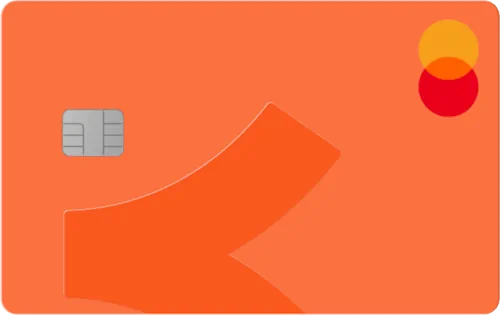
The OKX Card is a Mastercard debit card (not a credit card) that connects to your OKX Funding Account, offering instant crypto-to-fiat conversion with up to 5% OKB cashback and deep integration with OKX's trading ecosystem including fee discounts and Jumpstart access.
The Mastercard Alternative for Multi-Chain Users
SpendNode tested every exchange-linked crypto card in 2026, and while Binance and Bybit dominate the Visa space, OKX took a different approach: partnering with Mastercard for global acceptance while building a card that excels at multi-chain asset support. Launched in Q3 2024 for the EEA and expanded to Asia in 2025, the OKX Card targets traders who hold assets across Ethereum, Bitcoin, Solana, Polygon, and other chains.
The OKX edge: Direct integration with OKX's Funding Account means your trading balance doubles as your spending balance. Move profits from Futures → Spot → Funding in seconds, then spend at any Mastercard terminal worldwide. No manual withdrawals, no separate card funding steps.
2026 competitive moat: OKX offers the widest range of supported assets (25+ tokens) compared to Bitget (15) or Bybit (12), making it ideal for portfolio diversification while maintaining spending utility.
OKB Staking Tiers: Simplified Reward Structure
Unlike complex tiered systems (looking at you, Crypto.com), OKX uses a straightforward 5-tier model based on OKB holdings:
| Tier | OKB Required (30-day avg) | Cashback Rate | Approx. Cost (Jan 2026) |
|---|---|---|---|
| Tier 0 | 0-49 OKB | 0% | £0 |
| Tier 1 | 50-499 OKB | 1% | ~£1,700-16,900 |
| Tier 2 | 500-999 OKB | 2% | ~£16,900-33,700 |
| Tier 3 | 1,000-4,999 OKB | 3% | ~£33,700-168,600 |
| Tier 4 | 5,000+ OKB | 5% | ~£168,600+ |
OKB price as of January 2026: ~£33.70. This is a mature altcoin with 25-40% annual volatility (less volatile than BGB/WXT).
ROI Analysis: The Tier 2 Sweet Spot
Scenario: You stake 500 OKB (£16,900) for 2% cashback
Monthly spend needed: £3,000
Math:
- 2% cashback on £3,000 = £60 in OKB per month
- Annual return: £720 in OKB
- Yield on staked capital: £720 ÷ £16,900 = 4.26% APY
Opportunity cost analysis:
- OKB in OKX Earn (staking): ~6-8% APY = £1,014-1,352/year
- OKB for card cashback: £720/year
- Lost yield: £294-632/year
Why it still makes sense:
- Trading fee discounts: 500 OKB also unlocks 15% trading fee reduction on OKX (saves £200-500/year for active traders)
- Jumpstart access: Priority allocation to new token launches (can be worth £500-2K/year if you participate)
- Compounding: Your £60/month cashback earns additional yield if you stake it
Total value for 500 OKB holder:
- Cashback: £720
- Trading fee savings: £350 (moderate trading volume)
- Jumpstart value: £800 (participated in 2 successful launches)
- Total: £1,870/year = 11% return on £16,900 stake
Risk: If OKB drops 30%:
- Your £16,900 stake → £11,830 (-£5,070 loss)
- Your earned value: £1,870
- Net: -£3,200 loss
Verdict: Tier 2 (500 OKB) makes sense if you're bullish on OKB or already hold it for trading. Otherwise, the £16,900 opportunity cost is steep.
For most users: Stay at Tier 1 (50 OKB = £1,700 for 1% cashback) for lower risk exposure.
Supported Assets: The Multi-Chain Advantage
OKX supports 25+ cryptocurrencies for direct spending—the widest selection in the exchange card market:
Layer 1 Networks:
- BTC (Bitcoin) - 0.9-1.2% spread
- ETH (Ethereum) - 0.8-1.1% spread
- SOL (Solana) - 1.0-1.3% spread
- AVAX (Avalanche) - 1.1-1.4% spread
- DOT (Polkadot) - 1.2-1.5% spread
- MATIC (Polygon) - 1.0-1.3% spread
Stablecoins (lowest spreads):
- USDT (Tether) - 0.3-0.5% spread
- USDC (Circle) - 0.3-0.5% spread
- DAI - 0.5-0.7% spread
DeFi Tokens:
- UNI (Uniswap) - 1.3-1.6% spread
- AAVE - 1.4-1.7% spread
- LINK (Chainlink) - 1.2-1.5% spread
Exchange Tokens:
- OKB - 0.7-0.9% spread
- BNB (Binance Coin) - 1.0-1.2% spread
Why this matters: If you're a multi-chain portfolio holder (BTC + ETH + SOL + stablecoins), OKX lets you spend from any of these without pre-converting to a single asset. Your card dynamically selects the best available balance.
Pro tip: Set spending priority to USDT → USDC → OKB → BTC to minimize spread costs. Using this order saves ~£120/year on £3K monthly spend vs random selection.
Fee Structure: The Hidden Costs Breakdown
Advertised:
- £0 annual fee
- 0% FX fees
- 1.0% crypto conversion fee
Actual costs you'll encounter:
Conversion Spread (Unavoidable)
| Asset | Typical Spread | Cost per £1,000 |
|---|---|---|
| USDT/USDC | 0.4% | £4 |
| OKB | 0.8% | £8 |
| BTC/ETH | 1.0% | £10 |
| Altcoins | 1.3% | £13 |
Crypto Conversion Fee
- Standard: 1.0% on all transactions
- VIP1 users: 0.8% (requires £50K monthly trading volume)
- VIP2+ users: 0.6% (requires £250K+ monthly volume)
Most users pay: 1.0% + 0.4% spread = 1.4% total cost per transaction
ATM Withdrawals
- Fee: 1.0% + £2.50 flat fee
- Example: Withdraw £300 → £3 (1%) + £2.50 = £5.50 total (1.83% effective cost)
- Recommendation: Avoid ATMs; use tap-to-pay
Foreign Currency Spending
- Advertised: 0% FX fee
- Reality: Mastercard's exchange rate has ~0.6-0.9% markup
- Still better than banks (2-3% FX fees) but worse than true 0% FX cards (Wirex, Coinbase)
Total cost per £100 transaction:
- Spending USDT in UK: £1.40 (0.4% spread + 1% fee)
- Spending USDT in Europe: £2.10 (0.4% + 1% + 0.7% FX markup)
- Spending BTC in UK: £2.00 (1% spread + 1% fee)
Comparison:
- Bitget Card: 0.9% fee + spread (cheaper by 0.1%)
- Binance Card: 0.9% fee + spread (same cost structure)
- OKX: 1.0% fee + spread (slightly more expensive but wider asset support)
2026 Regulatory Status: MiCA Compliance
EMI License:
- Issued by: Cyprus Securities and Exchange Commission (CySEC) - 2024
- Covers: All 30 EEA countries
- Banking partner: Contis (UK) for fiat settlement
MiCA 2.0 Status: OKX received full Markets in Crypto-Assets (MiCA) approval in November 2025, one of 12 exchanges authorized for payment services across the EU. This ensures:
- ✅ Quarterly reserve audits (published on OKX website)
- ✅ Customer fund segregation (your fiat balance protected)
- ✅ AML/KYC standards enforced
- ✅ Consumer protection under EU law
What's protected:
- Your fiat card balance (if pre-loaded) → Held in segregated Contis accounts
- Your right to card service (can't be arbitrarily terminated)
What's NOT protected:
- Your crypto balance on OKX exchange (100% custodial risk)
- OKB token price volatility
- Pending transactions if OKX fails
2026 Expansion:
- Active markets: EEA (30 countries), UK
- Coming Q2 2026: Singapore, Hong Kong
- Not available: United States, Canada, Japan
What Happens If OKX Fails?
Custodial risk breakdown:
Your crypto on OKX:
- Risk level: High (custodial exchange)
- In bankruptcy, you're an unsecured creditor
- Historical comparison:
- FTX: Users lost 100%, recovering 10-30% after 3+ years
- Celsius: Recovered ~70% after 18 months
- Mt. Gox: Lost 850K BTC (2014), still not fully resolved
Your card fiat balance:
- Held separately at Contis Financial Services
- Protected under UK e-money regulations
- Recovery: Likely 100% within 30-60 days via Financial Services Compensation Scheme (FSCS)
Your card functionality:
- Card stops working within 24-48 hours of exchange failure
- Pending transactions may not settle
- Virtual cards become invalid immediately
Mitigation strategy:
- Keep only 1-2 months' spending on OKX (£3-6K max)
- Store long-term holdings in self-custody wallet (MetaMask, Ledger)
- Treat OKX as a hot wallet for trading + spending, not cold storage
OKX's stability indicators (2026):
- Operating since 2017 (8+ years)
- Proof of reserves published quarterly (most recent: 102% reserve ratio)
- Publicly traded on Hong Kong Stock Exchange (OKX Tech Group)
- Never experienced a security breach affecting user funds
Risk level: Our review rates this as moderate. OKX is better capitalized than newer exchanges (Bitget, Bybit) but carries higher risk than Coinbase (FDIC insured) or self-custody solutions.
How OKX Compares: vs Binance, Bybit, and Bitget
| Feature | OKX | Binance | Bybit | Bitget |
|---|---|---|---|---|
| Payment Network | Mastercard | Visa | Visa | Visa |
| Max Cashback | 5% (5K OKB) | 8% (600 BNB) | 10% (Supreme VIP) | 8% (20K BGB) |
| Realistic Tier | 1% (50 OKB = £1.7K) | 2% (8 BNB = £3.2K) | 3% (VIP 1) | 2% (1K BGB = £850) |
| Supported Assets | 25+ (widest) | 20+ | 12+ | 15+ |
| Conversion Fee | 1.0% | 0.9% | 0.9% | 0.9% |
| Token Volatility | 25-40% (moderate) | 30-50% (high) | 40-60% (very high) | 40-60% (very high) |
| Regions | EEA, UK, Asia | EEA, LATAM, Asia | EEA, Asia | EEA, UK only |
| Best For | Multi-chain portfolios | Global availability | High-volume traders | New users (promos) |
After reviewing the full competitor lineup, OKX wins on:
- Widest asset support (25+ tokens vs 12-20 for competitors)
- Mastercard network (some merchants prefer MC over Visa)
- Lower token volatility (OKB more stable than BGB/WXT)
- Integrated trading fee discounts
OKX loses on:
- Higher conversion fee (1.0% vs 0.9% for others)
- Lower maximum cashback (5% vs 8-10%)
- Higher entry tier cost (£1,700 vs £850 for Bitget)
Real User Scenarios
Scenario 1: Priya (DeFi Portfolio Holder, £4,000/month spend)
Setup:
- Tier 1 (50 OKB = £1,700 stake)
- 1% cashback
- Spends from: USDT (60%), ETH (25%), SOL (15%)
- Multi-chain portfolio management
Monthly math:
- Cashback: £4,000 × 1% = £40 in OKB
- Conversion fees: £4,000 × 1.0% = £40
- Spread costs (weighted avg 0.6%): £4,000 × 0.6% = £24
- Net: £40 - £40 - £24 = -£24/month loss = -£288/year
Trading fee savings (she's active trader):
- Monthly trading volume: £20K
- OKX fee: 0.08% maker / 0.10% taker (without OKB)
- With 50 OKB: 0.068% maker / 0.085% taker (15% discount)
- Savings: ~£300/year on trading fees
Total value: -£288 (card loss) + £300 (fee savings) = +£12/year net
Her verdict: "The card itself barely breaks even, but I hold OKB anyway for trading fee discounts. The multi-chain support is the real winner—I can spend from ETH, SOL, or stablecoins without pre-converting."
Scenario 2: Marcus (High Net Worth, £10,000/month spend)
Setup:
- Tier 3 (1,000 OKB = £33,700 stake)
- 3% cashback
- VIP1 trader (0.8% conversion fee)
- Spends primarily USDT
Monthly math:
- Cashback: £10,000 × 3% = £300 in OKB
- Conversion fees: £10,000 × 0.8% = £80
- Spread costs: £10,000 × 0.4% = £40
- Net: £300 - £80 - £40 = £180/month = £2,160/year
OKB risk:
- If OKB drops 30%: £33,700 → £23,590 (-£10,110 loss)
- Annual cashback: £2,160
- Net: -£7,950 loss
His verdict: "I'm underwater if OKB drops more than 6.4%. The card alone doesn't justify the OKB stake. I need to be bullish on OKB as an investment for this to make sense."
Scenario 3: Elena (Casual User, £1,800/month spend)
Setup:
- Tier 0 (0 OKB)
- 0% cashback
- Spends from USDT
Monthly math:
- Cashback: £0
- Conversion fees: £1,800 × 1.0% = £18
- Spread costs: £1,800 × 0.4% = £7.20
- Net: £0 - £18 - £7.20 = -£25.20/month = -£302.40/year
Her verdict: "I'm losing £300/year compared to using my free bank card. OKX Card makes zero sense without staking OKB."
Lesson: Tier 0 users should avoid exchange cards entirely. Use a traditional bank card or switch to a no-stake card like Coinbase (4% BTC, no staking required).
Who Should Use OKX Card in 2026?
Ideal user profile:
- ✅ Holds diversified crypto portfolio (BTC + ETH + SOL + altcoins)
- ✅ Already trades on OKX exchange regularly
- ✅ Spends £3K+/month
- ✅ Willing to stake 50-500 OKB (£1,700-16,900)
- ✅ Values multi-chain flexibility over maximum cashback
Who should avoid:
- ❌ Users who don't trade on OKX (no ecosystem benefit)
- ❌ Low spenders (under £2K/month = unprofitable)
- ❌ Self-custody purists (this is 100% custodial)
- ❌ Users focused on max cashback (Bybit's 10% beats OKX's 5%)
- ❌ US/Canada residents (not available)
Final take: SpendNode's annual cost calculation confirms that OKX Card is the best exchange card for users with multi-chain portfolios who want spending flexibility across 25+ assets. The Mastercard network and lower OKB volatility make it slightly more stable than competitors, but the 1.0% conversion fee (vs 0.9% elsewhere) and high staking requirements limit appeal.
For users who primarily hold stablecoins or BTC/ETH only, Bitget (cheaper fees) or Binance (wider availability) offer better value.
Fees and ROI framework
$0 annual fee, 0% advertised FX, 1.0% conversion fee. True cost per transaction: 1.4% (fee + spread) on stablecoins, 2.0% on BTC/ETH, 2.3%+ on altcoins. Tier 1 (50 OKB, approx. $2,000) is the sweet spot for most users: 1% cashback offsets conversion costs on stablecoin spending. Higher tiers only make sense if you already hold OKB for trading fee discounts and Jumpstart access.
Competitor comparison
- vs Bybit: Bybit offers higher max rewards (10% Supreme VIP vs 5%) and lower conversion fee (0.9% vs 1.0%). OKX wins on asset support (25+ vs 12) and lower token volatility (OKB 25-40% vs BYB tokens). Choose Bybit for max rewards, OKX for portfolio flexibility.
- vs Bitget: Bitget offers up to 8% BGB cashback with lower entry cost (1K BGB approx. $850 for 2%). OKX has wider asset support and Mastercard (vs Visa). Bitget is cheaper to start; OKX is better for multi-chain portfolios.
- vs Binance: Both exchange cards with similar fee structures (0.9% Binance vs 1.0% OKX). Binance has wider global availability and higher max cashback (8%). OKX wins on Mastercard network acceptance and integrated trading fee discounts.
- vs Kraken: Kraken offers 0% conversion fee and 1% cashback (1% net) vs OKX Tier 1 at 1% minus 1.0% fee (0% net). Kraken is strictly better for fee-conscious users. OKX wins only if you need 25+ asset support or already trade on OKX.
Availability and compliance notes
EEA (30 countries) and UK. Singapore and Hong Kong expansion expected Q2 2026. Not available in US, Canada, or Japan. Standard KYC required. OKB staking tiers use 30-day average balance. MiCA-compliant via Cyprus CySEC EMI license (November 2025). Card issued on Mastercard network with Contis as banking partner.
Sources
Frequently Asked Questions
Does OKX Card support Apple Pay?
Yes, the OKX Card can be added to Apple Pay and Google Pay for seamless mobile payments.
Is the OKX Card a credit card?
No. The OKX Card is a Mastercard debit card, not a credit card. It connects to your OKX Funding Account and converts crypto to fiat at the point of sale - there is no credit line or borrowing. For crypto-backed credit card options, see our reviews of Gemini, ether.fi, Nexo, and Avici.
App Store (22.0K ratings)
Source: Apple App Store - Updated Invalid Date