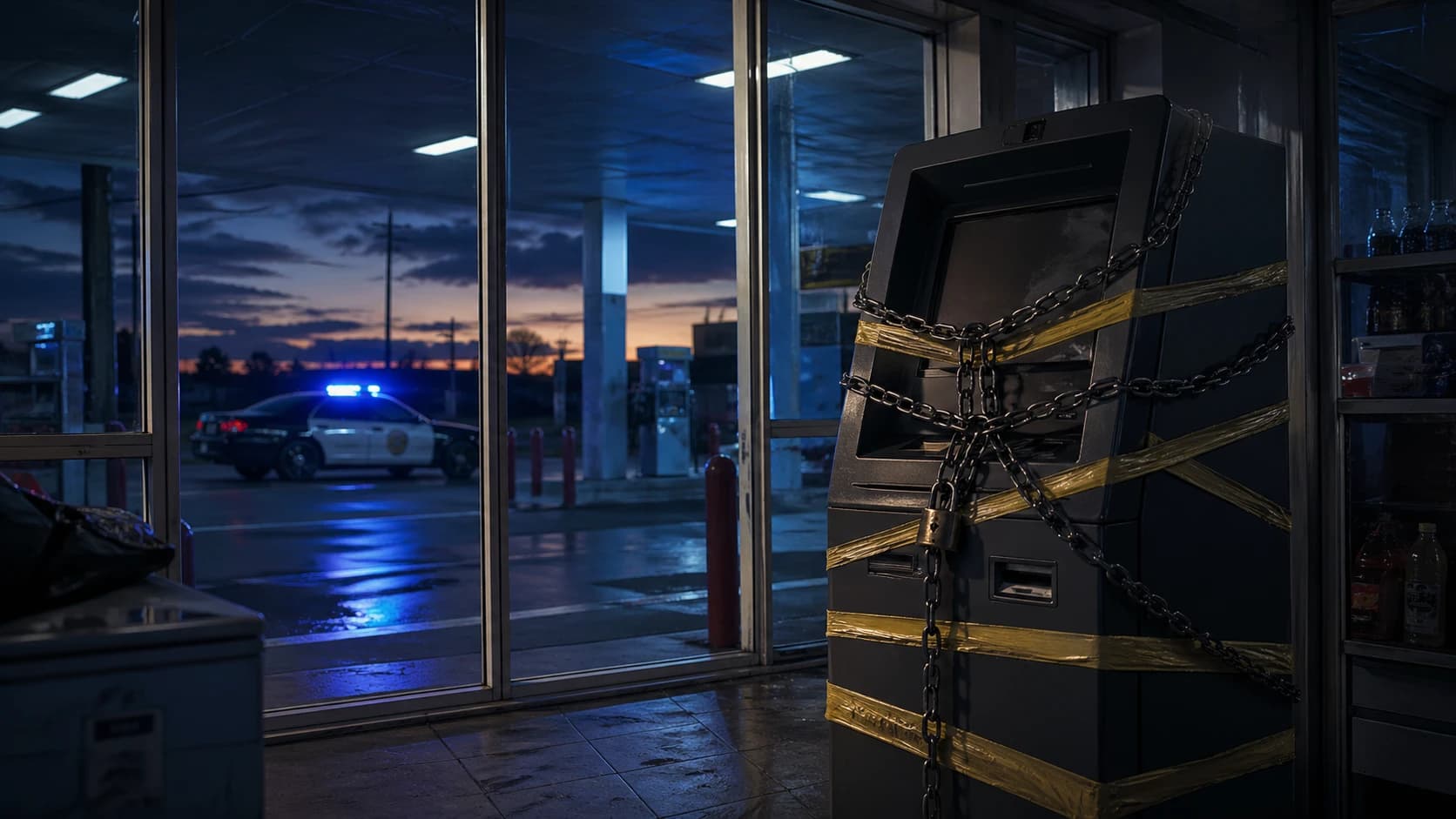
Tennessee has criminalized crypto ATMs. According to CoinMarketCap's reporting on April 25, 2026, the state has banned the machines outright, making it a misdemeanor to operate or host one, with penalties of up to one year in prison. Tennessee is the second US state to take this step, escalating what until recently was a patchwork of disclosure rules and dollar caps into outright criminal liability for operators.
For an industry that has spent the past decade building physical fiat-to-crypto rails in convenience stores, gas stations, and strip malls, this is a sharp shift in tone. Earlier state actions targeted fraud reimbursement, daily transaction limits, or licensing. Tennessee has skipped over those measures and gone to a direct ban backed by jail time.
From Disclosure Rules to Criminal Liability
Most state-level activity on crypto ATMs over the past two years has stayed inside the consumer-protection lane. A handful of states have passed laws around transaction caps, refund rights for fraud victims, or operator licensing. Those rules made the machines more expensive to run but kept them legal.
A criminal ban is a different category of policy. It treats the act of plugging in or hosting a crypto ATM as inherently illegal, regardless of how the operator behaves. A gas station owner who lets a third-party kiosk sit in the corner of their store is now exposed to the same misdemeanor charge as the company that owns the machine.
The CoinMarketCap announcement does not detail the bill's exemptions or its effective date, and the framing of "second US state to ban outright" puts Tennessee alongside one prior peer state. That earlier ban set the template; Tennessee adopting the same approach suggests other state legislatures may now have political cover to follow.
Crypto ATMs Sit At The Center Of Elder-Fraud Cases
Crypto ATMs grew quickly in the US because they sit in the cash economy. They take physical bills, do limited identity checks at lower transaction tiers, and produce a wallet credit in minutes. That convenience is also the policy problem: federal prosecutors and state attorneys general have for years pointed to crypto ATMs as a recurring instrument in elder-fraud and romance-scam payouts, where victims are coached into feeding cash into a kiosk and sending the resulting tokens to a wallet controlled by the scammer.
State responses fell into two camps. The first camp leaned on civil rules: cap daily transaction sizes, require refunds within a specified window, force licensing. The second camp, which Tennessee has now joined, treats the machines themselves as the problem and removes them from the market entirely.
Both approaches push users toward the same alternatives: account-based exchanges with full KYC and bank-rail funding, and crypto cards that sit on top of those accounts.
Knock-On Effects for US Crypto Access
A second state ban does not by itself remove crypto ATMs from the country. Operators can relocate, and the largest networks have already pulled out of jurisdictions that imposed unfavorable rules. But each state-level ban narrows the addressable map for cash-based on-ramps, and the criminal-liability framing changes the risk calculus for the small businesses that host the machines.
For users who relied on these kiosks because they did not have a bank account, lacked an exchange relationship, or simply preferred the privacy floor of a small cash transaction, the practical alternatives are thinner. Major exchanges require full identity verification and a linked US bank account. Crypto cards offer spending in the other direction, from token to fiat, but do not solve the cash-to-crypto problem the kiosks were designed for.
Some users may shift toward no-KYC card products, where verification is lighter, though those still require existing crypto holdings to fund. Peer-to-peer markets and prepaid-card workarounds are likely to absorb part of the volume that previously moved through ATMs in Tennessee.
The Third State Will Reveal Whether This Is A Wave
The first thing to watch is which state goes third. State-level crypto policy tends to move in waves once a template exists, and a criminal-ban model now has two adopters. State legislatures with active fraud-task-force activity, especially in the Mountain West and the Southeast, are the most likely candidates.
The second thing to watch is the effective date and any grandfathering language in the Tennessee statute itself, since operators that already have machines deployed need a wind-down path. A short window forces an immediate removal; a longer window lets the industry quietly relocate inventory to states that still permit the machines.
The third is whether the federal government picks up a similar framing. Congress has so far stayed in licensing and disclosure mode on crypto ATMs. A patchwork of state criminal bans tends to invite either federal preemption or a federal floor, and neither outcome would favor the kiosk model in its current form.
Overview
Tennessee has banned crypto ATMs outright and made operating or hosting one a misdemeanor punishable by up to a year in prison. It is the second US state to take this step, moving the policy debate from civil rules and licensing into criminal liability. The change narrows the cash-based fiat-to-crypto rails available to US users and increases pressure on other state legislatures to follow the same template.