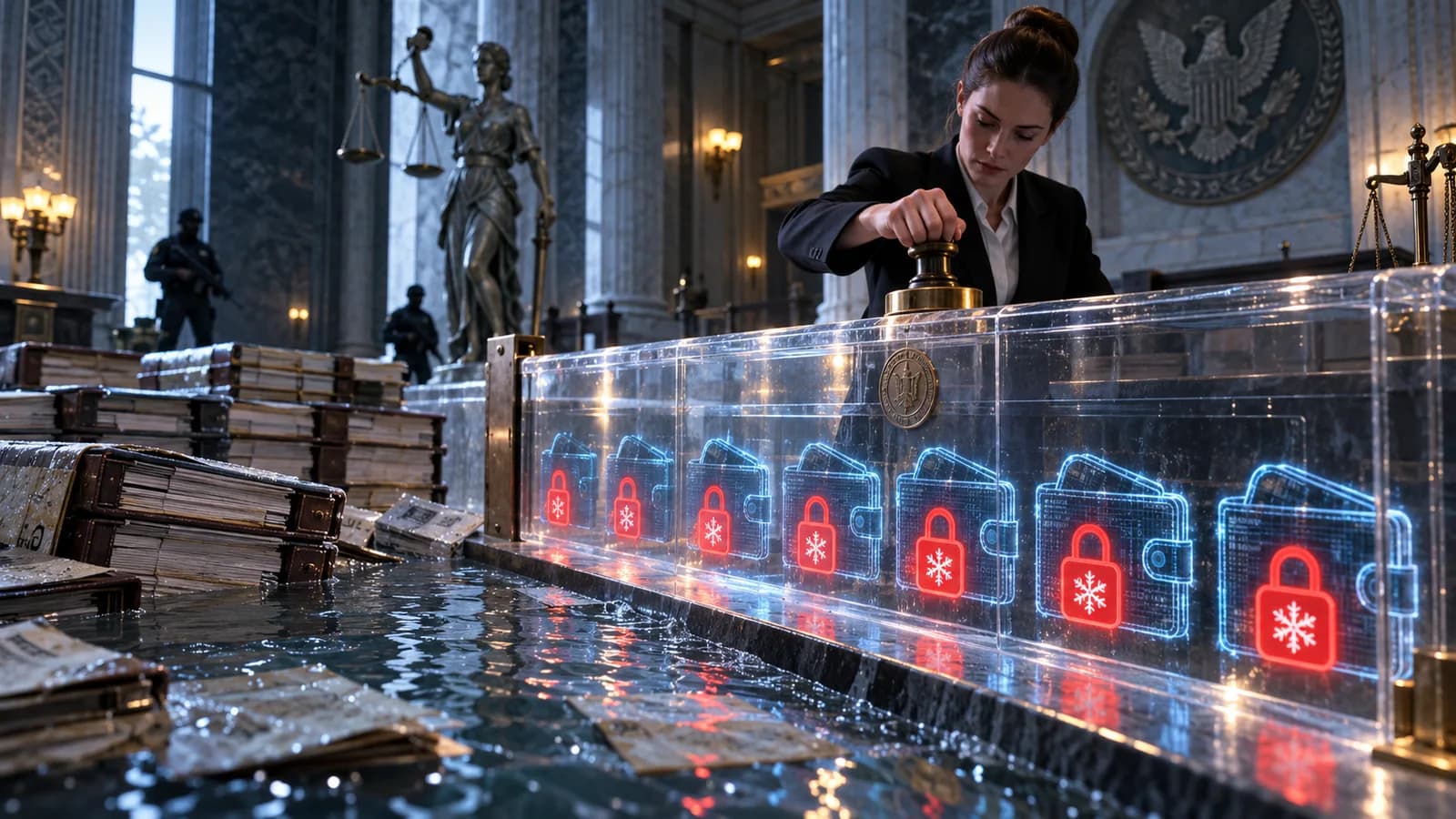
A Philippine court has ordered 25 cryptocurrency wallets and 86 bank accounts frozen in connection with a flood control plunder investigation tied to an unnamed lawmaker, according to a report shared by Cointelegraph on October 4, 2026. The freeze covers both traditional bank accounts and on-chain holdings, placing digital assets on the same footing as fiat deposits inside a corruption case.
The order lands as broader crypto markets sit calm. Bitcoin traded at $84,913 (up 0.3% on the day) and Ether at $2,692 as of October 4, 2026, with the Fear and Greed index reading 67 (Greed). The seizure is a legal event rather than a market one, and prices showed no reaction to it.
A freeze order that crosses the fiat-to-crypto line
The detail that matters is the combination: 25 wallets alongside 86 bank accounts in a single action. Courts in many jurisdictions have spent years treating crypto as an afterthought in asset freezes, often because investigators lacked the tooling to trace and restrain on-chain balances. Pairing wallet freezes with conventional bank account freezes signals that the authorities running this probe view both as recoverable property subject to the same restraint.
The case is framed around plunder, a specific offense in Philippine law reserved for large-scale misappropriation of public funds by officials. Tying that charge to a flood control program points to procurement money as the subject of the investigation. The lawmaker at the center has not been named in the reporting available at the time of writing, and the underlying court filing has not been published alongside the announcement.
One source currently supports the core facts here: the Cointelegraph post. The wallet count, the account count, and the plunder framing all come from that single report. Details that would sharpen the picture, including which chains the 25 wallets sit on, the total value restrained, and whether any assets had already moved, are not yet public. Treat the specifics beyond the headline numbers as open.
Custody is the variable that decides whether a freeze works
A freeze order is only as strong as its reach. That reach depends entirely on custody.
If the 25 wallets are held at centralized exchanges or custodial services operating in the Philippines, a court order can compel the custodian to lock the balances, exactly as a bank freezes an account. The user never controls the keys, so the operator complies and the funds stop moving. This is the same mechanism that lets stablecoin issuers act on addresses, as when Tether froze hundreds of millions in flagged USDT earlier this year.
Self-custodied wallets are a different problem. No operator sits between the court and the private keys, so a freeze order against a self-custody wallet cannot force a technical lock. Enforcement instead depends on seizing the keys themselves, through a device, a seed phrase, or cooperation, or on blacklisting the addresses at the points where funds try to exit into regulated venues. The order can still box the assets in, but it cannot reach into the wallet and hold the balance the way it can with a custodian.
For anyone holding crypto, the case is a reminder that the custody choice is also a legal exposure choice. Funds parked with a custodian are easier to restrain by a third party. Funds in a wallet you alone control are harder for a court to touch, which cuts both ways depending on which side of an order you are on.
Seizure powers are catching up to on-chain money
Restraining crypto inside corruption and fraud cases is becoming routine rather than exceptional. US courts have wrestled with the question of who gets access to large seized Bitcoin holdings. Regulators in the UK have won confiscation orders to repay victims of crypto fraud. Prosecutors have charged individuals for routing stolen funds through named exchanges. The common thread is that investigators now treat wallets as reachable assets and build the tracing and legal steps to act on them.
For an emerging market like the Philippines to fold 25 wallets into a plunder freeze shows the capability is spreading beyond the largest regulators. The practical takeaway is narrow but clear: on-chain balances tied to a legal matter are no longer a safe harbor from a freeze, and the line between a frozen bank account and a frozen wallet is thinning.
Overview
A Philippine court froze 25 crypto wallets and 86 bank accounts tied to a lawmaker in a flood control plunder investigation, per a Cointelegraph report on October 4, 2026. The number of wallets, the account count, and the plunder framing come from that single source; the lawmaker's identity, the chains involved, and the total value restrained are not yet public. The case shows seizure powers reaching on-chain money in an emerging market, with custody deciding whether a freeze actually bites: custodial holdings lock on an order, self-custodied funds are far harder to reach. Markets did not react, with Bitcoin at $84,913 as of October 4, 2026.