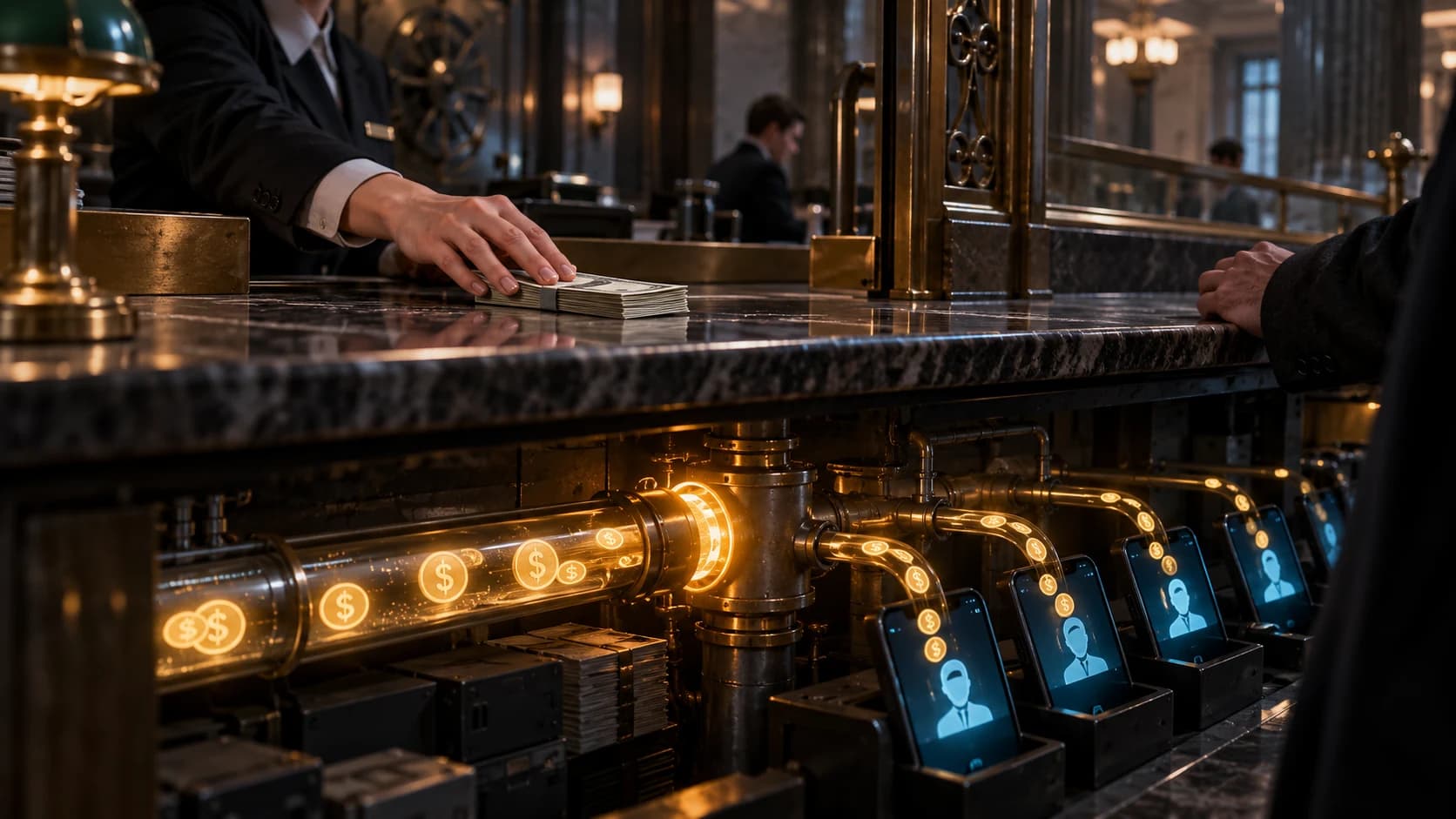
US federal prosecutors have charged a former Georgia bank employee with helping move roughly $932,000 in customer funds into Coinbase accounts controlled by co-conspirators, according to a report shared by CoinMarketCap on October 1, 2026. In exchange, the banker allegedly received a little over $1,000.
The case is a reminder that the crypto on-ramp is often the last step in a fraud, not the first. The money started inside a traditional bank, under the control of a trusted insider, before it ever touched an exchange.
The insider was the entry point
Prosecutors describe a straightforward betrayal of position. A person with legitimate access to customer accounts allegedly used that access to redirect funds toward destinations the customers never authorized. The crypto element enters only at the end: the stolen money landed in exchange accounts that co-conspirators could control and move.
The economics are worth sitting with. The alleged payout to the banker was just over $1,000 against nearly a million dollars moved. That spread tells you the insider was a tool, not the mastermind. Whoever organized the scheme paid a rounding-error fee to someone with the one thing they lacked: a logged-in seat inside the bank.
Exchanges keep ending up as the destination
Centralized platforms like Coinbase remain attractive to launderers for the same reasons they appeal to ordinary users. They are liquid, they convert between assets quickly, and funds can be split and forwarded in minutes. That utility cuts both ways.
What also keeps happening is the follow-up. Exchanges maintain know-your-customer records, transaction logs, and the ability to freeze accounts on a law-enforcement request. Those records are frequently how cases like this get built. Tether's repeated freezes of illicit USDT, including the $550 million in Iran-linked stablecoins it has locked this year, show the same pattern: the rails that move illicit money also create the paper trail that unwinds it.
An account opened under a real identity, funded by a traceable bank transfer, is not a strong hiding place. The design choices that make an exchange convenient also make it legible to investigators.
Compliance exposure runs upstream
For anyone building or using regulated payment products, the lesson sits a layer above the exchange. The failure here was at the bank, with an employee who had authorized access and a reason to misuse it. No amount of downstream exchange screening prevents an insider from moving customer money in the first place.
That is why compliance teams increasingly treat the full chain as one surface. A crypto platform can run clean onboarding and still receive funds that were already stolen before they arrived. In the United States, enforcement has shown it will follow the money across that boundary, charging the bank insider rather than stopping at the exchange account where the trail became visible.
Practical read for users
For everyday account holders, the specifics matter less than the shape. Fraud that touches crypto usually begins with a compromised credential, a social-engineering play, or, as alleged here, a dishonest insider. The exchange is where the money surfaces, not where the theft originates.
The defensive posture follows from that. Guard the accounts that actually hold your money, watch for unauthorized transfers at the bank level, and treat any unexpected movement as worth an immediate call. Platforms that enforce real verification are not the enemy of privacy so much as the reason stolen funds can be traced and, in some cases, clawed back. This case is still at the charging stage, and the accused is entitled to the presumption of innocence until proven otherwise.
The dollar figures reinforce the point. Nearly a million dollars moved, roughly a thousand dollars paid to the insider, and a federal case that reached back past the exchange to the bank seat where it all began.
Overview
A former Georgia banker faces US charges for allegedly routing about $932,000 in customer funds into Coinbase accounts controlled by co-conspirators, reportedly in exchange for just over $1,000. The scheme started with insider access at a traditional bank, with the exchange serving only as the destination where the money became visible and traceable. The case underscores that crypto compliance risk extends upstream into the banking system, and that the records exchanges keep are often what makes prosecution possible.