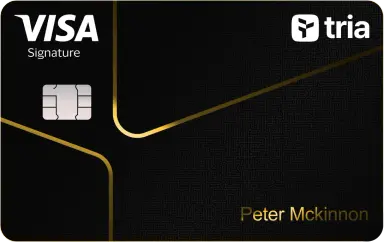
OKX has announced a significant enhancement to its crypto card offering, emphasizing zero-fee stablecoin spending with real-time conversion capabilities. The announcement, made via the exchange's official X account on February 1, 2026, positions the OKX Card as a direct competitor to stablecoin-focused alternatives like Gnosis Pay and Tria.
What OKX Announced
According to the official post, OKX Card now enables users to:
- Spend stablecoins like cash at any Visa-accepting merchant worldwide
- Real-time conversion from USDC/USDT to local fiat currency at point of sale
- Zero conversion fees on stablecoin transactions
- No legacy payment rails - direct blockchain-to-merchant settlement
This positions OKX competitively in the rapidly growing stablecoin card market as users increasingly demand fee-free spending solutions.
Why This Matters in 2026
Stablecoin cards have emerged as the lowest-cost option for crypto card users in 2026. Unlike volatile assets (BTC, ETH) which incur 1.5-3% conversion spreads, stablecoins typically convert at 0.1-0.5% markup because there's minimal price volatility between USDC and USD.
The competitive landscape has intensified:
- Gnosis Pay (Europe) offers 0% FX fees on EURe stablecoin spending
- Tria allows USDC spending with 0.5% fee but adds 15% APY on idle balances
- ether.fi Cash provides stablecoin spend with yield-bearing positions
- OKX Card (Global) now promises "no fees" on stablecoin transactions
OKX's move addresses a key user pain point: hidden conversion spreads. Many cards advertise "0% fees" but sell your crypto at 2% below market rate. By focusing on stablecoins—which have near-zero volatility—OKX can offer genuine zero-markup conversion.
How Real-Time Stablecoin Spending Works
The technical architecture OKX appears to be implementing:
Step 1: User holds USDC or USDT in their OKX exchange wallet Step 2: User taps OKX Card at merchant terminal for $50 coffee purchase Step 3: OKX instantly converts $50 worth of USDC (50 USDC) to fiat Step 4: Merchant receives $50 USD via Visa network Step 5: User's balance shows -50 USDC
The "zero fee" claim likely means:
- No explicit transaction fee (0% per purchase)
- Tight conversion spread (0.1-0.3% instead of industry average 1.5-2%)
- No monthly maintenance fees on stablecoin balances
Comparison to volatile asset spending:
| Asset Type | Typical Conversion Spread | Per $1,000 Spend |
|---|---|---|
| BTC/ETH | 1.5-2.5% | $15-25 loss |
| USDC/USDT | 0.1-0.5% | $1-5 loss |
This explains why stablecoin-native cards are becoming the preferred choice for users who prioritize predictable costs over speculative asset exposure.
OKX Card vs. Competitors: Feature Comparison
| Card | Stablecoin Support | Conversion Fee | FX Fee | Custody Model | Best For |
|---|---|---|---|---|---|
| OKX Card | USDC, USDT | 0% (claimed) | Varies | Custodial | Global stablecoin holders |
| Gnosis Pay | EURe | 0% | 0% | Self-Custodial | Europe, self-custody users |
| Tria | USDC | 0.5% | 1% | Self-Custodial | Yield + card combo |
| ether.fi Cash | USDC, DAI | 0.5% | Varies | Hybrid | DeFi yield farmers |
| Coinbase Card | USDC | 1% | 2.49% | Custodial | US users, beginners |
Key differentiators:
OKX's advantage: Zero fees on stablecoin spend, global availability, established exchange backing Gnosis Pay's edge: True self-custody + IBAN integration (Europe only) Tria's unique offer: 15% APY on idle USDC while maintaining card spend capability ether.fi's innovation: Earn DeFi yield on balance until the moment you swipe
Custodial Trade-offs: What You're Accepting
OKX Card operates on a custodial model—your USDC/USDT sits in OKX's exchange wallet, not your personal on-chain wallet. This introduces:
Pros:
- Instant card top-ups from exchange balance
- Password recovery if you lose access
- Seamless integration with OKX trading/staking features
Cons:
- Exchange risk: If OKX faces regulatory issues or hack, your balance is at risk
- Account freezes: OKX can freeze withdrawals or card spending for compliance reasons
- Not your keys: You don't control the private keys to your stablecoins
For self-custody alternatives:
- Gnosis Pay (connects to Safe multi-sig wallet)
- Tria (MPC wallet, you control keys)
- Solflare Card (Solana wallet integration)
Who Should Use OKX Card for Stablecoin Spending?
Ideal users:
- Stablecoin holders who want to spend USDC/USDT without selling to fiat first
- International travelers needing stable purchasing power (pair with no-FX-fee cards)
- DCA strategists who hold stables during bear markets but still need spending access
- OKX ecosystem users already trading on the exchange
Not ideal for:
- Self-custody maximalists (choose Gnosis Pay or Tria instead)
- Yield chasers (Tria offers 15% APY on idle balance, ether.fi offers DeFi yields)
- US residents with restricted access to OKX (use Coinbase Card instead)
The Broader Stablecoin Card Trend in 2026
OKX's announcement reflects a market-wide shift toward stablecoin-native spending:
Why stablecoins are winning:
- Predictable costs: 0.1-0.5% spreads vs 1.5-3% on volatile assets
- No tax events (in some jurisdictions): Spending $1 USDC that you acquired at $1 = $0 capital gain
- International travel: USDC is effectively "digital USD" accepted globally
- Yield opportunities: Park stables in DeFi, earn 4-8% APY, spend as needed
2026 market data:
- 56% of Gen Z prefer self-custody cards (post-FTX era)
- Stablecoin cards processing $180M+ cross-border monthly (Feb 2026)
- Average conversion spread on stablecoin cards: 0.3% (down from 1.2% in 2024)
Regulatory clarity from MiCA 2.0 (Europe) and clearer FinCEN guidelines (US) have enabled compliant stablecoin card offerings to flourish.
How to Get Started with OKX Card
Step 1: Sign up for OKX account (available in 100+ countries, excluding US) Step 2: Complete KYC verification Step 3: Deposit USDC or USDT to your exchange wallet Step 4: Order OKX Card (virtual or physical) Step 5: Link card to wallet and set spending limits
Typical fees (pre-announcement baseline):
- Card issuance: $0-20 (varies by tier)
- Monthly fee: $0
- ATM withdrawal: 2% (after free allowance)
- FX fees: 1% (for non-stablecoin spending)
With the new zero-fee stablecoin feature, the effective cost of spending USDC/USDT should approach 0.1-0.3% total (spread + network costs).
Verification & Caveats
What we know:
- OKX posted the announcement on February 1, 2026
- Claim: "Spend stablecoins like cash... no fees and no legacy payment rails"
What needs clarification:
- Does "zero fees" include conversion spread, or just explicit transaction fees?
- Which stablecoins are supported? (Likely USDC and USDT based on messaging)
- Is this available globally or region-restricted?
- What are the exact conversion rates compared to CoinGecko mid-market prices?
We recommend:
- Test with small transactions ($10-50) to verify actual conversion rates
- Compare receipts against real-time USDC/USD spot prices
- Monitor for hidden fees in the Terms & Conditions
The Bottom Line
OKX's move to offer zero-fee stablecoin spending positions it competitively in the rapidly growing stablecoin card market. For users who:
- Hold significant USDC/USDT balances
- Want predictable, low-cost spending without volatility exposure
- Already use OKX for trading/custody
- Accept custodial risk for convenience
...this could be a market-leading option in 2026.
However, for self-custody advocates or yield maximizers, alternatives like Gnosis Pay (non-custodial + 0% fees in Europe) or Tria (15% APY on idle USDC) may offer better risk-adjusted value.
Key takeaway: The crypto card market is splitting into custodial high-convenience options (OKX, Coinbase, Binance) and self-custodial high-security options (Gnosis Pay, Tria, Solflare). Choose based on your custody preference and primary use case.
Source: OKX Official X Post (Feb 1, 2026)
Disclosure: SpendNode is a data comparison platform. We do not accept payment for coverage or rankings. Verify all features directly with OKX before applying.