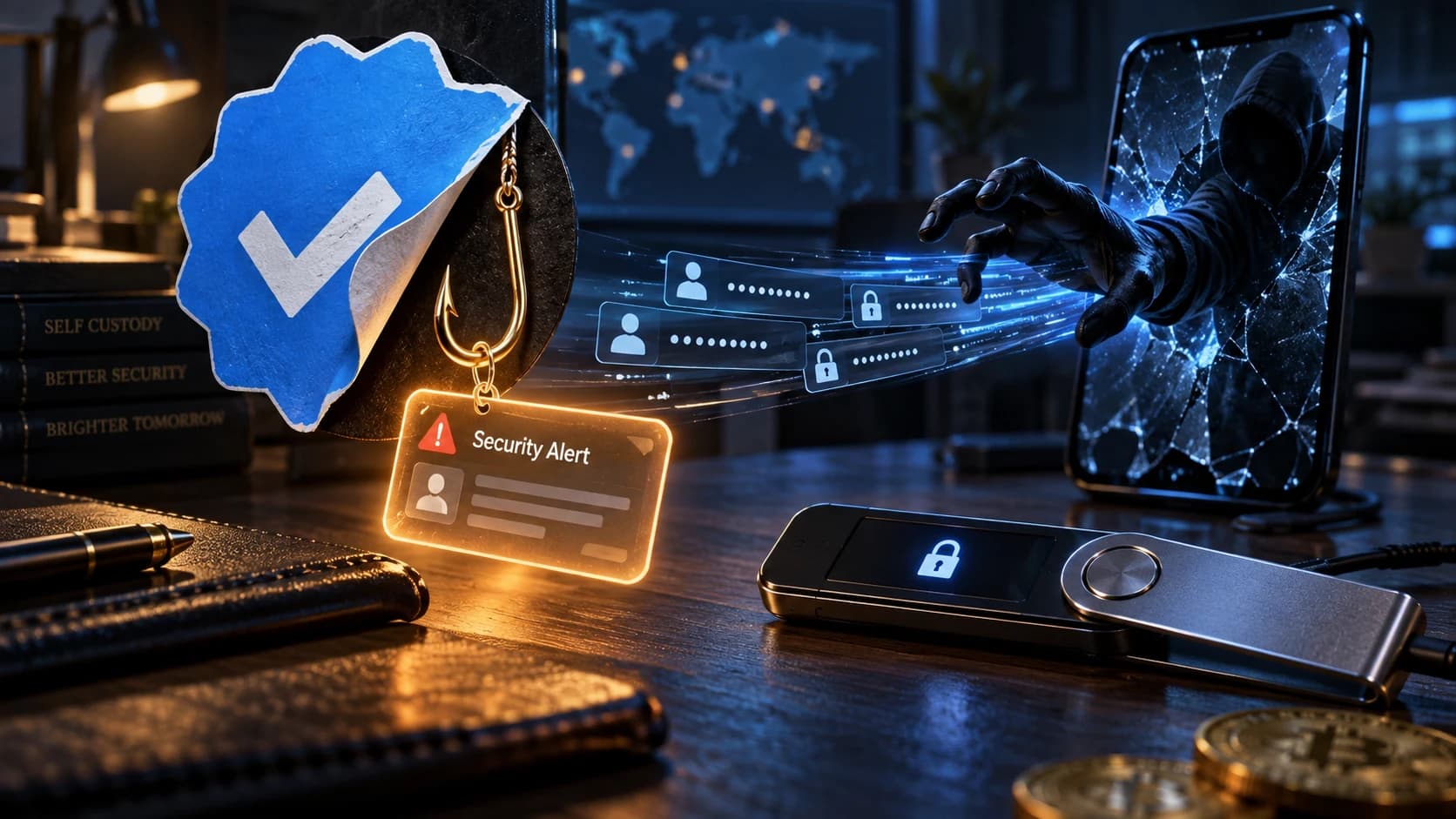
Ledger confirmed on October 10, 2026 that a hardware wallet belonging to one affected customer contained an unauthorized implant, adding weight to suspicions of a supply-chain attack routed through a Southeast Asian reseller called CryptoBilis. The disclosure came after users began reporting crypto losses that now approach $93.4 million across hundreds of addresses, though Ledger has not independently verified that total.
The confirmation matters because it shifts the story from rumor to a documented physical compromise. Reports of drained wallets had circulated for days, but a brand admitting that one of its devices was tampered with before reaching the buyer is a different category of problem. It points at the distribution channel rather than the firmware or the company's own factory.
The implant targets the one moment keys appear onscreen
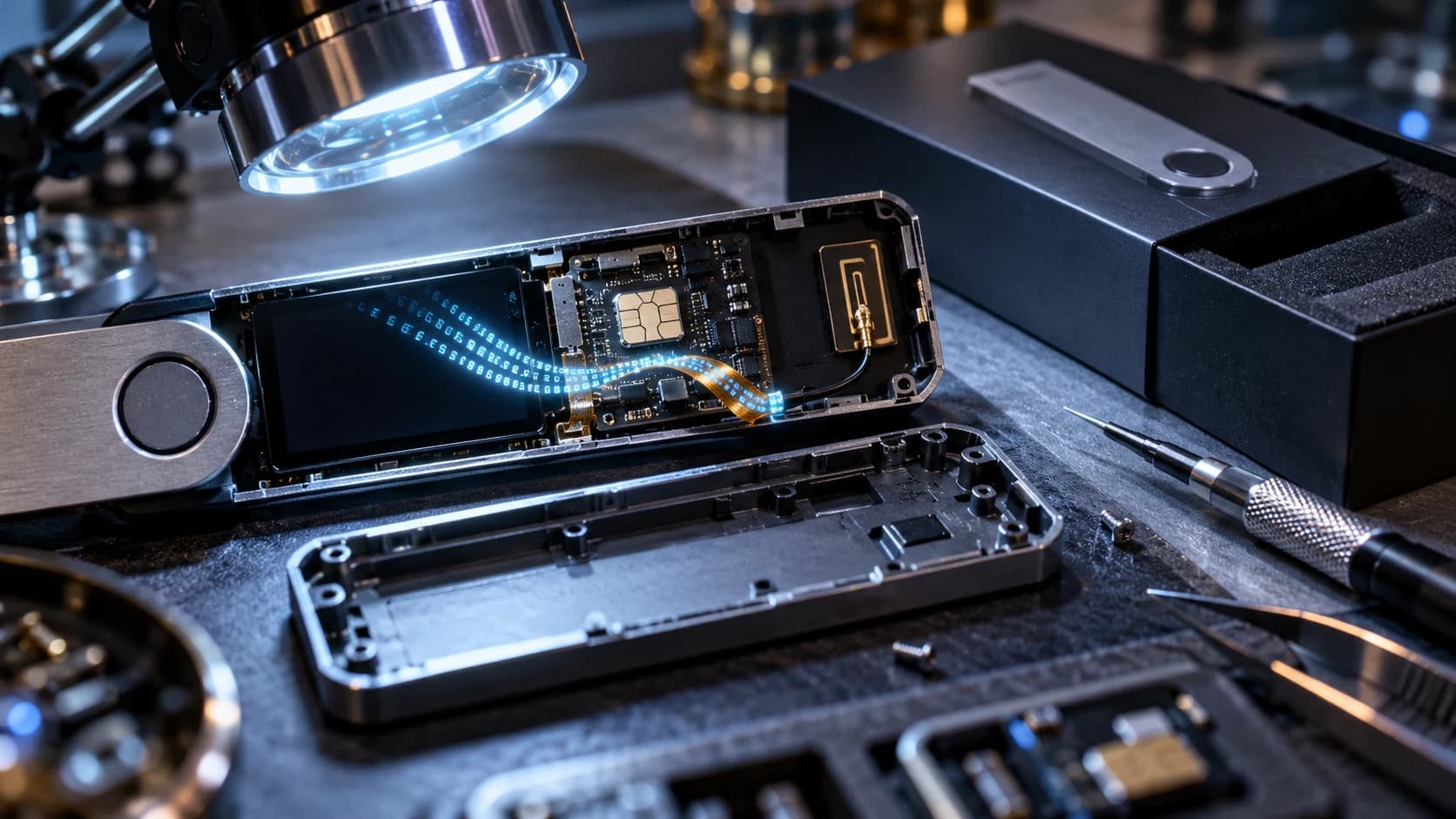
Photos and videos posted to X and Threads show a small circuit board tucked beneath the device's screen. According to those accounts, the board captures whatever the display renders, including the 24-word recovery phrase a user sees during initial setup. Investigators described a hidden module holding a SIM-style chip concealed inside the screen padding, while the outer packaging showed no sign of tampering.
That design is clever in a cynical way. A hardware wallet's entire security model rests on the seed phrase never leaving the device in readable form. The recovery phrase does surface in exactly one place: the screen, during the first-time setup when the user writes it down. An implant that can read the display sidesteps every cryptographic protection by stealing the secret at the one instant it is human-readable. Once an attacker has those words, they can reconstruct the wallet on their own equipment and move funds whenever they like, with no further access to the physical device.
CryptoBilis sits at the center of the distribution question
Ledger's advice centers on where the devices came from. The company said users who bought from CryptoBilis and have not yet completed setup should stop and not proceed. Users who already finished setup should generate a new seed phrase on a trusted device and transfer their Bitcoin and other assets to a fresh wallet. CryptoBilis has halted hardware wallet sales while Ledger works with authorities on the investigation.
The reseller angle is the crux. Ledger sells directly and through authorized partners, and the company has long warned against buying hardware wallets from third-party marketplaces or unofficial dealers precisely because a device can be opened, altered, and resealed in transit. A pristine box is not proof of integrity. The implant described here is a textbook version of the attack Ledger's own guidance has cautioned about for years.
Supply-chain risk is the gap self-custody cannot fully close
Moving to a hardware wallet is the standard answer to exchange and custodial risk. The lesson from this incident is narrower and more uncomfortable: the protection only holds if the device arrives exactly as the manufacturer shipped it. For anyone weighing self-custody options, the purchase path now deserves as much scrutiny as the device itself. Buy direct from the maker or an authorized retailer, check that the device generates a brand-new seed on first use, and treat any pre-filled or pre-configured wallet as compromised.
This also reframes how people should think about where keys live. The same seed-phrase exposure that an implant exploits is the reason many wallet-linked spending products keep private keys split across hardware and app layers, or lean on spending from your own wallet without ever surfacing the full recovery phrase on a screen an attacker could read. None of that helps if the root device is poisoned before you power it on, which is the specific failure mode here.
For context on the market backdrop, Bitcoin traded at roughly $82,990 as of October 10, 2026, up 0.7% on the day, so the reported losses are not tied to any price shock. The thefts appear to be a direct consequence of compromised hardware, not a market event.
Overview
Ledger has confirmed a physical implant in at least one customer wallet, lending credibility to reports of thefts nearing $93.4 million linked to devices sold through reseller CryptoBilis. The implant reportedly reads the recovery phrase off the screen during setup, defeating the wallet's cryptographic protections at the single moment the seed is visible. Ledger has not verified the full loss figure. The practical takeaway is specific: buy hardware wallets only from the manufacturer or authorized sellers, insist the device generate a fresh seed on first setup, and if you bought from CryptoBilis, move your funds to a new seed now.