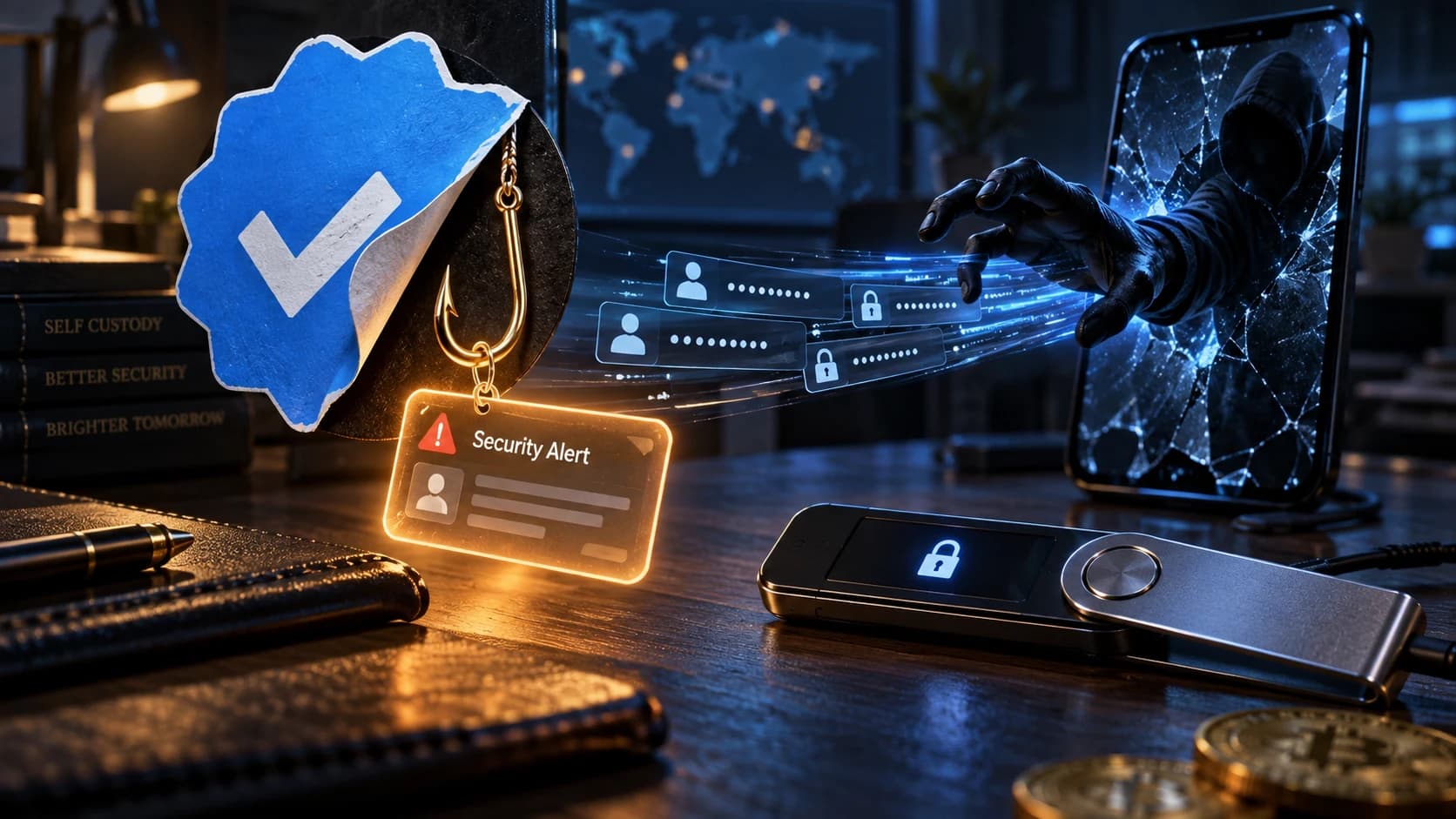
Coldcard's official account on X was compromised and used to broadcast a phishing scam dressed up as an urgent wallet security warning, according to a report from BitcoinNews on October 11, 2026. The post used the account's verified status and follower trust to steer hardware wallet holders toward a malicious link.
The attack did not target Coldcard's devices or firmware. It targeted the company's social presence, which is a softer and far more common point of failure. For an audience of self-custody users trained to act fast on anything labeled a "security warning," a hijacked official channel is close to an ideal delivery mechanism.
A trusted channel turned into the weapon
The mechanics here matter more than the specific link. When a scam arrives from an unknown handle, experienced crypto users mostly ignore it. When the same message arrives from the brand that makes the hardware wallet sitting on their desk, the instinct to verify drops. The blue check and the familiar name do the persuasion that the attacker cannot do on their own.
Urgency is the second lever. A message framed as a "wallet security warning" pushes the reader to act before thinking, which is the entire point of social engineering. The combination of a trusted sender and a manufactured deadline is what makes compromised-account phishing effective even against technically sophisticated holders.
Based on the report, the post was a phishing attempt rather than evidence that Coldcard's devices were breached. That distinction is important. A Coldcard stores keys offline and signs transactions on-device, so the private keys are not exposed through a social media takeover. The risk comes entirely from what a panicked user might do after clicking: connect a wallet to a fraudulent site, enter a seed phrase into a fake "recovery" form, or approve a malicious signing request.
The seed phrase is still the only thing that matters
No legitimate hardware wallet maker will ever ask for your 12 or 24 word recovery phrase through a website, a support form, or a social media link. That rule holds regardless of how official the request looks. A real firmware update or security patch is applied through the manufacturer's dedicated app or verified download page, never through a link dropped in a social post.
This incident lands in a stretch of similar attacks on wallet users. Coverage this month has included a hidden hardware implant tied to tens of millions in Ledger-related thefts and spyware harvesting imToken wallet data off compromised iPhones. The through-line is that the key material itself is hard to crack, so attackers keep going after the human in front of it instead.
For holders who follow Ledger, Coldcard, or any other hardware brand on social media, the practical takeaway is to treat every "urgent" security post as suspect until confirmed through a second channel. Check the manufacturer's official website directly. Look for the same notice in more than one place. If a post pressures you to click a link and move funds or re-enter a seed, that pressure is itself the red flag.
Self-custody removes the safety net
The appeal of a hardware wallet is control: your keys, your coins, no custodian standing between you and your money. That control also removes the safety net. There is no support desk that can reverse a fraudulent transfer and no account recovery that can claw back funds sent to an attacker. The same independence that protects you from an exchange collapse means a single bad click can be final.
That is the uncomfortable trade at the center of self-custody. The device protects the keys, but the user remains responsible for every approval and every link. Social engineering exists precisely because the technical layer is working. Attackers go after trust, attention, and urgency because those are cheaper to break than cryptography.
Coldcard users who did not interact with the malicious post have no reason to think their devices are affected. Anyone who clicked the link, connected a wallet, or entered recovery details should move funds to a new wallet with a freshly generated seed as a precaution. The device is only as safe as the last action taken with it.
Overview
Coldcard's official X account was hijacked and used to post a phishing scam disguised as an urgent wallet security warning, per BitcoinNews on October 11, 2026. The hardware wallets and firmware were not the target; the trusted social channel was. The core defense is unchanged: no legitimate maker asks for your recovery phrase through a link, and any "urgent" security post should be verified through the official website before you act on it.