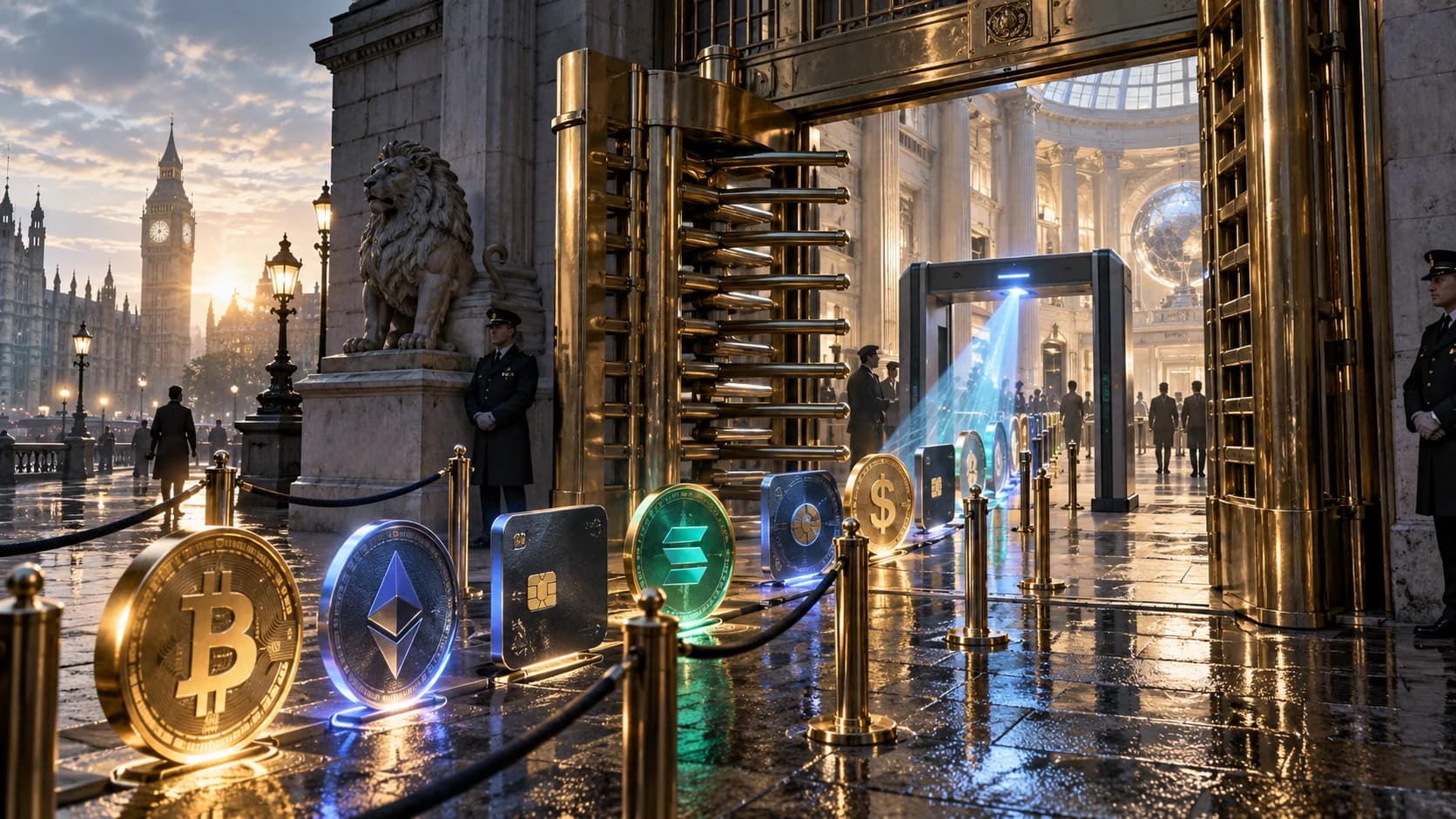
Iran has unveiled a Bitcoin-denominated marine insurance product called Hormuz Safe, aimed at cargo shipments passing through the Persian Gulf, according to a post from BitcoinNews circulating on May 17, 2026. The announcement claims the program has generated roughly $10 billion in revenue, a figure that has not been independently verified.
The framing matters more than the headline number. Most Persian Gulf cargo is insured through Lloyd's of London syndicates and a handful of European reinsurers, all of which screen counterparties against US and EU sanctions lists. Hormuz Safe sidesteps that gating by quoting and settling cover in BTC, which moves on a public blockchain rather than through SWIFT or correspondent banking rails.
A product, not a press release
Bitcoin-denominated insurance is a real product category, not a novelty wrapper. Cover is priced in BTC, premiums are paid in BTC, and claim payouts settle in BTC. That means insurers carry exposure to Bitcoin's price volatility between the date a premium is received and the date a claim is paid, which is normally hedged with derivatives or held against fiat reserves. Iranian state media have not described the hedging design, which is the first technical question any reinsurer would ask.
The $10 billion revenue claim is the part of the announcement most worth treating with caution. Global marine cargo insurance premiums were about $36 billion in 2024, per the International Union of Marine Insurance. A single national program reaching $10 billion in premiums in its first year would represent close to a third of the entire global pool, which is implausible. The number could refer to insured value rather than premium revenue, or it could be a state-media inflation of activity that has not yet been audited.
The Strait of Hormuz angle
Roughly 20% of the world's oil and a meaningful share of LNG passes through the Strait of Hormuz. Hull-and-cargo coverage for that traffic has hardened in 2025 and 2026 as regional tensions raised war-risk premiums. Several tankers operating in the Gulf have been seized or detained over the past two years, and underwriters have responded by tightening exclusions and raising rates for vessels with even tangential Iranian ties.
A parallel insurance pool quoted in BTC removes one of the friction points that has pushed sanctioned trade onto opaque rails. It does not remove the legal exposure for buyers in jurisdictions that enforce US secondary sanctions. A Greek or Turkish operator that accepts Hormuz Safe coverage still risks designation by OFAC if the underlying voyage involves a sanctioned counterparty.
The BTC settlement layer is the headline
Bitcoin is not normally thought of as an insurance currency. It is not a stable unit of account, and policyholders typically want predictable claim payouts denominated in the currency of their underlying liabilities. The decision to settle in BTC rather than a stablecoin like USDT or USDC is therefore deliberate. Stablecoins remain freezable at the issuer level, as Tether has demonstrated in past sanctions cases. Bitcoin held in self-custody is not.
That design choice is more meaningful than the revenue claim. It tells you the program is built for counterparties who care about resistance to seizure more than they care about price stability. For payments-rail watchers and on-chain analysts, it also creates a new class of large, predictable Bitcoin flows tied to physical cargo movements. Those flows will be visible to chain-surveillance firms even if the policyholder identities are not.
Three tests for whether this is real
Three things will tell us whether Hormuz Safe is a serious financial product or a statement of intent. First, whether independent shipping brokers begin quoting it alongside conventional cover, which would imply genuine acceptance by counterparties outside Iran. Second, whether OFAC issues a sanctions advisory against the program, which would mark it as material enough to warrant US response. Third, whether on-chain analysts can identify the wallet clusters holding the program's reserves, which would let observers verify or falsify the $10 billion figure rather than relying on state-media claims.
Bitcoin trades at $78,384 as of May 17, 2026, with the Fear and Greed index at 42 (Neutral). The asset's price has not moved meaningfully on the announcement, which suggests markets are treating it the same way they should: as an interesting design experiment with an unverified revenue tag, not as a confirmed shift in global insurance flows.
Overview
Iran has launched Hormuz Safe, a Bitcoin-denominated insurance product for Persian Gulf cargo. State-linked media claim $10B in revenue, a figure that does not survive basic sanity-checking against the global marine insurance market. The genuinely novel piece is the use of Bitcoin as the settlement currency, which makes payouts resistant to issuer-level freezes that affect stablecoins. Whether the program attracts non-Iranian counterparties, and how Western regulators respond, will determine if this is a real alternative rail or a contained sanctions-evasion experiment.