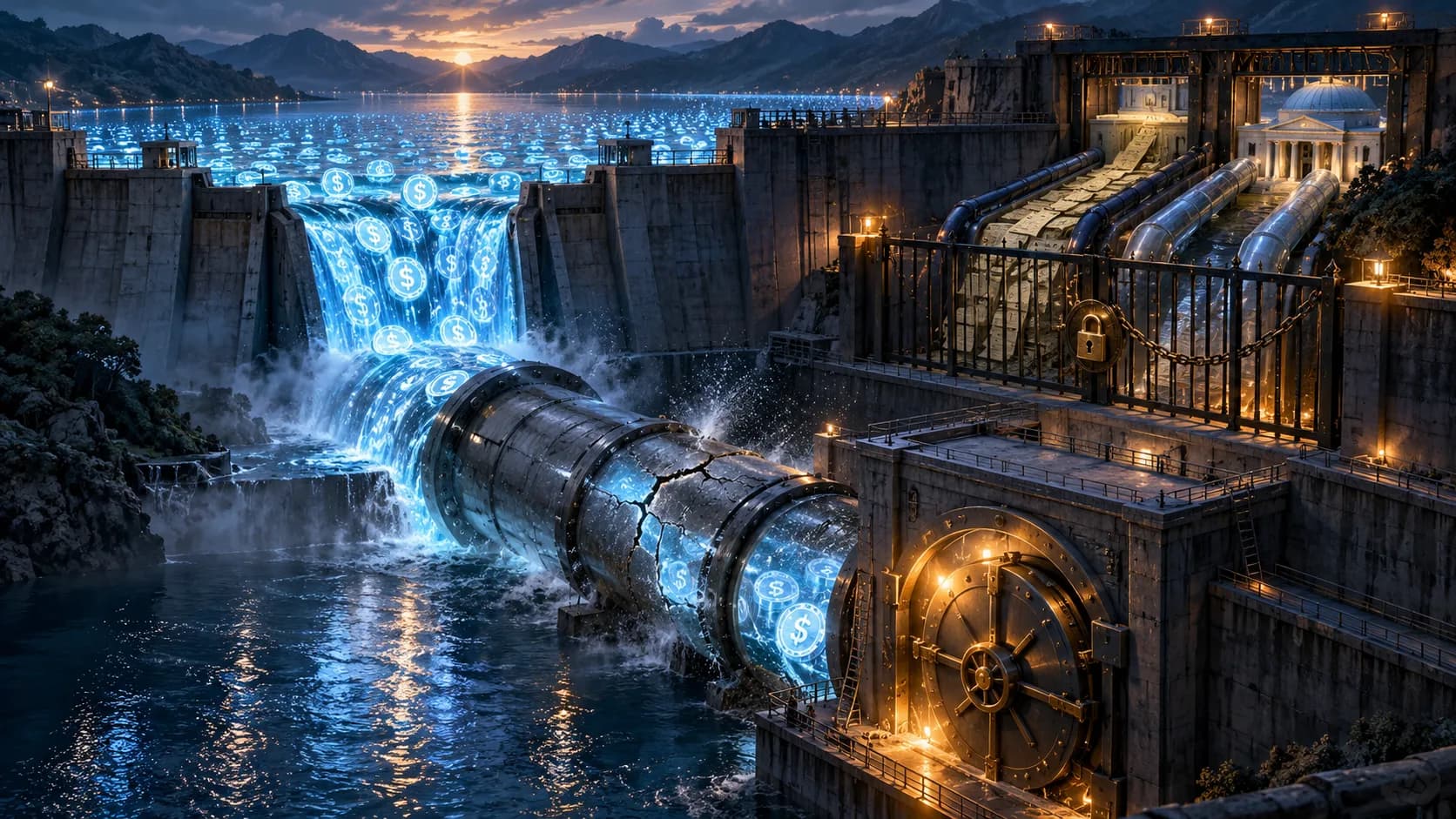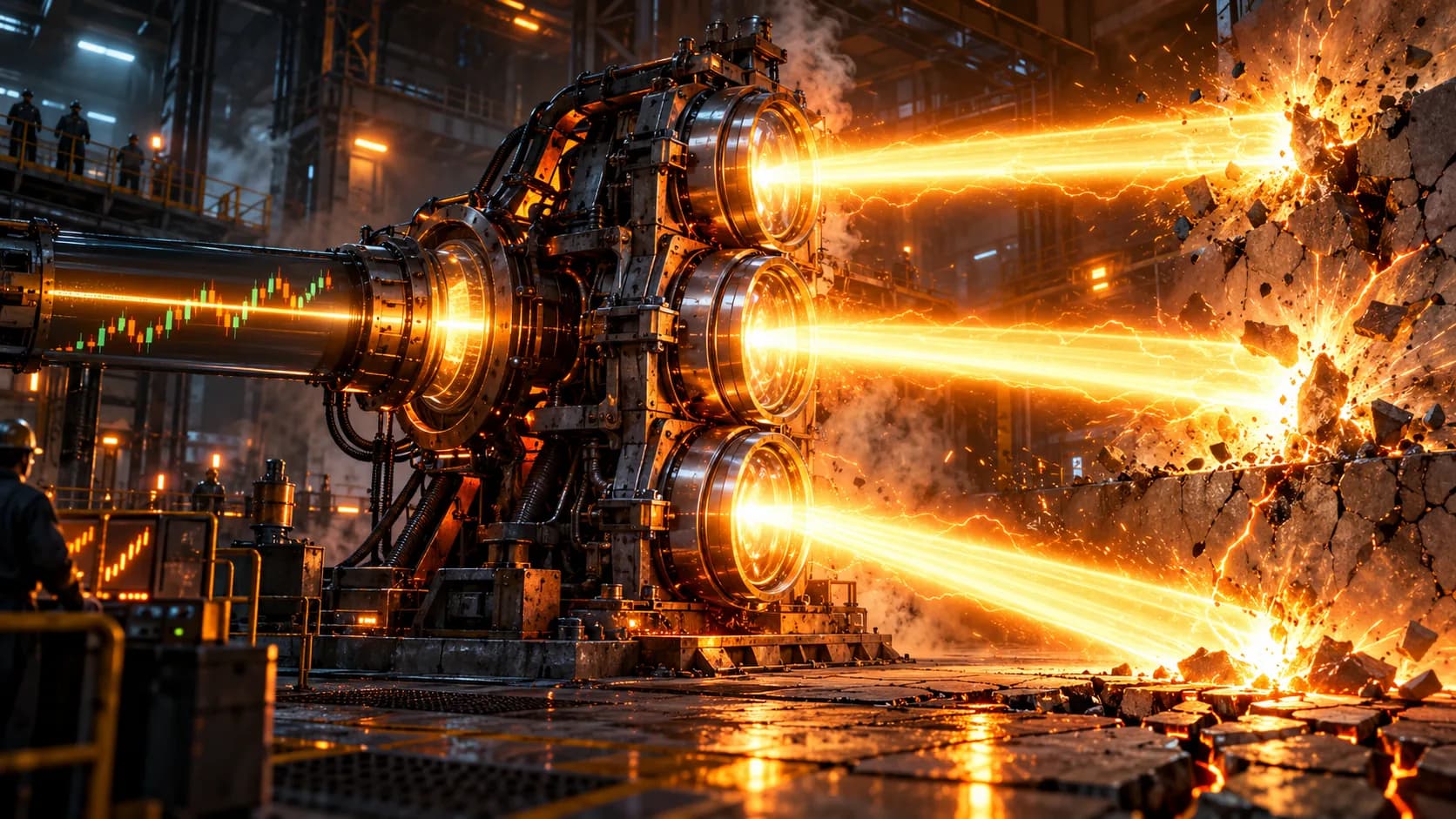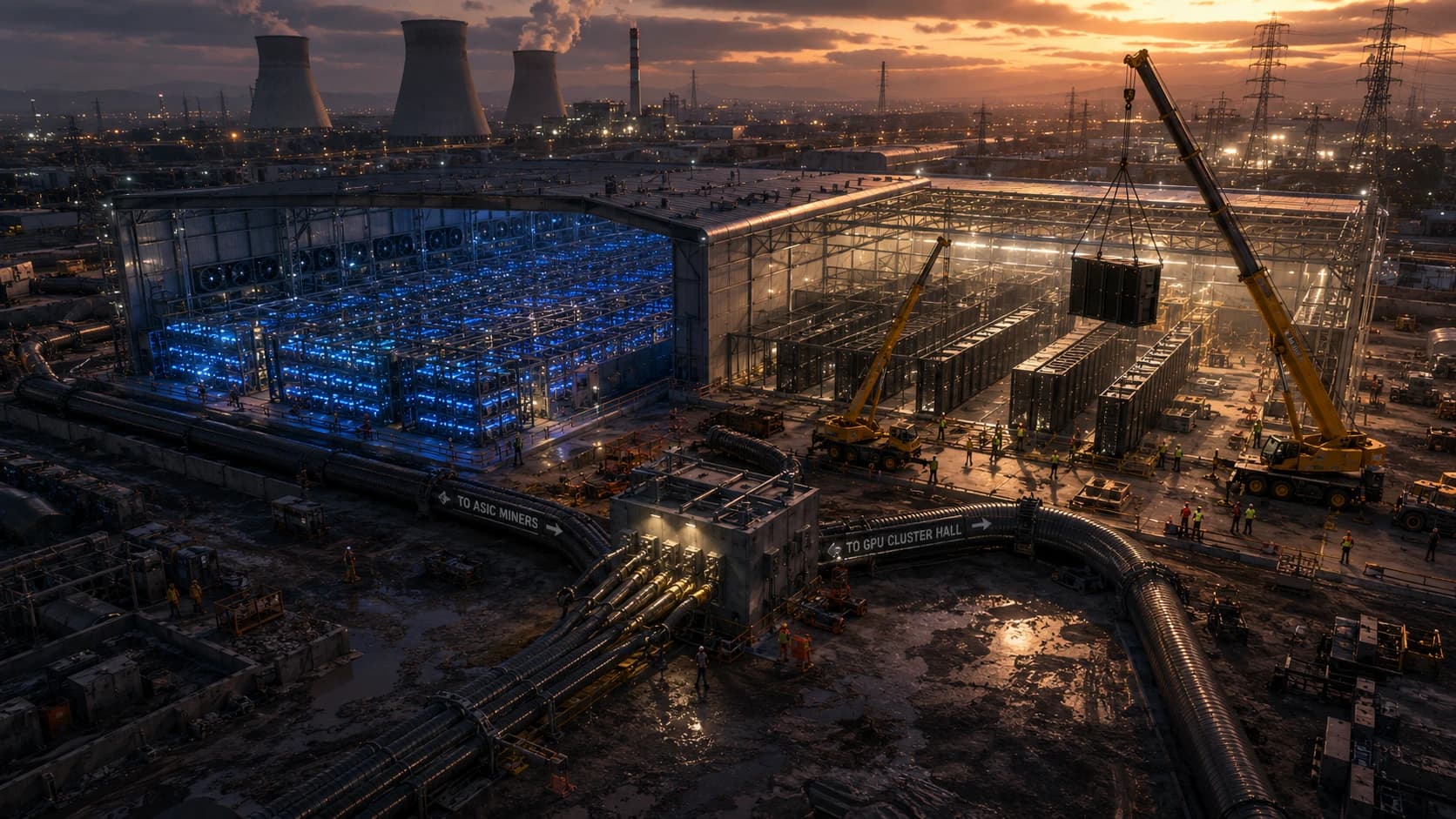
Bitcoin miners have signed more than $90 billion in AI infrastructure partnerships and now control roughly 27 GW of planned power capacity, according to a Bernstein research note circulated on May 20, 2026. The figures, flagged by CoinMarketCap on X, position the mining sector as one of the larger landlords of the AI data center buildout, not just operators of hashrate.
The numbers land while Bitcoin trades at $77,459, up 0.8% on the day but down 4.1% on the week, with the Fear and Greed index at 40 (Neutral) as of May 20, 2026. The macro picture for miners is mixed: BTC price pressure squeezes hashrate economics, while GPU-hosting contracts pay in dollars and lock in multi-year revenue.
A power play, not a hashrate play
The headline that matters is 27 GW. That is the planned, contracted, or optioned power capacity that publicly disclosed miners say they can route into AI workloads. For context, U.S. hyperscalers have been competing for individual sites in the 100 to 500 MW range. A miner with several gigawatts of substation rights, grid interconnects, and permitted land does not need to build a moat; it already has one.
Bernstein's $90 billion figure aggregates announced deals, framework agreements, and signed AI hosting contracts across the sector. The disclosure quality varies: some are firm dollar contracts, others are capacity commitments without final pricing. Treat the headline number as directional rather than locked-in revenue.
The miners that re-rated
Several listed miners have already moved from "energy company that mines bitcoin" to "energy company that rents power to AI." Core Scientific signed a multi-billion dollar hosting agreement with CoreWeave, then expanded it. IREN, Hut 8, Cipher, and TeraWulf have each announced AI-related capacity. Riot Platforms has pivoted parts of its Texas footprint toward hyperscale tenants. Marathon, traditionally the most pure-play of the bunch, has signaled openness to non-mining workloads.
The investor read-through is straightforward. A megawatt of permitted, interconnected power in Texas or the Mid-Atlantic now trades at a higher implied multiple inside an AI hosting contract than inside a mining P&L. That is why several of these stocks have decoupled from Bitcoin spot price moves over the past quarters.
The constraints that are hard to fake
Grid interconnect queues in the U.S. now run multi-year in most ISO regions. The miners that quietly secured substations during 2021 and 2022, when power was cheap and nobody else wanted it, are now sitting on permits that hyperscalers cannot reproduce on any reasonable timeline. That scarcity is the real asset behind the $90 billion in announced deals.
There are constraints to flag. AI hosting contracts demand far tighter uptime and lower latency than Bitcoin mining, which can tolerate curtailment and remote sites. Retrofitting an immersion-cooled ASIC barn into a GPU hall is not trivial. And miners that take on hyperscaler tenants assume real counterparty exposure: a single anchor customer can carry a site, and lose one.
The limits of the re-rating
It does not mean Bitcoin mining is going away at these companies. Several operators are running a hybrid model, where the hashrate business funds expansion and the AI hosting business funds the equity story. It also does not mean every miner can pivot. Smaller operators without permitted gigawatt-scale sites are not part of this trade.
The 27 GW figure also implies a structural shift in how the sector should be valued. If a meaningful share of that capacity is contracted to AI tenants at hyperscaler rates, the cash flows look more like an industrial REIT or a utility than a mining company. Bernstein has been making that argument for over a year; the dollar figure is the cleanest version of it yet.
The knock-on effect for crypto
For crypto cards, exchanges, and DeFi protocols, the indirect read is on energy. Mining capacity that gets diverted to AI is capacity that does not come back into hashrate at lower BTC prices, which has implications for difficulty adjustments and the cost floor of mining. It is also a reminder that the largest balance sheets in the public crypto sector are increasingly built around real-world power assets, not token holdings.
Overview
Bernstein estimates Bitcoin miners have announced more than $90 billion in AI infrastructure deals and control 27 GW of planned power capacity, making the sector one of the larger landlords in the AI data center buildout. The figure is directional rather than a contracted revenue number, but it confirms a shift already visible in equity prices: listed miners are being re-rated as power infrastructure businesses with a Bitcoin upside, not Bitcoin businesses with optional AI exposure.