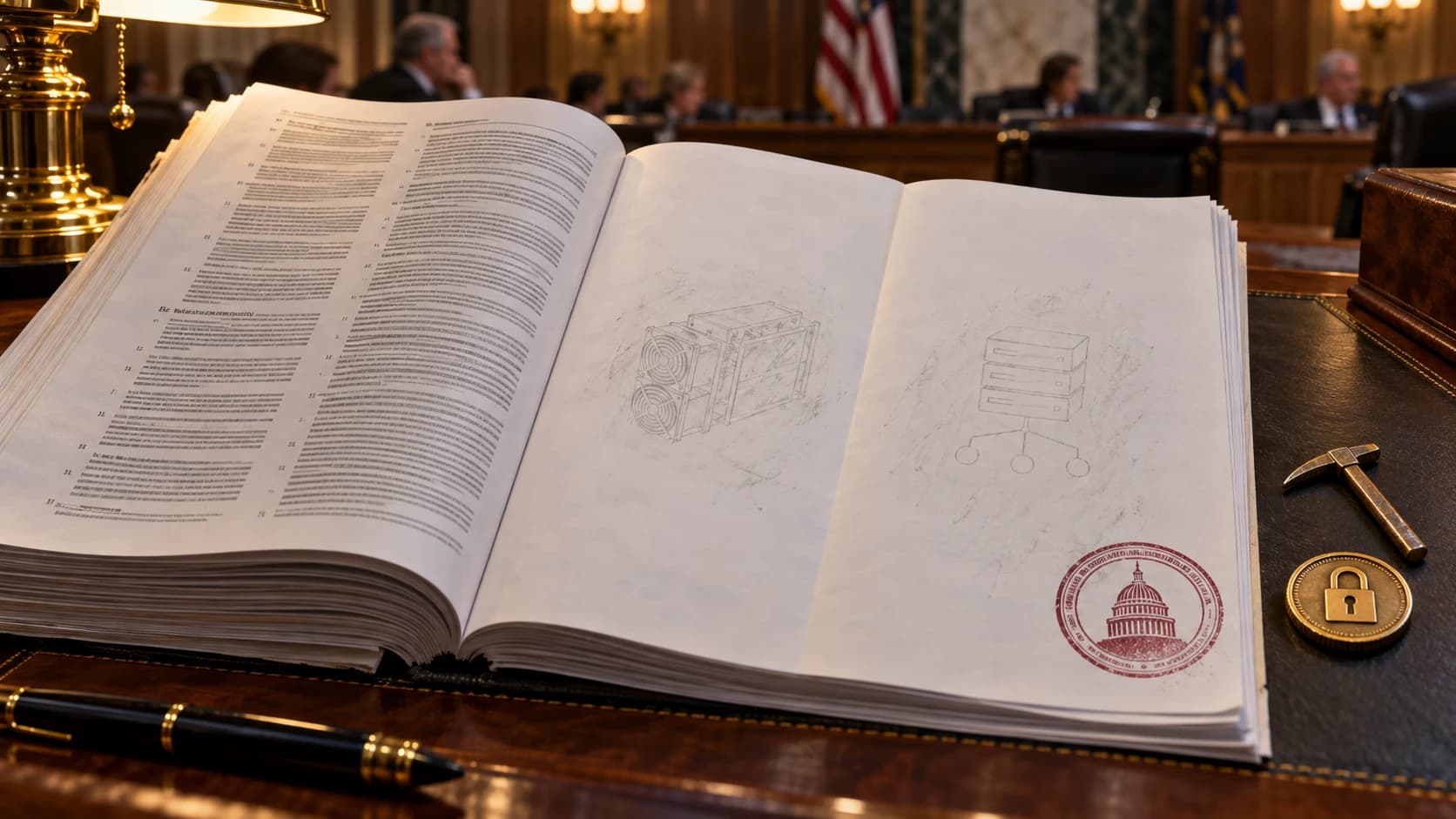
The House Ways and Means Committee is bringing a 114-page crypto tax package to markup this Wednesday, according to a Cointelegraph report posted early on September 15, 2026. The document runs long, but it stops short on one question that has followed the industry for years: how mining and staking rewards should be taxed. That guidance is not in the text.
For a bill of that length, the omission is the headline. Miners secure proof-of-work chains and stakers lock capital to validate proof-of-stake networks, and both receive newly issued tokens for the work. The tax treatment of those tokens, when income is recognized, at what value, and whether it happens at receipt or at sale, has never been settled in statute. A 114-page package that touches many corners of crypto and skips this one leaves the people who run the networks where they already were.
The question the bill did not answer
The core dispute is about timing. Under current practice, block rewards and staking rewards are generally treated as ordinary income at the moment they land in a wallet, valued at that day's price. Recipients then owe tax on that value even if they never sold, and even if the token's price falls afterward. That creates a cash-flow problem: a validator can owe tax on rewards that are worth far less by the time a bill comes due.
An alternative approach would defer the taxable event until the tokens are sold, treating newly minted rewards more like self-created property than like a paycheck. The distinction changes the math for anyone running a node at scale. The Cointelegraph report indicates the markup package does not resolve which approach applies. Reading that as a choice rather than an oversight is analysis, not reporting, but a 114-page draft that omits a long-running question is hard to read as accidental.
Who feels the gap
The uncertainty falls hardest on the operators who cannot easily restructure around it. Large mining firms and professional staking providers file detailed returns and carry the compliance cost of tracking every reward at its receipt-day value. Individual validators running a single machine face the same rules with far less tooling. Ether moved with the broader market rather than on this news, trading around $2,513 as of September 15, 2026, up 1.4% on the day, so this is a policy story rather than a price event.
The stakes are largest on proof-of-stake networks, where staking is the mechanism that keeps the chain running. If the tax treatment of rewards stays unresolved in a bill this size, participants keep planning around guidance and prior practice rather than a clear rule. That is a workable status quo for well-advised firms and a persistent headache for smaller operators in the United States, who watch US-based tax questions like this one for signals on whether running a validator at home is worth the paperwork.
Reading a long bill by what it leaves out
A markup is the stage where a committee debates and amends a bill before advancing it, so the current text is a starting point, not a final law. Provisions can be added or struck during the session. The absence of mining and staking language now does not foreclose an amendment later, and it does not tell us why the drafters left it out. Possible reasons range from unresolved internal disagreement to a decision to handle the issue in separate legislation or leave it to Treasury guidance. The source does not specify, so any single explanation is speculation.
What the report does establish is narrow and useful: the committee is advancing a substantial crypto tax package, and the mining and staking question is not in it. Everything past that, including how the omission plays out, waits on the markup itself and whatever text emerges from it.
For everyday crypto users, the practical takeaway is small for now. Spending, trading, and holding are not the subject of this gap. The people who should track Wednesday's session closely are the ones earning protocol rewards, because the rule that governs their tax bill is still, by this account, unwritten.
Overview
The House Ways and Means Committee is taking a 114-page crypto tax package to markup on Wednesday, and it does not include rules for taxing mining and staking rewards, per Cointelegraph on September 15, 2026. The omission leaves network operators in the same unsettled position on reward timing and valuation they have occupied for years. Markup could still add language, so the outcome depends on the session and the final text.