This was one of those weeks where the important crypto card news was split between shiny user features and less comfortable infrastructure updates.
Bitget pushed its Visa card further into APAC. COCA added Apple Pay. RedotPay made European funding look more like a bank transfer. Wirex and Gate.io kept building merchant and developer rails. And xPlace had to explain what the Drift exploit means for its savings and credit system.
Bitget Card Expands in APAC
Bitget said the Bitget Card, powered by Visa, is now available to all Bitget users in selected APAC regions.
The pitch is straightforward: instant activation, zero setup costs, use in 180+ countries, and up to 20% cashback. The announcement was also the biggest card-specific post in this scrape by reach, with more than 175,000 views.
For Bitget, this is the kind of card update that matters more than another trading campaign. It moves the product from exchange balance to daily spending, which is where crypto cards either become useful or quietly get ignored.
xPlace Discloses Drift Exposure
xPlace gave users a detailed update after the Drift Protocol incident, saying XPlace users had about $544,000 of collateral and $152,000 of loans within Drift at the time of the exploit, with net TVL of about $392,000.
The company also said $113,000 of the collateral was team capital, which means the team has direct exposure alongside users.
That does not mean the full amount is lost. xPlace has been careful on that point. It said the potential impact depends on Drift's official recovery plan, that cash mode and bank transfers remain operational, and that savings and credit are being migrated to a more secure protocol.
xPlace also posted follow-up updates on April 3 and April 6, saying it was in direct contact with Drift and had moved to bi-daily calls.
For crypto card users, this is the important part: yield and credit features are not just marketing extras. They depend on underlying protocols. When that protocol layer breaks, cardholders can feel it even if the card itself still works.
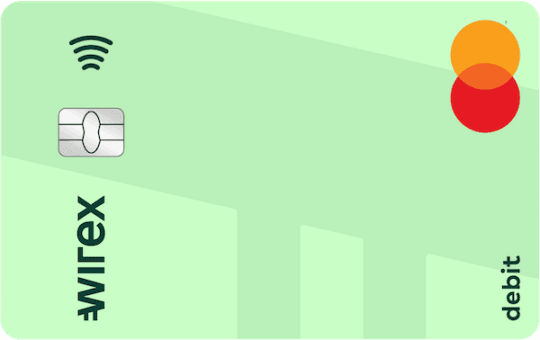
Wirex Brings Cards and Accounts to Stellar
Wirex announced a partnership with Ultra Stellar, the team behind LOBSTR and StellarX, to bring native Stellar payment infrastructure to projects building on Stellar.
The thread says the setup will support cards, accounts, payouts, and yield for Stellar projects. That puts Wirex in a familiar position: less "one more consumer card" and more infrastructure provider for apps that want stablecoin wallets to become spendable products.
This is the B2B side of crypto cards that keeps getting more important. If wallets and fintech apps can plug into issuer/payment infrastructure without building every piece themselves, more crypto balances can move from holding to spending.
Gate Pay Adds Stablecoin Subscriptions
Gate.io launched Gate Pay Web3 subscription payments: recurring stablecoin payments on EVM chains using USDT and USDC.
The merchant pitch includes flexible billing, customizable discounts, and API integration. Gate also kept pushing the consumer side of the stack with Gate Card posts around Google Pay, global spending, USDT/BTC/ETH payments, cashback, and higher VIP limits.
Subscriptions are a useful test case for crypto payments. One-off payments are easy to market. Recurring billing is where payment rails either become practical or stay a demo.
RedotPay Opens Easier EUR and GBP Funding
RedotPay said it has made EUR and GBP funding easier, with zero fees on incoming EUR transfers, personal EUR account details, and GBP transfers via Faster Payments.
The update is live for users in the UK, Romania, Germany, France, Italy, Spain, and more than 24 additional countries, according to the post.
This is quieter than a card launch, but it is the kind of update users actually feel. A crypto card is only as useful as its funding path. If adding money feels like a normal bank transfer, the product gets much closer to everyday use.
COCA Adds Apple Pay
COCA said the COCA Mastercard now works with Apple Pay.
Users can add the card to an iPhone or Apple Watch and pay anywhere contactless payments are accepted. COCA also kept pushing its subscription cashback flow this week, including 50% savings across supported subscription categories when users top up through Aurora.
Small feature, large usability impact. Once a card is in Apple Pay, it stops feeling like a crypto product you have to remember and starts behaving like a normal spending tool.
Quick Hits
- Tria reminded users that Rewards Season 2 ends April 20, with rewards in USDT and staked TRIA.
- Bleap turned its $6 million seed raise into a user campaign, including a 1 BTC giveaway.
- Ready pushed its Ready Travel feature with a "$1,400 saved in one click" claim.
- Avici said its first decision-market proposal, "Go Big or Go Home", passed by a large majority.
- Ledger added Stablecoin Yield inside Ledger Wallet, powered by Kiln and integrated with Morpho, Aave, and Compound.
- Uphold kept promoting the Exa Credit Card as a way to borrow against BTC, ETH, and USDC while keeping market exposure.
- Uphold also pushed the debit-card side with an "Earn XRP IRL" post for up to 4% back in XRP. US only.
- Phantom kept the card adoption drumbeat going with a simple question: have you created your Phantom card yet?
- Cypher promoted a Premium card bundle that includes a free metal card and SafePal hardware wallet.
- Plutus teased the return of McDonald's perks and cashback.
- Jupiter Global said it pays USDC rewards straight to user balances, without the "earned it, then it expired" problem.
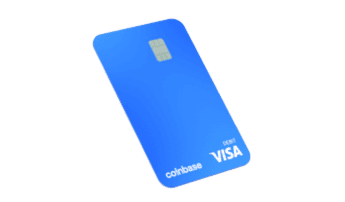
- Coinbase launched the x402 Foundation under the Linux Foundation, framing it as an open standard for payments over HTTP.
Overview
The week had two clear tracks.
On the user side, Bitget, COCA, RedotPay, Gate, Tria, Uphold, Phantom, Cypher, Plutus, and Jupiter all pushed card or spend-adjacent features that make the category easier to use, fund, or talk about.
On the infrastructure side, Wirex moved deeper into Stellar, Gate Pay added recurring stablecoin billing, Coinbase pushed x402, and xPlace gave a real-world reminder that savings and credit layers depend on the protocols underneath them.
That is the crypto card market right now: more normal payment UX on the front end, more protocol plumbing behind the scenes, and more vendors trying to make sure users notice both.
If a vendor you follow shipped something we missed, let us know.