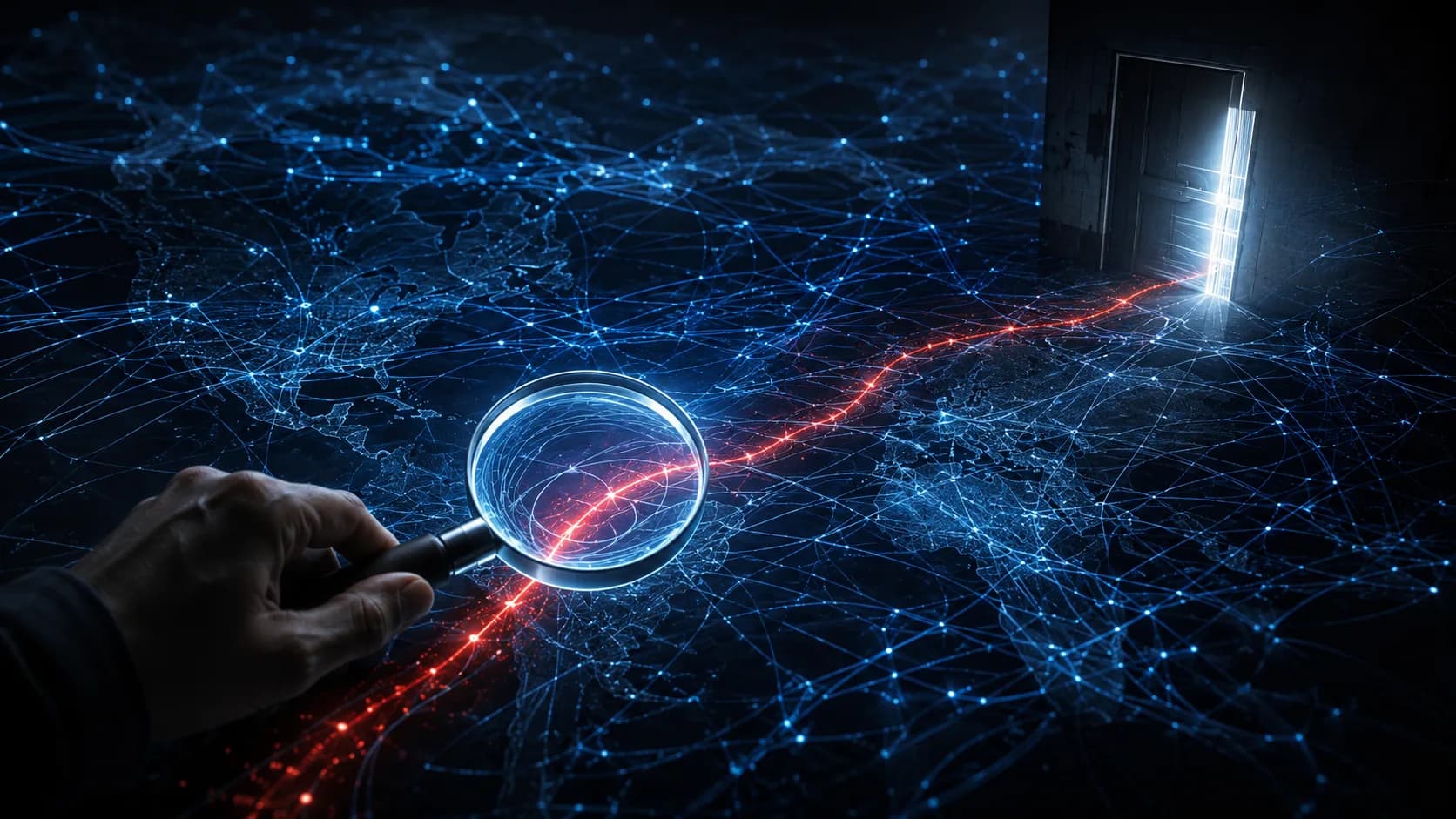
Binance said it has partnered with the nonprofit STOP THE TRAFFIK to gain specialist intelligence and staff training for detecting crypto activity tied to human trafficking and child exploitation. The announcement, shared on July 24, 2026, frames the tie-up as a way to sharpen how the exchange spots the financial footprints these crimes leave onchain.
The partnership is narrow in scope but specific in intent. STOP THE TRAFFIK is an anti-trafficking organization that studies how criminal networks recruit, move, and profit from victims. Binance's compliance and investigations teams get access to that domain knowledge, plus training designed to help analysts recognize the transaction patterns that separate exploitation-linked funds from ordinary trading and payments.
The pattern problem behind trafficking finance
Trafficking money rarely announces itself. It moves through the same rails as legitimate activity, often in small amounts, layered across many wallets and cash-out points. An exchange looking at raw transfers sees numbers, not context. The value a group like STOP THE TRAFFIK adds is the context: which routing behaviors, timing patterns, and cash-out geographies tend to correlate with coercion and forced labor rather than normal commerce.
That is the core of the deal. Blockchain analytics can trace where funds go, but interpreting whether a cluster of transfers reflects a trafficking operation still needs human expertise about how these crimes actually work. Pairing onchain tracing with subject-matter intelligence is meant to lower the false-negative rate, the cases that slip through because no one recognized the shape of the money.
Compliance as the real product
For an exchange the size of Binance, investigations are not a side function. Anti-money-laundering obligations, sanctions screening, and law-enforcement cooperation are the price of operating across dozens of jurisdictions, and the intensity of that work has climbed as regulators tightened expectations. A partnership aimed at a specific harm category fits a broader pattern across the industry, where large platforms increasingly bring in outside specialists rather than building every capability in-house.
It also lands in a period when crypto firms are being held to sharper compliance standards. In the UK, new rules put crypto businesses at risk of severe penalties for failing to identify wallets linked to illicit activity. Pakistan recently stood up a dedicated crypto crime unit focused on money laundering. Against that backdrop, an exchange investing in better detection of the worst-abuse categories is both a genuine safety step and a signal to regulators that it takes the mandate seriously.
None of this changes how ordinary users interact with Binance day to day. The work happens in the background, inside compliance systems most customers never see. The practical effect, if it works as intended, is fewer trafficking-linked accounts operating undetected and more usable intelligence handed to investigators and law enforcement.
Onchain transparency cuts both ways
The uncomfortable truth for criminals is that public blockchains keep a permanent record. The same transparency that privacy advocates worry about is what makes this kind of detection possible at all. Cash leaves no ledger. A stablecoin transfer does, and once an analyst flags a wallet, its entire history and forward flow become traceable.
That permanence is why exchange-level detection matters so much. Most illicit crypto eventually needs an off-ramp to become spendable money, and centralized exchanges are the chokepoint where identity checks apply. A well-trained investigations desk at a major off-ramp can interrupt flows that would be invisible on a peer-to-peer or minimal-verification path. Improving detection at that chokepoint is arguably the highest-leverage place to act.
The announcement did not include metrics, a timeline, or details on how results will be measured or reported. Binance described the collaboration in terms of intelligence access and training rather than a formal reporting framework, so the scale of its impact is not yet possible to assess from the disclosure alone.
Overview
Binance has partnered with STOP THE TRAFFIK to strengthen how it detects crypto tied to human trafficking and child exploitation, combining the nonprofit's domain intelligence with the exchange's investigations and training. It is a compliance-side initiative, not a consumer product, and it reflects a wider industry move toward specialist partnerships as regulatory scrutiny rises. The disclosure is light on measurable detail, so its real effect will only be clear if Binance later shares outcomes. For now, it is a concrete example of how onchain traceability and human expertise are being combined at the exchange layer, the point where most illicit funds must eventually surface.