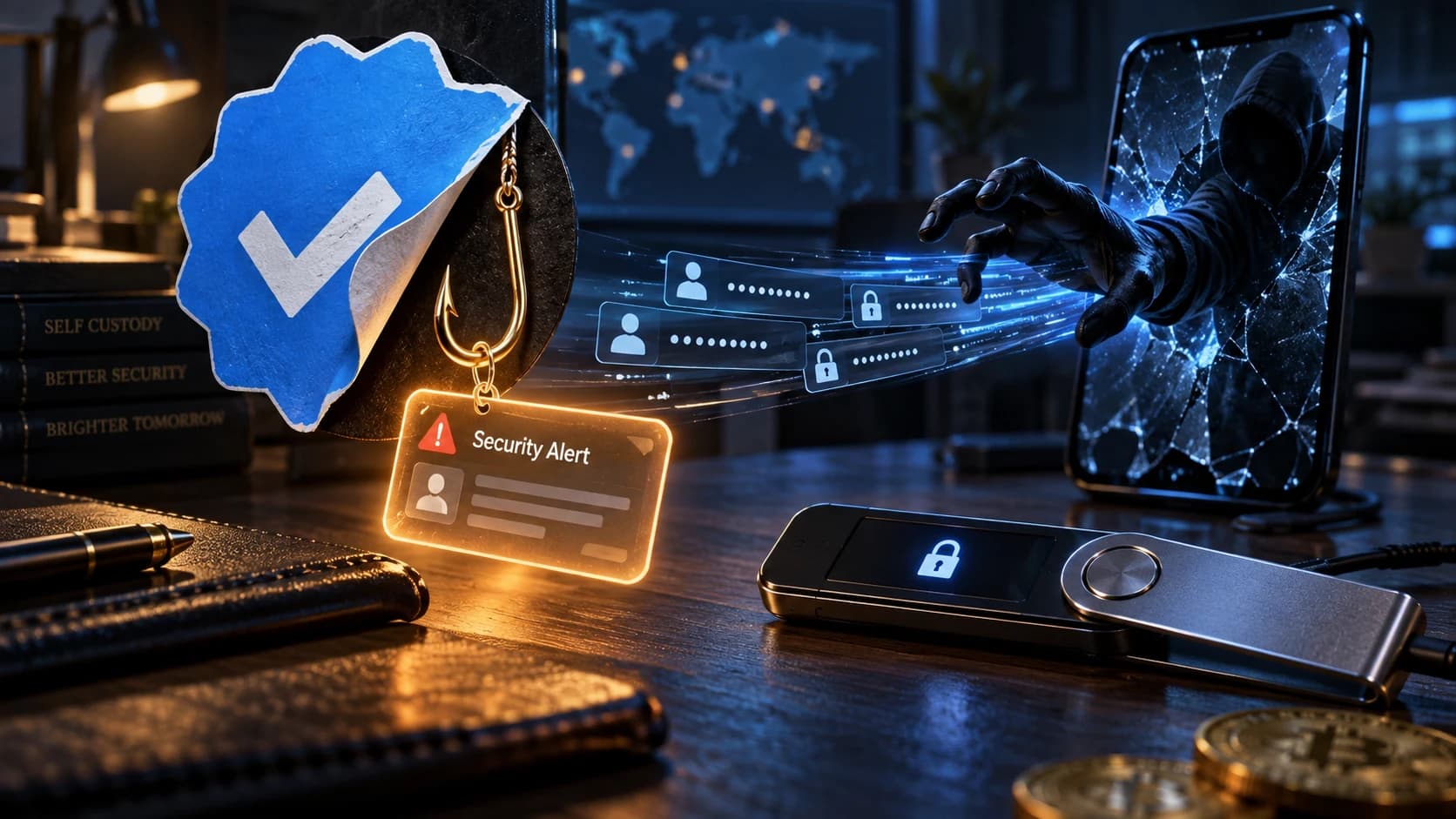
Consensys, the company behind the MetaMask wallet, has confirmed that a developer later tied to North Korea contributed to its codebase before the firm identified the risk and cut off access. The disclosure was reported on July 18, 2026 by WuBlockchain, citing statements from the company.
The admission lands at a jittery moment for crypto markets. Bitcoin sat at $63,873 (down 0.1% on the day) and Ether at $1,839 (down 1.5%) as of July 18, 2026, with the Fear and Greed Index reading 34, or "Fear." Security disclosures involving the most widely used self-custody wallet tend to travel fast in that kind of tape.
The disclosure itself
Consensys said a contributor who worked on MetaMask-related code was subsequently linked to North Korea, and that the company revoked the person's access once the connection surfaced. The firm stated it found no evidence that malicious code was introduced. That distinction matters: contributing to a repository is not the same as shipping a backdoor, and MetaMask's code passes through review before it reaches production.
Consensys is the primary source here, and the claim is narrow. There is no allegation of stolen funds, no compromised release, and no user-facing exploit tied to this developer. What the company is describing is an infiltration attempt at the hiring layer, caught after the fact.
A pattern, not an isolated case
North Korean IT workers posing as remote engineers have become one of the most persistent staffing threats in crypto. The playbook is consistent: operatives use fabricated or stolen identities, pass interviews, take contract or full-time roles at Web3 companies, and route their wages back to the regime. US authorities and blockchain investigators have documented the scheme across dozens of firms over the past two years, and the money involved runs into the hundreds of millions.
For an open-source project, the exposure is different from a centralized exchange. Anyone can propose changes, and popular repositories accept contributions from a global pool of developers. The MetaMask codebase is public, which is a security strength because thousands of eyes can inspect it, and also an attack surface because a bad actor only needs to get one useful-looking commit past review.
The same week brought a related reminder of how state-linked actors probe the supply chain. Earlier reporting has covered how Telegram's infrastructure wobble exposed crypto's dependency risk, and US sanctions work has repeatedly targeted crypto rails, including the Treasury freeze of $130M in wallets tied to Iran's central bank. Infiltration of a developer team is the human-layer version of the same problem.
The stakes for wallet and card users
MetaMask is not just a browser extension. It sits underneath a growing stack of spending products, including the MetaMask metal card and its virtual counterpart, which let users spend from balances they hold in self-custody. When the wallet layer is the same software that authorizes card top-ups and on-chain transfers, code integrity is not an abstract concern. It is the thing standing between your keys and an attacker.
Self-custody removes counterparty risk of the FTX or Wirecard variety, where an insolvent operator freezes balances. It does not remove software risk. The trade is that you, not a custodian, are trusting the client code that signs your transactions. That is why disclosures like this one carry weight even when no funds moved: the whole model rests on the assumption that the wallet does exactly what it claims and nothing else.
Practical takeaways for users are modest but real. Keep MetaMask and any wallet extension updated so you are running reviewed, current builds. Treat hardware wallets as the signing layer for large balances, since an isolated signer limits what compromised client software can do. And be skeptical of unofficial forks or sideloaded builds, which strip away the very review process that caught this contributor.
Consensys's account, and its gaps
Consensys has confirmed the contribution happened and that access was revoked. It has said it found no malicious code. It has not, in the reported statements, detailed how long the developer had access, what components they touched, or how the North Korea link was established. Those gaps matter for a full assessment, and readers should treat the current picture as partial until the company or independent investigators publish more.
For now, the story is best read as a caught infiltration attempt rather than a breach. That is a meaningful difference, but it is not an all-clear for the industry. The hiring pipeline remains the softest entry point into crypto companies, and MetaMask's scale makes it a standing target.
Overview
Consensys disclosed that a developer later linked to North Korea contributed to MetaMask's codebase before the firm revoked access, and it says it found no evidence of malicious code. The episode is another data point in the long-running DPRK IT-worker infiltration campaign against crypto firms. For users of MetaMask's wallet and its spending cards, the practical response is unchanged: run updated, official builds, lean on hardware signers for large balances, and remember that self-custody trades away counterparty risk for software-integrity risk.