Crypto Card Marketing Has a Compression Problem
A lot of crypto card marketing is just the cleanest possible version of a more complicated sentence.
A rewards rate becomes the highest possible tier. A fee table becomes "zero fees." A regional rollout becomes "global." By the time the claim reaches the top of the page, most of the conditions that make it useful are gone.
That does not mean the headline is fake. It usually means it is incomplete.
Here are seven crypto card claims that tend to sound better than they are once you read the terms, check the tier table, and look at how the card actually works.
1. "Up to 8% Cashback"
The two most important words are not the number. They are "up to."
COCA advertises up to 8% cashback, but the free tier is much thinner and the top rate only appears deeper in the staking ladder. Getting there means staking 30,000 COCA tokens, which is roughly $38,400 at current prices. Crypto.com does the same thing: the highest number belongs to a private tier that almost nobody is using as a casual everyday card, and the Prime tier requires a $1,000,000 CRO stake.
Bitget also leads with its maximum rate even though the base tier is far lower. Reaching 8% means holding 20,000+ BGB, or roughly $38,800 at current prices.
That is the pattern to watch: the number in the headline is often the outer edge of the card, not the version most people will actually get.
We break this pattern down further in When Cashback Caps Erase Rewards Value.
2. "Zero Fees"
Zero-fee language almost never means zero total cost. It means one layer of visible fees is zero.
A card can charge 0% annual fee, 0% FX fee, and 0% top-up fee, and still be expensive because the real cost sits in the conversion spread, a weekend markup, or the funding path.
That is why some "free" cards end up costing more than cards with a simple, visible fee. The pricing is just pushed into a place most users do not look first.
Plutus is a good example. The rewards headline can look attractive until the paid plan and FX layer are doing more work than the cashback. Ledger is another: a low rewards rate and meaningful FX cost are not a great combination for international spending.
"No fee" and "low cost" are not the same claim. We mapped the real per-$1,000 cost in What Crypto Cards Actually Cost.
3. "Available Globally"
This one is often true in spirit and useless in practice.
The problem is that "global" can mean a lot of different things.
A card may have wide vendor coverage but limited physical shipping. A virtual card may be available where the premium metal tier is not. A brand may be recognized globally while the actual product is only live in one market.
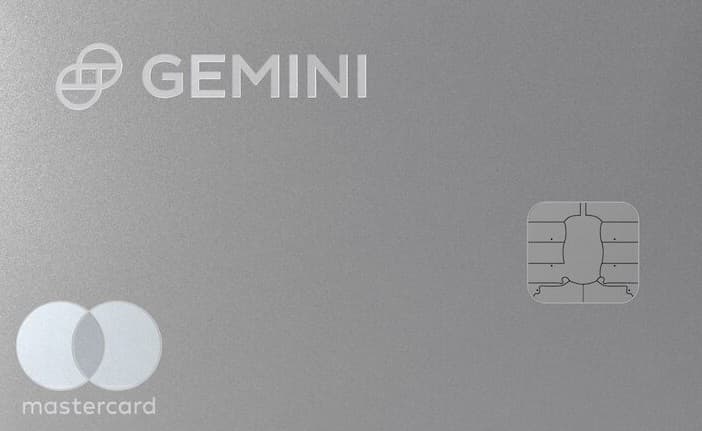
MetaMask Metal is not broadly available outside the US. Gemini is still a US product. Gnosis Pay remains EEA-focused. Ready is EEA and UK only.
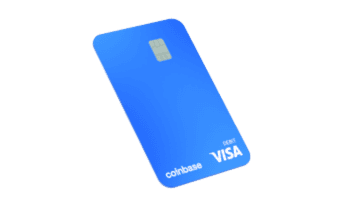
A card can be "global" enough to sound widely available while being unavailable in your country, your state, or your specific card variant. Gnosis Pay is EEA-only. Ready is EEA and UK only. Coinbase and Gemini are US-only.
The failure mode is not just application rejection. It is building your shortlist around a card that was never a realistic option for you.
4. "Self-Custody Card"
This sounds binary. In practice, there are layers.
A card can feel self-custodial in one part of the flow while still depending on a third-party processor, a managed spending layer, or a more controlled funding path elsewhere. The real distinction is usually not pure self-custody versus no self-custody. It is what part of the stack you actually control.
That is why the category runs from clearly custodial products like Crypto.com through hybrid structures like Nexo to genuinely stronger self-custody setups like COCA, Gnosis Pay, and MetaMask.
But even "self-custody" cards depend on a card network (Visa or Mastercard) and an issuing bank. If the issuer goes down, your on-chain funds are safe, but the card stops working. That is a real improvement over fully custodial cards, where the issuer controls both the funds and the card. It is not the same as "you control everything."
Our 2026 Crypto Card Custody Bible goes deeper on the categories, and the self-custody benefit page tracks which cards actually qualify.
5. "Tax-Free Spending"
This is the claim that causes the most damage because it compresses legal complexity into something that sounds absolute.
Sometimes it means stablecoin spending avoids volatility-related gains. Sometimes it means borrow-to-spend (like ether.fi) avoids a taxable disposal in certain jurisdictions. Sometimes it refers to a country with zero capital gains tax, like the UAE or Panama.
It almost never means "there are no tax consequences."
The problem is not that the phrase is always false. It is that it gets used for several different situations that should not be treated as interchangeable.
The biggest mistake is importing one country's logic into another. A structure that is efficient in Singapore or Georgia can be completely different in Japan or India. Even within Europe, the treatment of rewards, disposals, and holding periods can be different enough to change the conclusion.
That is why tax-friendly and tax-free should be read as two different claims.
6. "Premium Perks Included"
Sometimes they are. Sometimes they are attached to a tier the landing page is not showing you.
Airport lounge access is the cleanest example. Crypto.com Icy White includes LoungeKey access, but that card requires a $50,000 CRO stake. The Ruby Steel at $500 CRO does not include it. Plutus rebates on Netflix, Spotify, and Amazon Prime, but only on paid subscription plans starting at GBP 6.99/month, and only 1-3 perks depending on the tier.
Tria is a good example of how this gets blurred. Some pages fold Visa network perks into a broader "travel insurance" story even though issuer-provided coverage and network benefits are not the same thing.
The same thing happens with subscription rebates. The perk is real. The part that gets flattened is the price of the tier needed to unlock it.
We dug into that in Death of the Rebate.
7. "Best for Travelers / Nomads / Expats"
This is where marketing stops being descriptive and starts being editorial without doing the editorial work.
To call a card "best for travelers," you would need to check FX costs, stablecoin funding quality, ATM treatment, acceptance and wallet compatibility, country availability, and whether the rewards survive real-world travel spend patterns.
Most cards win one of those dimensions and get marketed as if they win the whole use case.
A card with strong lounge perks but a high FX fee is not automatically the best travel card. A card with clean stablecoin spending but no physical card option is not automatically the best expat card. A high-rate rewards card with a tight cashback cap is not automatically the best nomad card.
The reason these use cases get messy is that they are bundle claims. They combine fees, custody, availability, ATM policy, wallet support, and rewards into one label. Most cards only win part of that bundle.
That is why the answer is rarely one universal card. It is usually a shortlist.
How to Read Crypto Card Marketing
The fix is not cynicism. Most crypto card landing pages are not fiction. The data is usually real, somewhere in the terms. The problem is compression.
When you see a big claim, translate it:
- "Up to 8% cashback" means under certain tier and cap conditions
- "Zero fees" means zero visible fees in one layer
- "Available globally" means available in some countries, for some users, on some product variants
- "Tax-free spending" means possibly more tax-efficient in a specific structure and jurisdiction
That small translation step is what separates a headline from a useful comparison.
If a claim on a card page does not specify the tier, the cap, and the country, treat it as incomplete until you find the missing pieces.