
Coinbase vs Ledger
Side-by-side comparison of Coinbase and Ledger crypto cards. Data sourced from official issuer documentation and verified by SpendNode.
Comparing 2 Cards
Side-by-side comparison of features and benefits
| Attribute | 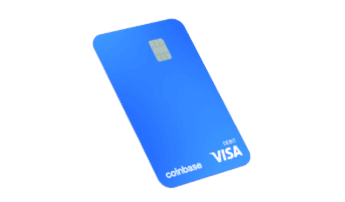 |  |
|---|---|---|
| Max Cashback | 4%Highest | 1% |
| Annual Fee | FreeBest | FreeBest |
| FX Fee | 0% | 1.75% |
| Custody Model | Custodial | Custodial |
| Network | VISA | VISA |
| Regions | US | USEEAUKLATAM |
| Supported Assets | 4+ assets USDCBTCETHSOL | 4+ assets BTCETHUSDCUSDT |
| Cashback | Yes | Yes |
| Staking | No | Yes |
| Points | No | No |
| Airdrops | No | No |
| Lounge access | No | No |
| Subscription rebates | No | No |
| Metal card | No | No |
| Virtual Cards | No | Yes |
| Physical Cards | No | Yes |
| Visa | No | No |
| Mastercard | No | No |
| Apple Pay | No | No |
| Google Pay | No | No |
| Self-custody spend | No | No |
| Stablecoin spend | No | No |
| No annual fee | Yes | Yes |
| No FX fee | Yes | No |
| ATM free allowance | No | No |
| No KYC | No | No |
| Virtual vs Physical | No | Yes |
| Debit vs Prepaid | No | No |
| Best For | Best for Cashback | Best for Yield |
Note: All data verified as of February 2026. Rewards and fees may vary based on your spending tier and region. Check each card's detailed page for complete terms.
Coinbase vs Ledger: Key Differences
US-regulated exchange ecosystem versus hardware-secured [self-custody](/crypto-cards/self-custody/) - two fundamentally different security models competing in the American market. [Coinbase](/crypto-cards/coinbase-card/) offers a dual-card system (prepaid Visa with rotating rewards + Amex credit with up to 4% BTC back) with zero fees, FDIC insurance, and full Amex purchase/travel protection. [Ledger](/crypto-cards/ledger-cl-card/) connects your physical hardware wallet to a Visa debit card with 1% [cashback](/crypto-cards/cashback/), 1.75% FX + 1.75% conversion fees, and the guarantee that your private keys never touch the internet. Both serve the US. Only Ledger serves Europe and Latin America. The question is whether Coinbase's superior economics and regulatory backing outweigh Ledger's hardware-grade key sovereignty.
The right choice depends on your priorities: cashback rates, regional availability, custody model, and which ecosystem you already use. Below, we break down who should choose each card.
Geographic Reality: US Head-to-Head, Ledger Everywhere Else
The direct comparison only applies to US users. Outside America, Ledger wins by default.
Coinbase serves the US only (all states except Hawaii for prepaid Visa; excluding territories for Amex). Two card products: (1) Prepaid Visa (Pathward, N.A., FDIC-insured) with rotating crypto rewards and zero fees - no annual, no FX, no ATM from Coinbase. (2) Coinbase One Amex credit card ($49.99/year membership) with tiered BTC back: 2% base, 2.5% at $10K+ AOC, 3% at $100K+ AOC, 4% at $300K+ AOC. Higher tiers capped at $10,000/month in purchases (then 2%). Stainless steel 17g. Full Amex protection: Retail Protection, Extended Warranty, Trip Cancellation, Car Rental Insurance. Assets: USDC, BTC, ETH, SOL (Visa); BTC only (Amex rewards). $75,000/month spending (Visa), $10,000/month at higher tiers (Amex). Publicly traded (NASDAQ: COIN). 4.7 stars, 1.79M App Store reviews.
Ledger serves US, EEA, UK, and LATAM. Visa debit. Self-custodial via hardware wallet - private keys stored on physical Ledger device, transaction signing on-device. 1% cashback in BTC or USDC. $0 annual fee. 1.75% FX, 1.75% crypto conversion, 1.5% ATM. 4 assets (BTC, ETH, USDC, USDT). $15,000/month spending, $500/day ATM. BTC yield via Lombard/Figment in Ledger Live. 4.9 stars, 14,446 App Store reviews.
Both have no annual fee (Coinbase Amex requires Coinbase One membership but the card itself is free). Both operate on Visa (Coinbase also has Amex). Coinbase is custodial with FDIC backing. Ledger is self-custodial with hardware security.
Net Returns: The Gap Is Massive
Coinbase charges 0% on everything. Ledger charges 1.75% on FX and 1.75% on crypto conversions. This fee asymmetry makes the cashback comparison lopsided.
| Scenario | Coinbase Visa (approx. 2%, 0% fees) | Coinbase Amex (4%, $4.17/mo sub) | Coinbase Amex (2% base, $4.17/mo) | Ledger (1%, domestic) | Ledger (1%, cross-currency) |
|---|---|---|---|---|---|
| Casual ($1,000/mo) | $20 | $36 (after sub) | $16 (after sub) | $10 | -$8 (-0.75% net) |
| Active ($2,000/mo) | $40 | $76 (after sub) | $36 (after sub) | $20 | -$15 (net loss) |
| Power ($3,000/mo) | $60 | $116 (after sub) | $56 (after sub) | $30 | -$23 (net loss) |
| Annual ($3,000/mo) | $720 | $1,392 (after $50 sub) | $672 (after $50 sub) | $360 | -$270 (net loss) |
SpendNode's fee breakdown shows the Coinbase Amex at 4% earns $1,392/year on $3,000/month spending (after the $50 membership). Ledger earns $360/year on the same domestic spending. The $1,032/year gap means the Coinbase Amex generates nearly 4x more value. Even Coinbase's free prepaid Visa at a conservative 2% earns $720/year - double Ledger's return with zero fees and no membership.
On cross-currency spending, Ledger loses money. The 1% cashback minus 1.75% FX = -0.75% net on every international transaction. A European Ledger user spending $3,000/month cross-currency loses $270/year. Coinbase charges 0% FX on both cards - but Coinbase is US-only, so this cross-currency scenario only applies to Ledger's EEA/UK/LATAM users where Coinbase is not available.
On crypto-funded domestic spending, Ledger's 1.75% crypto conversion fee applies even without FX. A Ledger user spending BTC domestically pays 1.75% conversion minus 1% cashback = 0.75% net cost. Coinbase applies a spread on crypto-to-fiat conversion (variable, typically 0.5-1.5%), but this is generally lower than Ledger's fixed 1.75%. Loading USDC on either card avoids conversion fees entirely.
Coinbase Amex tier thresholds matter. The 4% tier requires $300,000+ in Assets on Coinbase (30-day average balance). At 2% base tier (no AOC requirement), the Amex still earns $672/year after membership - $312 more than Ledger. The break-even AOC for upgrading from Visa to Amex at 2% base: Coinbase One membership costs $50/year, so any spending above $210/month makes the Amex 2% worth it versus the free Visa at a conservative 2%.
Tax note: The Coinbase One Amex is a credit card - spending does not sell crypto. BTC rewards are received as new income (taxable at receipt). The Coinbase prepaid Visa and Ledger CL Card are both debit cards that sell crypto at point of sale, creating a taxable disposal. For US holders with significantly appreciated crypto, the Amex credit model avoids capital gains tax on spending. A user with $40,000 in appreciated BTC (50% gains, 24% federal + state CGT) spending $3,000/month creates approximately $4,320/year in capital gains tax on debit spending. The Amex eliminates this entirely.
Custody: FDIC Insurance vs Hardware Sovereignty
These cards represent the two strongest security models in crypto cards - but they protect against different threats.
Coinbase is fully custodial with regulatory backing. Your crypto sits on Coinbase's servers. USD balances carry FDIC insurance up to $250,000 via Pathward, N.A. Coinbase is publicly traded (NASDAQ: COIN), regulated by US state money transmitter licenses, and subject to quarterly audits. If you lose your phone, Coinbase support recovers your account. The risk: if Coinbase faces a regulatory order, hack, or insolvency event, your crypto balances (not USD) could be frozen or lost. The FDIC coverage applies only to USD held at Pathward, not to crypto assets.
Ledger is self-custodial with hardware security. Your private keys exist on a physical Ledger device that never connects to the internet. Transaction signing happens on-device - even if your computer is fully compromised, your keys remain safe. If Ledger the company shuts down, your crypto remains accessible through any BIP-39 compatible wallet using your recovery phrase. The risk: if you lose your Ledger device AND recovery phrase, your crypto is permanently unrecoverable. There is no customer support that can help.
The security trade-off is reversible vs irreversible loss. Coinbase's risks (exchange hack, regulatory freeze) are dramatic but potentially recoverable - insurance, legal proceedings, and regulatory intervention can restore access. Ledger's risk (lost device + lost seed phrase) is permanent and absolute - no authority can recover hardware-secured funds. Most users face higher practical risk from Coinbase's counterparty exposure than from Ledger's self-custody responsibility, but users who experienced FTX's collapse (where billions were frozen for years) may disagree.
The Self-Custody Premium: $360-1,032/Year
Ledger's lower returns quantify the cost of hardware self-custody:
- Versus Coinbase Visa (approx. 2%): $360/year less cashback on $3,000/month domestic spending. This is the minimum premium for hardware security over exchange custody.
- Versus Coinbase Amex (4%): $1,032/year less in the cashback gap alone. Add the Amex's purchase protection (Retail Protection, Extended Warranty, Trip Cancellation, Car Rental Insurance) - benefits Ledger cannot match - and the total value gap exceeds $1,500/year.
- Including tax savings: If the Amex credit model saves $4,320/year in capital gains tax versus any debit card (including Ledger), the total premium of choosing Ledger over the Coinbase Amex reaches $5,352/year for holders of appreciated crypto.
Whether this premium is worth paying depends on your threat model. Users who sleep better knowing no third party holds their keys may find $360-1,032/year a reasonable price. Users who prioritize financial optimization will find Coinbase's ecosystem hard to beat.
Ledger's yield offset: BTC yield via Lombard/Figment in Ledger Live adds passive income. At approximately 3-5% APY on a $10,000 BTC balance, that is $300-500/year - partially closing the cashback gap. Coinbase offers no comparable yield product through its card ecosystem (though Coinbase Earn exists separately).
Amex Protection: Coinbase's Unique Advantage
The Coinbase One Amex offers traditional credit card protections that no debit card - including Ledger - can match:
- Retail Protection: Coverage against theft or accidental damage on eligible purchases for up to 90 days
- Extended Warranty: Doubles the manufacturer's warranty up to one additional year
- Trip Cancellation/Interruption: Coverage for prepaid, non-refundable travel expenses
- Car Rental Insurance: Secondary coverage when declining the rental company's CDW
- Return Protection: Refund on eligible items the merchant will not take back
These protections add $200-500/year in estimated insurance value for active users. A single cancelled trip or stolen purchase can exceed the $50 annual Coinbase One membership. No crypto debit card - Ledger, Coinbase Visa, or otherwise - includes these protections.
Common Pitfalls
Choosing Ledger for US domestic spending when Coinbase is available, without quantifying the self-custody premium. A US user spending $3,000/month domestically earns $360/year on Ledger (1%) versus $720/year on Coinbase Visa (approx. 2%) or $1,392/year on Coinbase Amex (4% tier). Over 3 years, the Ledger user earns $1,080 while the Coinbase Amex user earns $4,176 - a $3,096 difference. Add Amex purchase protections and potential tax savings, and the gap exceeds $10,000 over 3 years. The self-custody benefit is real, but it has a quantifiable cost that many users do not calculate before choosing. How to avoid it: If you are a US user, calculate the annual cost of self-custody ($360-1,032/year in foregone cashback plus tax savings). If the number exceeds your risk tolerance for exchange custody, Ledger is the right choice. If not, Coinbase delivers dramatically more financial value. Consider a dual strategy: Coinbase Amex for daily spending rewards, Ledger for long-term cold storage of assets you are not spending.
Using Ledger for cross-currency spending without recognizing the net loss. Ledger's 1% cashback minus 1.75% FX fee = -0.75% net loss on every international transaction. A European user spending $2,000/month cross-currency loses $180/year. Over 3 years, that is $540 paid to use the card with nothing earned. For European self-custody, MetaMask (1%, 0% fees), Gnosis Pay (1-5%, 0% fees, IBAN), or ether.fi (3%, 1% FX) all deliver positive returns with self-custody. How to avoid it: If you are in the EEA or UK and want self-custodial spending, compare Ledger's net returns against MetaMask (1% net on all spending), Gnosis Pay (1-5% net, zero fees), and ether.fi (2% net cross-currency). Reserve Ledger for what it does best: secure cold storage, not daily spending card.
Which One to Pick
For US users who want maximum financial returns: Coinbase One Amex with up to 4% BTC back, zero fees, full Amex protection suite, and no capital gains tax on spending (credit model). Even at the 2% base tier, the Amex outperforms Ledger after membership costs.
For US users who want free simplicity: Coinbase Visa with rotating crypto rewards, zero fees, zero membership, and FDIC-insured USD balances. No commitment required.
For hardware security purists in the US: Ledger with 1% BTC cashback and BTC yield in Ledger Live. Accept the $360-1,032/year premium as the cost of key sovereignty. Consider holding both: Coinbase Amex for daily cashback-positive spending, Ledger for cold storage security.
For users outside the US: Ledger is the only option between these two, serving EEA, UK, and LATAM. But compare against MetaMask (1%, 0% fees, 50+ countries) and Gnosis Pay (1-5%, 0% fees, EEA/UK) before choosing - both deliver better cross-currency economics with self-custody.
Outlook: Coinbase's dual-card ecosystem (prepaid Visa + Amex credit) sets the benchmark for US crypto card value. If Coinbase expands internationally, Ledger's geographic advantage disappears. Ledger's BTC yield integration and potential cashback rate increases could narrow the returns gap. The key variable for 2026: whether Coinbase launches in EEA/UK markets (as rumored), which would create a genuine head-to-head outside the US where Ledger currently wins by default.
Fee Breakdown
| Fee | Coinbase | Ledger |
|---|---|---|
| FX Fee | 0% | 1.75% |
| Annual Fee | Free | Free |
| ATM Fee | 0% | 1.5% |
Fees pulled from issuer documentation. Verify on the official site before applying.
Who Should Choose Coinbase
The Coinbase Card (Prepaid Visa) is best suited for users who:
- Want up to 4% cashback on spending
- Need zero FX fees for international transactions
- Prefer a card with no annual fee
- Are based in US
Who Should Choose Ledger
The Ledger CL Card is best suited for users who:
- Want up to 1% cashback on spending
- Prefer a card with no annual fee
- Are based in US, EEA, UK, LATAM
Our Verdict
**In SpendNode's head-to-head, Coinbase wins on economics by every measure - but Ledger wins on key security and geographic reach.** On $3,000/month US domestic spending, Coinbase's Amex at 4% earns $1,392/year (after $50 membership). Ledger's 1% earns $360/year. Even Coinbase's free prepaid Visa at a conservative 2% earns $720/year with zero fees. Meanwhile, Ledger charges 1.75% on every cross-currency and crypto conversion, turning its 1% cashback into a -0.75% net loss on international spending. The annual gap ranges from $360 (Coinbase Visa 2% vs Ledger 1%) to $1,032 (Coinbase Amex 4% vs Ledger 1%). But Ledger's hardware custody means your private keys exist on a physical device that never connects to the internet - a security guarantee Coinbase cannot match. For US users prioritizing returns, Coinbase delivers dramatically more value. For users who experienced exchange collapses (FTX, Celsius, Voyager) and refuse to surrender custody, Ledger provides peace of mind worth the premium. For users outside the US, Ledger is the only option between these two.
Frequently Asked Questions
Which has better cashback, Coinbase or Ledger?
Coinbase offers up to 4% cashback compared to Ledger's 1%. Actual rates depend on your spending tier and card variant.
Which card has lower fees?
Coinbase charges 0% FX fee vs Ledger's 1.75%. Neither charges an annual fee.
Is Coinbase or Ledger better for self-custody?
Both use custodial models. If self-custody is important, consider providers like Gnosis Pay or ether.fi.
Which card is available in more regions?
Ledger is available in 4 regions (US, EEA, UK, LATAM) compared to Coinbase's 1 region (US). Always verify eligibility on the issuer's website.