
1inch vs Gnosis Pay
Side-by-side comparison of 1inch and Gnosis Pay crypto cards. Data sourced from official issuer documentation and verified by SpendNode.
Comparing 2 Cards
Side-by-side comparison of features and benefits
| Attribute | 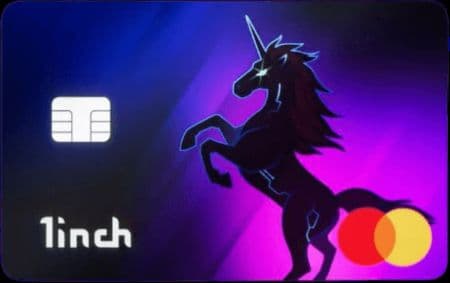 | 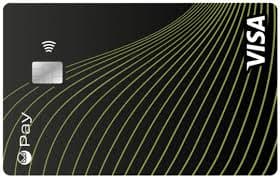 |
|---|---|---|
| Max Cashback | 2% | 5%Highest |
| Annual Fee | FreeBest | FreeBest |
| FX Fee | 0% | 0% |
| Custody Model | Custodial | Custodial |
| Network | MASTERCARD | VISA |
| Regions | EEAUK | EEAUK |
| Supported Assets | 8+ assets 1INCHETHUSDTUSDCBTCLTCXRPBXX | 1+ assets EURe |
| Cashback | Yes | Yes |
| Staking | No | Yes |
| Points | No | No |
| Airdrops | No | No |
| Lounge access | No | No |
| Subscription rebates | No | No |
| Metal card | No | No |
| Virtual Cards | Yes | No |
| Physical Cards | Yes | No |
| Visa | No | No |
| Mastercard | No | No |
| Apple Pay | Yes | No |
| Google Pay | Yes | No |
| Self-custody spend | No | Yes |
| Stablecoin spend | No | Yes |
| No annual fee | Yes | Yes |
| No FX fee | Yes | Yes |
| ATM free allowance | No | No |
| No KYC | Yes | No |
| Virtual vs Physical | Yes | No |
| Debit vs Prepaid | No | No |
| Best For | Best for Cashback |
Note: All data verified as of February 2026. Rewards and fees may vary based on your spending tier and region. Check each card's detailed page for complete terms.
1inch vs Gnosis Pay: Key Differences
Two DeFi-native cards with opposite custody models and dramatically different economics in the same European market. [1inch](/crypto-cards/1inch-card/) is custodial (Baanx-powered) with up to 2% BXX [cashback](/crypto-cards/cashback/) but a 1.75% crypto conversion fee that erodes nearly all returns. [Gnosis Pay](/crypto-cards/gnosis-pay-card/) is truly [self-custodial](/crypto-cards/self-custody/) with on-chain settlement via Safe smart contracts, up to 5% GNO cashback, and zero fees across the board. Both serve EEA and UK users with [no annual fees](/crypto-cards/no-annual-fee/).
The right choice depends on your priorities: cashback rates, regional availability, custody model, and which ecosystem you already use. Below, we break down who should choose each card.
Custody: The Fundamental Difference
Despite both being DeFi-adjacent brands, these cards have architecturally opposite custody models.
1inch is custodial. Powered by Baanx, loaded funds are held by the card platform. You deposit crypto into Baanx's system; they manage conversion and settlement. Your private keys do not control the card balance once loaded. A security incident at Baanx puts your loaded funds at risk - the same counterparty model that DeFi users specifically chose to avoid after FTX.
Gnosis Pay is self-custodial. Your spending account is a Safe smart contract wallet on Gnosis Chain (Safe has $100B+ TVL). Funds remain under your control until the moment of purchase. Every transaction settles on-chain with cryptographic proof. The Safe integration makes your spending account fully programmable: custom spending rules, multi-sig requirements, and recovery mechanisms enforced by smart contract logic.
For users who chose DeFi tools specifically for self-sovereignty, Gnosis Pay's architecture is philosophically aligned. 1inch the protocol is decentralized; 1inch the card is not.
Net Returns: Not Even Close
1inch's 1.75% conversion fee destroys its cashback economics. Gnosis Pay charges zero fees everywhere.
| Scenario | 1inch (2% BXX, after 1.75% fee) | 1inch (1% BTC, after 1.75% fee) | Gnosis Pay (1%, 0 GNO) | Gnosis Pay (3%, 10+ GNO) | Gnosis Pay (5%, 100+ GNO + OG) |
|---|---|---|---|---|---|
| Casual ($1,000/mo) | $3 (0.25% net) | -$8 (-0.75% net loss) | $10 | $30 | $50 |
| Active ($2,000/mo) | $5 | -$15 (net loss) | $20 | $60 | $100 |
| Power ($3,000/mo) | $8 | -$23 (net loss) | $30 | $90 | $150 |
| Annual ($3,000/mo) | $90 | -$270 (net loss) | $360 | $1,080 | $1,800 |
Choosing BTC or USDT rewards on 1inch (1%) minus the 1.75% conversion fee means losing money on every transaction. A user spending $3,000/month with BTC rewards loses $270/year. Only the 2% BXX tier stays positive at 0.25% net ($90/year), paid in Baanx's low-liquidity ecosystem token.
Gnosis Pay at its zero-commitment base tier (0 GNO held) already returns $360/year - 4x more than 1inch's best case. At the 10+ GNO tier (approximately $3,000 invested in GNO), the gap widens to $1,080 versus $90 - a 12x advantage. At the maximum 5% tier (100+ GNO with OG NFT), Gnosis Pay earns $1,800/year versus 1inch's $90 - a 20x advantage.
The conversion fee context: 1inch's 1.75% is the highest conversion fee among DeFi-adjacent cards. Even custodial exchange cards (Bybit, OKX) charge only 0.9%. Kraken and Crypto.com charge 0%. The fee is an outlier that makes 1inch uncompetitive against virtually every card on SpendNode.
EURe-Only vs Multi-Asset
The asset gap is 1inch's single practical advantage.
Gnosis Pay supports only EURe (euro stablecoin on Gnosis Chain). Users must hold or convert to EURe before spending. Non-EUR transactions incur only the Visa network exchange rate (typically 0.2-0.4%). The personal IBAN allows European users to receive salary payments, freelance invoices, and SEPA bank transfers directly into their on-chain wallet - a bridge between traditional banking and DeFi spending.
1inch supports 8 assets (1INCH, ETH, USDT, USDC, BTC, LTC, XRP, BXX). Users holding diverse crypto can spend without pre-converting to a single stablecoin. But the 1.75% conversion fee applies to every crypto-to-fiat transaction regardless of asset, making even stablecoin spending (USDT, USDC) expensive.
Network and payments: 1inch operates on Mastercard with Apple Pay and Google Pay. Gnosis Pay operates on Visa with Apple Pay. Both have no annual fees. 1inch supports ATM withdrawals at 2% fee ($500/day limit). Gnosis Pay does not support ATM withdrawals (card-only for POS and online purchases).
Spending limits: 1inch has an $8,000/day spending limit. Gnosis Pay does not publish a hard monthly limit (verify in-app). Both are low-KYC options.
On-Chain Settlement: Gnosis Pay's Technical Moat
Every Gnosis Pay transaction creates a verifiable on-chain record on Gnosis Chain:
- Cryptographic proof of every purchase, auditable by anyone
- Programmable spending via Safe smart contracts: custom rules, multi-sig approvals, automated treasury management
- Personal IBAN for SEPA deposits directly into the on-chain wallet
- ENS name printed on the physical card
- Zero gas fees (Gnosis Chain gas is subsidized)
1inch offers none of this on-chain infrastructure. Transactions settle through Baanx's traditional payment rails with no on-chain visibility. 1inch's strength is its DEX aggregation engine for optimal swap rates when loading or exchanging within the app - but that value does not extend to card spending.
For freelancers, DAOs, or anyone needing provable spending records, Gnosis Pay's on-chain settlement is a feature no other card matches. For regular consumers, the on-chain aspect is invisible - the card works like any Visa at the point of sale.
Both cards are debit models. Gnosis Pay spends EURe (stablecoin with minimal capital gains exposure). 1inch converts crypto at point of sale (taxable disposal on appreciated assets). For tax purposes, Gnosis Pay's stablecoin spending model is generally cleaner.
Common Mistakes When Choosing
Using the 1inch card for crypto spending without pre-loading fiat to avoid the 1.75% conversion fee. Every crypto-to-fiat transaction on 1inch incurs the 1.75% fee regardless of asset. At the 2% BXX tier, the net return is only 0.25% ($90/year at $3,000/month). At the 1% BTC tier, every purchase is a -0.75% loss ($270/year lost on $3,000/month). The only way to avoid the fee is pre-loading fiat currency, which defeats the purpose of a crypto card. Gnosis Pay charges 0% on every transaction. How to avoid it: If you want to spend crypto through a card in the EEA/UK, Gnosis Pay delivers 4-20x more net value with zero fees. If you must use 1inch, select only the 2% BXX reward tier and pre-load fiat to minimize conversion fees.
Dismissing Gnosis Pay for its EURe-only asset support without considering the personal IBAN. Many users see "EURe only" and assume Gnosis Pay requires complex DeFi bridging. In practice, the personal IBAN allows direct SEPA bank transfers into your on-chain wallet - you can fund from any European bank account as easily as any traditional card. For EUR-primary spenders (the majority of EEA users), the single-asset limitation is barely noticeable. Non-EUR spending incurs only Visa's standard network rate (0.2-0.4%). How to avoid it: Check whether your primary spending is EUR-denominated. If yes, Gnosis Pay's EURe-only model is a non-issue with the SEPA IBAN funding route. If you frequently spend in multiple non-EUR currencies or need to spend BTC/ETH directly, the multi-asset limitation is real.
Decision Shortcut
For European self-custody users: Gnosis Pay wins outright. Higher cashback at every tier (1-5% versus 0.25% net), zero fees, true self-custody, on-chain settlement, personal IBAN, and ENS card personalization.
For users needing multi-asset spending from a single card: 1inch supports 8 tokens directly, but the 1.75% fee makes this convenience expensive. Consider MetaMask (9 assets, 1% cashback, 0% fees, self-custodial, 50+ countries) or ether.fi (4 assets, 3% cashback, global) as better alternatives.
For DAOs and developers: Gnosis Pay's Safe smart contract wallet enables programmable spending that no other card offers.
For cash-dependent users: 1inch supports ATM withdrawals at 2% fee. Gnosis Pay does not support ATM withdrawals at all.
Outlook: Gnosis Pay's cashback program and zero-fee model position it as the leading self-custodial card in Europe. If Gnosis Pay adds multi-asset support beyond EURe (accepting USDC or wETH directly), it would eliminate 1inch's only advantage. 1inch's competitiveness depends entirely on reducing or eliminating the 1.75% conversion fee - without a fee reduction, the card remains a niche product for Baanx ecosystem participants. Watch for Gnosis Pay expansion to additional countries and potential Gnosis Chain yield products for idle EURe balances.
Fee Breakdown
| Fee | 1inch | Gnosis Pay |
|---|---|---|
| FX Fee | 0% | 0% |
| Annual Fee | Free | Free |
| ATM Fee | 2% | TBD |
Fees pulled from issuer documentation. Verify on the official site before applying.
Who Should Choose 1inch
The 1inch Mastercard is best suited for users who:
- Want up to 2% cashback on spending
- Need zero FX fees for international transactions
- Prefer a card with no annual fee
- Are based in EEA, UK
Who Should Choose Gnosis Pay
The Gnosis Pay Card is best suited for users who:
- Want up to 5% cashback on spending
- Need zero FX fees for international transactions
- Prefer a card with no annual fee
- Are based in EEA, UK
Our Verdict
**Gnosis Pay dominates this comparison by every meaningful metric.** At the base tier (0 GNO), Gnosis Pay's 1% with zero fees returns 4x more than 1inch's best net rate (0.25% after 1.75% fee). At the 10+ GNO tier (3%), the gap is 12x. At 100+ GNO with OG NFT (5%), Gnosis Pay earns $1,800/year versus 1inch's $90 on $3,000/month spending - a 20x advantage. Add genuine self-custody (Safe smart account versus Baanx custodial), on-chain settlement with cryptographic proof, a personal IBAN for SEPA funding, and ENS name on the physical card, and Gnosis Pay wins on returns, custody, transparency, and infrastructure. 1inch's only advantage is multi-asset support (8 tokens versus EURe only) and integrated DEX aggregation for optimal swap rates.
Frequently Asked Questions
Which has better cashback, 1inch or Gnosis Pay?
Gnosis Pay offers up to 5% cashback compared to 1inch's 2%. Actual rates depend on your spending tier and card variant.
Which card has lower fees?
Both charge 0% FX fee. Neither charges an annual fee.
Is 1inch or Gnosis Pay better for self-custody?
Both use custodial models. If self-custody is important, consider providers like Gnosis Pay or ether.fi.
Which card is available in more regions?
Both are available in 2 regions. Check the issuer's website for current eligibility.