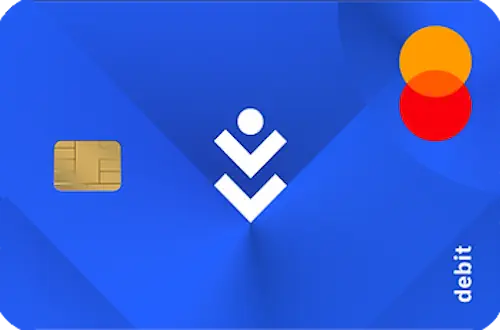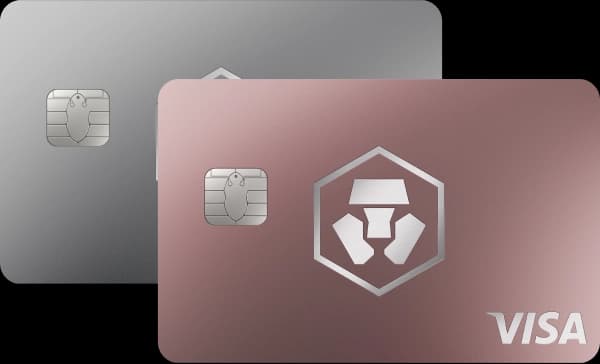
Tria, the protocol pioneer behind "Self-Custodial Rewards," has successfully closed a $12 million strategic funding round to accelerate its vision of a unified crypto neo-bank. The round saw participation from major industry heavyweights, including Polygon, Aptos, the Ethereum Foundation, 0G Labs, Wintermute, and Arbitrum. This capital injection is earmarked for scaling Tria's "Proof of Spend" points program and expanding its infrastructure to support high-throughput, cross-chain consumer payments.
Why $12M from Polygon and Ethereum Foundation Validates Self-Custody Cards
The venture capital landscape in 2026 has shifted away from pure protocol speculation toward functional "Real World Use Case" (RWUC) platforms. Tria's successful raise in a mature market signals strong institutional confidence in the Self-Custody Card model. For users, this means Tria now has the "war chest" needed to maintain its aggressive 6% cashback rates and ensure long-term liquidity for its upcoming governance token launch.
Core Explanation (Direct Answer Format)
Tria has raised $12 million in strategic funding to transition from a rewards-focused card provider into a comprehensive crypto neo-bank that unifies spending, trading, and earning within a single, self-custodial interface. This funding round supports the expansion of Tria’s account abstraction wallet architecture, which allows users to interact with DeFi protocols while maintaining the user experience of a traditional banking app. The project is currently leveraging its "Proof of Spend" points program to build a massive on-chain identity layer before its 2026 Token Generation Event (TGE).
Market Benchmarking and ROI Math
The $12M raise puts Tria in an elite group of well-capitalized crypto payment startups. This liquidity allows Tria to subsidize transaction costs and maintain higher rewards than its bootstrapped competitors.
| Metric | Tria (Post-Funding) | Standard Self-Custody Card | Traditional Neo-Bank |
|---|---|---|---|
| Backing | Ethereum Foundation / Polygon | Varies / Angel | Series C / Institutional |
| Max Cashback | 6% (USDC) | 1-2% | 0.1 - 0.5% |
| Daily Limit | $100,000 | $10,000 | $5,000 |
| Custody | Self-Custodial (MPC) | Self-Custodial | Centralized |
For a power user, the "Equity Upside" of Tria is the primary differentiator. If the $12M raise values the protocol at $150M, and your "Proof of Spend" points represent a 0.01% share of the eventual airdrop, your spending today is effectively purchasing protocol equity at a ground-floor valuation.
Common Mistakes or Myths
Myth 1: "Funding means Tria is going centralized." The involvement of the Ethereum Foundation and Polygon suggests the opposite. Tria’s core mission is to scale decentralized, non-custodial infrastructure. The funding is being used to build better software, not to take custody of user funds.
Myth 2: "Points programs are just a distraction from real yield." In Tria's case, the points are a bridge to ownership. The $12M raise ensures that there is actual capital and a professional market-making partner (Wintermute) behind the eventual token launch.
Myth 3: "High-limit cards are only for whales." Tria's new "Neo-Bank" interface is designed for everyday retail use. While the $100K limits are available for the Signature tier, the $25/year Virtual tier allows anyone to participate in the points ecosystem.
How This Relates to Crypto Cards
Tria's funding news confirms that the industry is moving toward Account Abstraction (ERC-4337) as the standard for crypto cards. By using smart contract wallets, Tria can offer "Social Recovery" and gasless transactions—features that were impossible for legacy custodial cards.
If you are looking for a card that combines the safety of self-custody with the convenience of a modern bank, Tria is now the most well-funded option in that category.
Overview
Tria’s $12M raise is a turning point for the "Spend-to-Earn" sector. It proves that the bridge between DeFi and retail payments is not just a niche experiment, but a multi-million dollar infrastructure play. For cardholders, the message is clear: your loyalty is being tracked, and your spending data is being valued by some of the biggest names in blockchain.