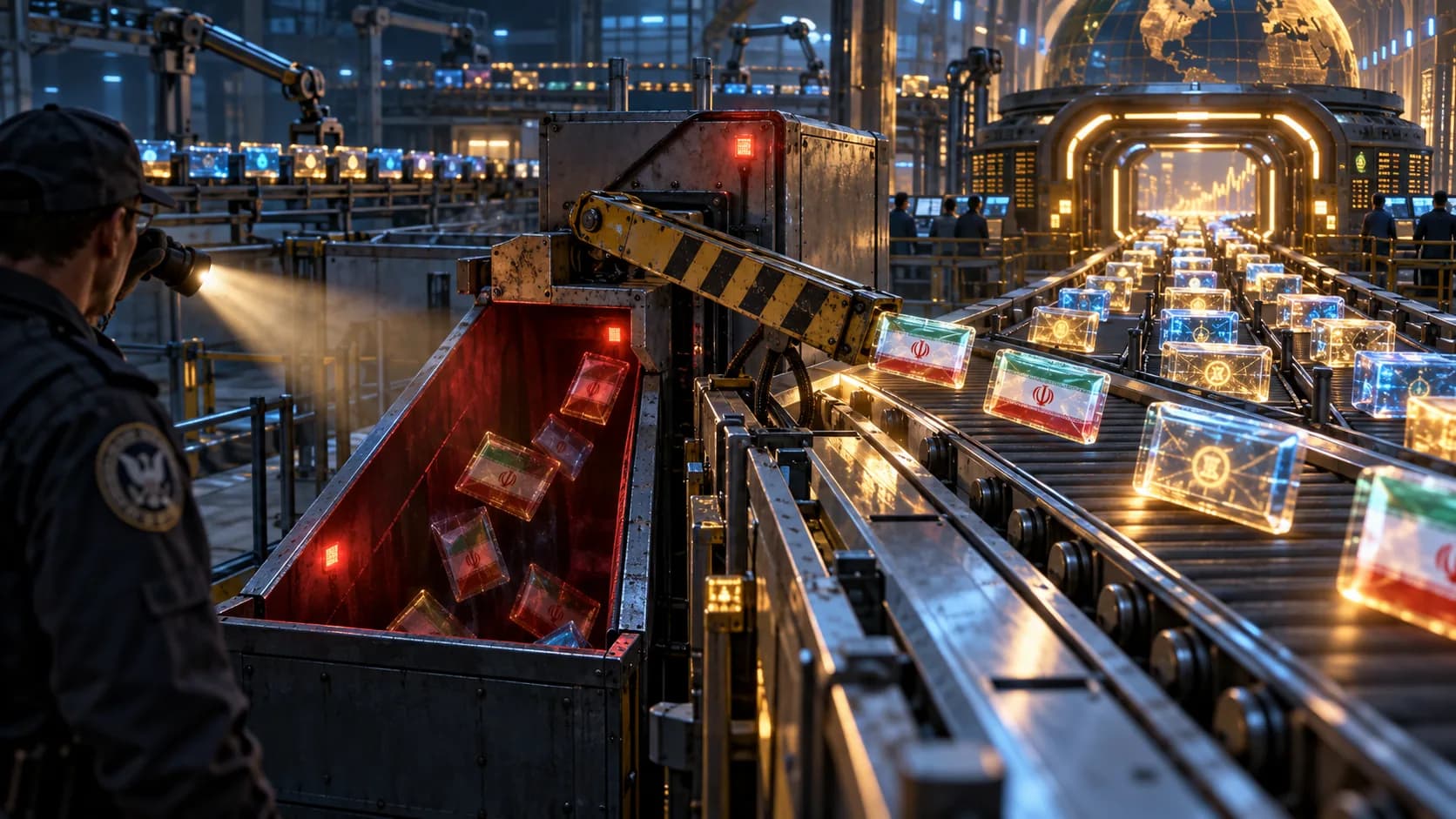
Texas has stopped issuing new permits for data centers while the state audits its power grid, according to a Reuters report posted on September 22, 2026. Governor Greg Abbott ordered the freeze on all state-issued permits until the audit is complete. The order does not name an end date, which leaves any operator waiting on a state permit in limbo until officials sign off on the grid review.
The timing matters for crypto because Texas is the center of gravity for Bitcoin mining in the United States. Miners moved there in bulk after China's 2021 ban, drawn by cheap power, a deregulated grid, and a state government that courted the industry. A permit freeze aimed at data centers broadly still catches large mining operations in its net, since industrial-scale mines draw power at the same order of magnitude as the AI and cloud facilities the audit is worried about.
Grid strain is the trigger, not crypto specifically
The stated reason is grid capacity, not a crypto crackdown. Data center demand, driven mostly by AI compute buildouts, has grown faster than Texas planners expected, and the audit is meant to measure how much load the grid can actually absorb before new large connections are approved. That framing puts Bitcoin miners in the same queue as hyperscale AI campuses. Both are large, concentrated electricity loads that connect to the grid at high voltage.
The distinction is worth keeping straight. This is a supply-side pause on new industrial power connections, not a ban on mining or a tax on it. Existing facilities that already hold permits and interconnection agreements are not the target of the order as reported. The freeze bites on what comes next: the pipeline of announced expansions that assumed Texas would keep approving large loads on the same timeline as before.
Expansion plans hit a waiting room
For miners with Texas expansions on the drawing board, the practical effect is delay. Projects that need a fresh state permit cannot advance until the audit finishes and the state resumes issuing approvals. That pushes capital timelines out, raises the odds that some operators look at other states, and adds a new variable to any hashrate growth forecast that leaned on Texas capacity coming online.
Texas has spent years marketing itself as the friendliest US jurisdiction for both mining and grid participation, including programs that pay large loads to power down during demand spikes. A pause on new permits does not undo that history, but it signals that the state is now weighing grid stability against the pace of new industrial connections. Operators that treated Texas as an open runway will have to plan around a checkpoint that did not exist before.
Market backdrop as the news lands
Crypto prices were firm as the report circulated. Bitcoin traded near $85,480, up about 5.2% over 24 hours as of September 22, 2026, with the broader market in a risk-on mood. Ether sat around $2,731 and XRP near $1.52, both higher on the day, and the Crypto Fear and Greed Index read 78, in greed territory. A permit freeze on future mining capacity is a slow-moving, structural story rather than a price catalyst, and the tape reflected that: the market was reacting to momentum, not to Texas grid policy.
The longer-term question is where new US mining capacity goes if Texas keeps large-load approvals on hold. Rival states have courted miners with their own power deals, and a prolonged Texas pause could accelerate that redistribution. For anyone tracking the industry's footprint, the audit's findings, and how long the freeze lasts, will say more about US mining geography than any single day's Bitcoin move. Readers holding US-issued crypto cards or watching domestic policy have one more reason to follow how states balance crypto-adjacent infrastructure against grid limits.
Overview
Texas has frozen new state-issued data center permits until it completes a grid audit, per a Reuters report on September 22, 2026. Because Texas hosts the largest concentration of US Bitcoin mining, the pause lands on future mining and AI capacity alike. Existing permitted sites are not the target; new expansions are the ones stuck waiting. Bitcoin traded near $85,480 (+5.2% on the day) as the news circulated, showing the market treated it as a structural signal rather than an immediate catalyst. The key unknowns are how long the audit takes and whether a drawn-out freeze pushes new mining capacity to other states.