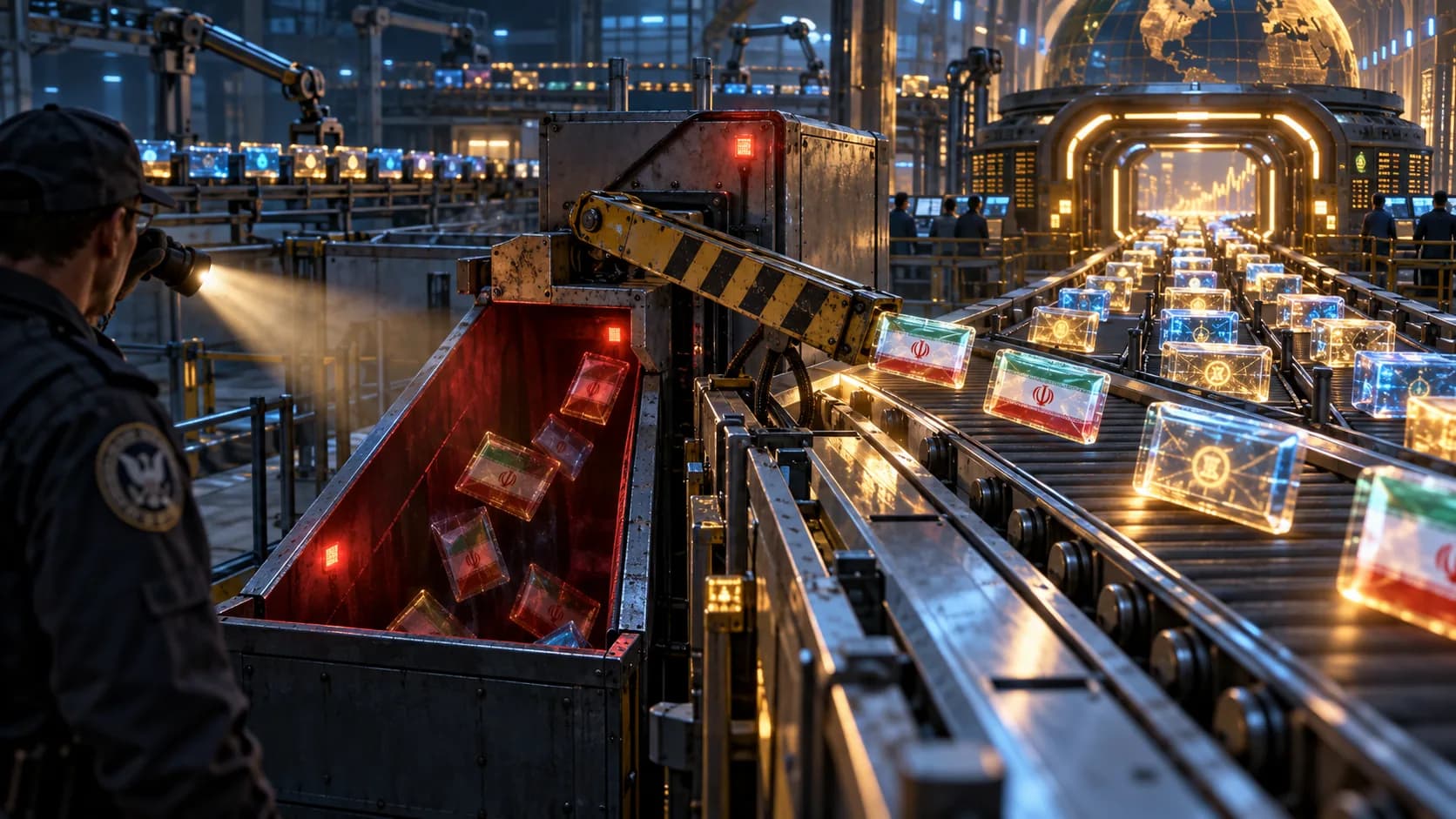
The US Department of Justice is investigating whether Binance violated Iran sanctions by failing to block certain trades on its platform, according to a Bloomberg report surfaced by Cointelegraph on September 22, 2026. The inquiry centers on whether the exchange's controls let transactions connected to sanctioned Iranian activity pass through when they should have been screened out.
For the largest crypto exchange by volume, this is not the first brush with US sanctions enforcement. The new probe reopens a compliance question that Binance thought it had put behind it.
The core allegation
The reported focus is narrow but serious: prosecutors are examining whether Binance allowed certain trades tied to Iran to execute rather than blocking them. Sanctions law requires financial platforms with US exposure to screen users and transactions against government blacklists and to stop dealings connected to sanctioned jurisdictions. A failure to block, if proven, is the kind of control gap that draws both criminal and civil scrutiny.
At this stage it is an investigation, not a charge. Bloomberg's reporting describes an active DOJ inquiry, and Binance has settled sanctions and anti-money-laundering matters with US authorities before. Whether this review produces an enforcement action, a settlement, or nothing at all is unknown. Treat the specifics beyond the sourced facts as open.
Echoes of the 2023 settlement
Binance pleaded guilty in late 2023 to violations of the Bank Secrecy Act and US sanctions rules, agreeing to pay roughly $4.3 billion in penalties. As part of that resolution, the company accepted years of compliance monitoring designed to catch exactly the type of screening failure now under review.
A fresh sanctions inquiry, coming after that settlement and its monitoring regime, is the detail that gives this story weight. If US authorities believe controls still let Iran-linked trades through, the question shifts from a one-time lapse to whether the remediation actually worked. That framing matters more than any single transaction the probe might name.
The timing also lands against a broader enforcement backdrop. US authorities have kept sanctions pressure on crypto rails high, from Treasury designations of exchanges accused of processing Iran-linked flows to individual wallet blacklistings.
The screening gap on crypto rails
Crypto exchanges sit in an awkward spot. They onboard users globally, custody assets, and match trades at speed, all while being expected to enforce jurisdiction-based blacklists that were built for slower, account-based banking. Screening has to catch not just the named user but the counterparties, the funding source, and the geographic signals behind a trade. Gaps appear when identity checks are thin, when users route through intermediaries, or when a platform grows faster than its compliance stack.
That tension is why sanctions cases against crypto firms tend to hinge on controls rather than intent. Prosecutors do not need to prove an exchange wanted to serve Iran; they focus on whether the systems that were supposed to stop it were adequate and actually used.
The counterparty layer above your exchange account
For everyday traders, an investigation is not the same as an outage. Binance continues to operate, and there is no indication in the sourced reporting of frozen funds or halted services. Still, the case is a reminder of the counterparty layer that sits above any centralized exchange account. When you hold assets on a platform, you also hold exposure to that platform's regulatory standing, its banking relationships, and the outcome of probes like this one.
That exposure is the practical throughline for anyone weighing where to keep crypto. Self-custody options move the assets out of an exchange's control entirely, at the cost of taking on key management yourself. Cards that spend directly from your own wallet follow the same logic on the payments side, keeping balances off a custodial platform until the moment of purchase. Neither removes regulatory risk from the ecosystem, but both shrink how much of your money rides on one company's compliance record.
The wider market did not treat the report as a shock. As of September 22, 2026, Bitcoin traded near $85,787, up 5.3% on the day, with Ether around $2,753 and the Crypto Fear & Greed Index at 78 (Greed), a risk-on backdrop that overshadowed the Binance headline.
Overview
The DOJ is reviewing whether Binance failed to block certain Iran-linked trades, per a Bloomberg report dated September 22, 2026. It is an investigation, not a charge, but its significance comes from context: Binance settled US sanctions and AML violations for about $4.3 billion in 2023 and accepted compliance monitoring as part of that deal. A new screening probe tests whether those fixes held. For users, the takeaway is the reminder that exchange balances carry the platform's regulatory risk, one reason self-custody keeps drawing interest.