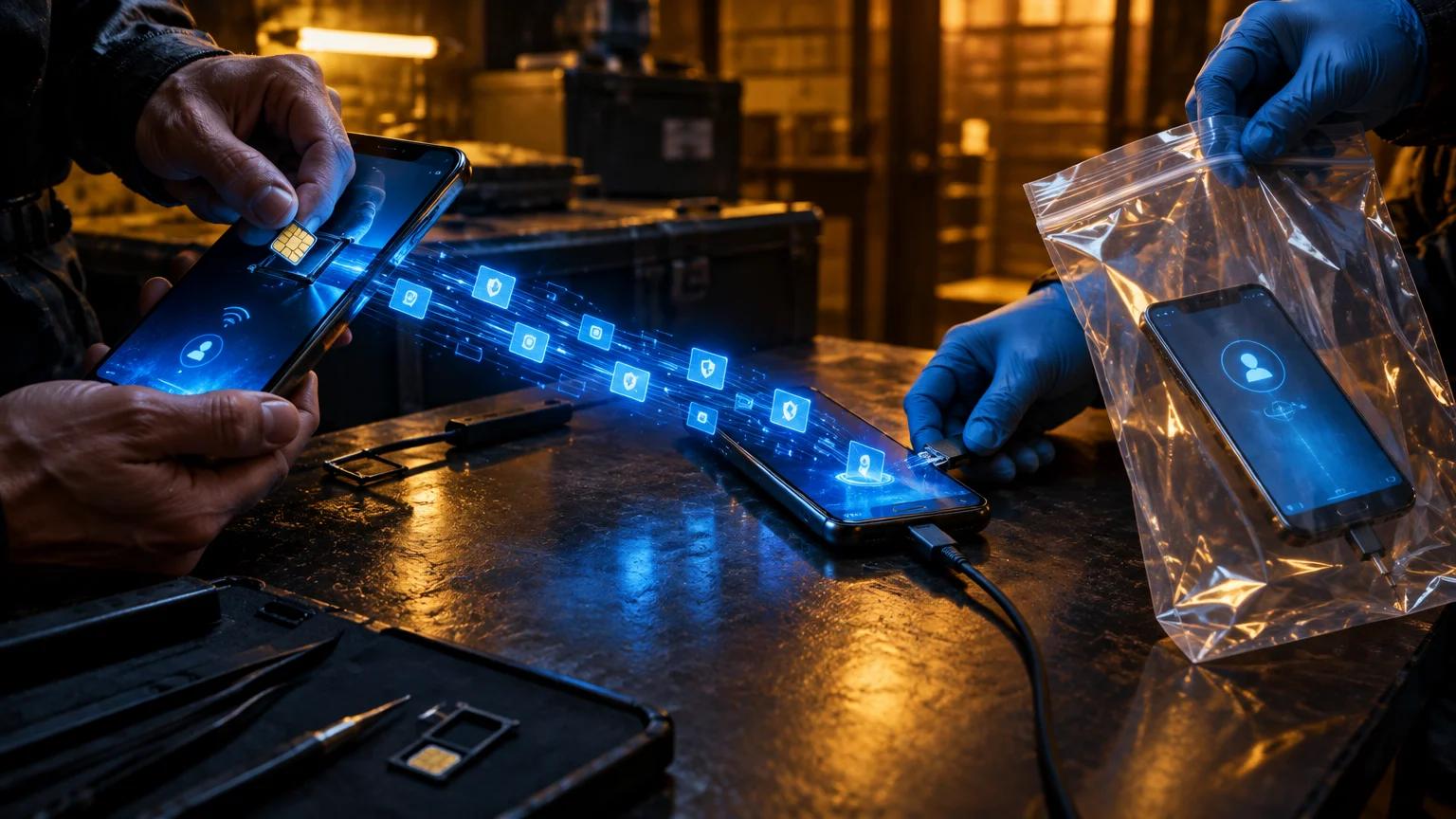
Tyler Robert Buchanan has been sentenced to six years in federal prison for his role in a phishing and SIM-swapping conspiracy that stole more than $11.6 million in cryptocurrency. Decrypt reported the sentencing on November 18. The Justice Department’s announcement dates the sentence to November 17 and identifies Buchanan as the fifth and final defendant sentenced in this case.
The case brings a criminal sentence for an attack sequence familiar to crypto users: stolen credentials, control of a telephone number, then access to financial accounts. That sequence explains the risk. A password and a text-message verification code can depend on separate services while remaining vulnerable to a coordinated account takeover.
Buchanan is the final defendant sentenced
Buchanan, 24, is from Dundee, Scotland, in the United Kingdom. United States District Judge John W. Holcomb imposed the 72-month sentence and scheduled a restitution hearing for December 11.
Buchanan pleaded guilty on April 17 to conspiracy to commit wire fraud and aggravated identity theft. According to prosecutors, the conspiracy ran from September 2021 to April 2023 and targeted at least a dozen companies, their employees and individual victims across the United States.
The sentencing completes the imposition of prison terms in this prosecution. Victim repayment remains a separate issue, with the restitution hearing still ahead. The prison term punishes Buchanan’s conduct; the sentencing announcement is not confirmation that victims have received their stolen cryptocurrency back.
A stolen phone number can defeat a second login step
The Justice Department describes corporate phishing messages that impersonated employers or their service providers and directed employees to imitation websites. It also describes SIM swaps used to intercept authentication codes for individual victims’ accounts.
The FBI’s explanation of SIM swapping fills in the mechanism: criminals persuade a mobile carrier to move a victim’s telephone number to a SIM card they control. Incoming messages then reach the attacker’s device. Password-reset messages can give the attacker another route into accounts.
For a crypto holder, the security of a mobile account can therefore affect the security of financial accounts. An account may require two login steps, but the protection weakens if an attacker can obtain the password and take over the number receiving the second code.
The FBI recommends physical security tokens or standalone authentication applications, alongside precautions around mobile-account information. It also advises people against advertising their telephone number, address or cryptocurrency holdings on social media.
Those recommendations address different stages of an attempted takeover. Limiting public information reduces material available to someone selecting a target. Changing the authentication method addresses the later point at which an attacker tries to turn control of a phone number into account access.
An urgent security message can be the entry point
A separate FBI Internet Crime Complaint Center advisory describes criminals impersonating cryptocurrency exchange employees. Their approach often starts with an unsolicited call or message claiming that an account has a problem or faces an attempted compromise.
The requested response sounds protective: provide information, follow a link or confirm account details. The attacker uses that response to gain access.
The advisory covers a broader scam pattern beyond the findings in Buchanan’s case. It gives users a specific way to interrupt an impersonation attempt before credentials change hands.
The FBI advises recipients to stop responding and contact the exchange through an independently obtained official channel. Users should open the exchange website separately and avoid telephone numbers or links supplied by the caller. Account login information should not be shared.
Users can take that step before deciding whether the caller sounds convincing. Moving the conversation to a contact route obtained independently removes the attacker’s control over the destination. A familiar company name or an urgent account warning should trigger that verification step.
After a suspected SIM swap, the FBI advises contacting the mobile carrier, changing passwords and notifying the financial institution. Its exchange-impersonation advisory also asks victims to report transaction information and cautions against services promising to recover lost cryptocurrency.
Overview
Buchanan received a six-year federal sentence in a conspiracy involving corporate phishing, SIM swapping and more than $11.6 million in stolen cryptocurrency. Reporting identifies him with Scattered Spider; prosecutors identify him as the last of five defendants sentenced in this particular case.
Account protection needs to address both credential theft and control of the telephone number used for authentication. Independently verifying unsolicited security messages and choosing stronger authentication methods address those routes of attack.
The next scheduled proceeding is the December 11 restitution hearing.