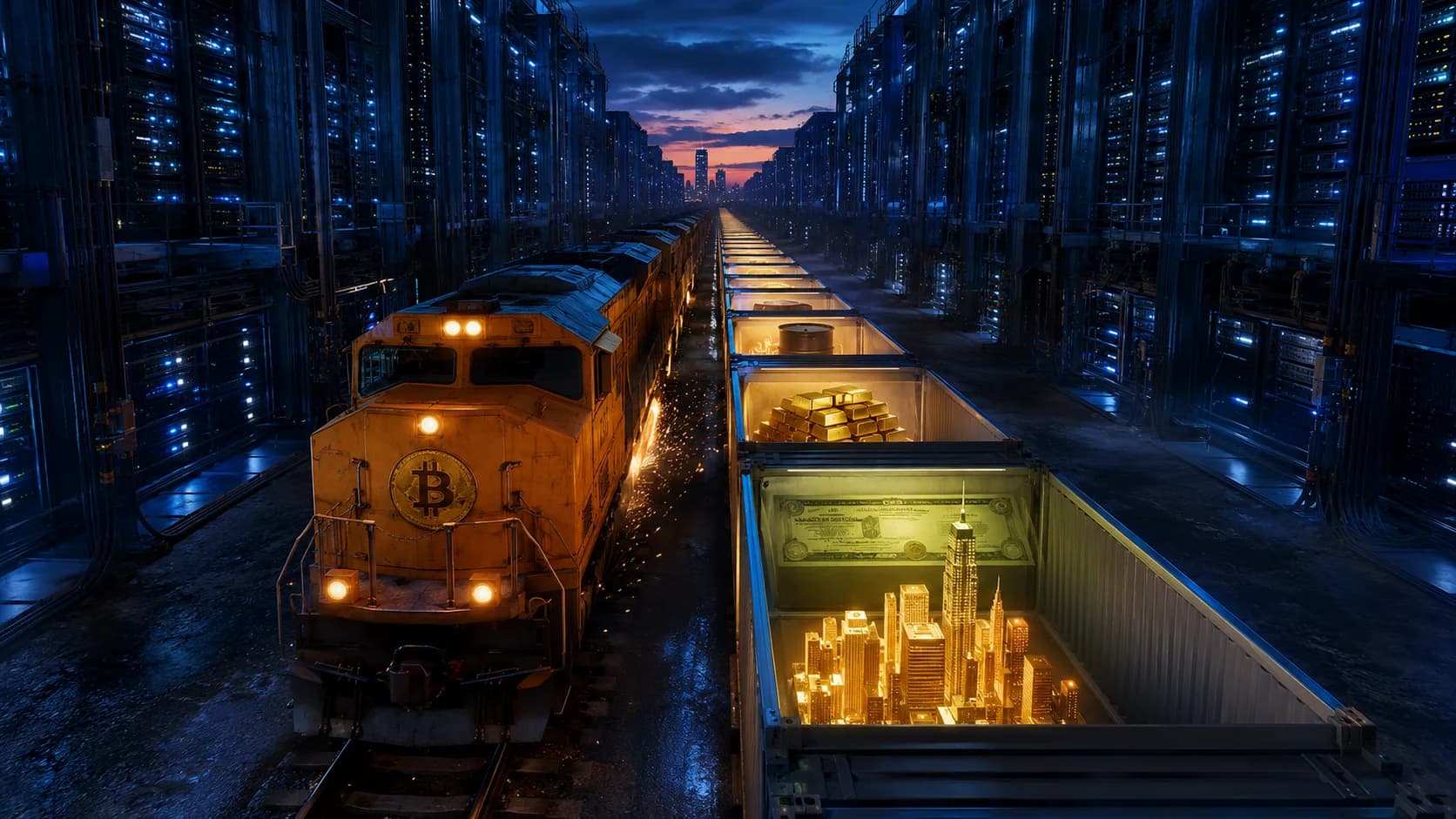
Perpetual futures tied to real-world assets have climbed to 99.2% of Bitcoin perpetual futures volume on Hyperliquid and Binance, according to a July 31 Cointelegraph report citing tokenization data. The number puts a market that barely existed a year ago within a rounding error of crypto's most-traded contract.
Bitcoin sat at $63,877 as of July 31, 2026, down 0.5% on the day, with Ether at $1,890 and the Fear & Greed Index reading 36, or "Fear." Prices were quiet. The volume shift underneath them was not.
Tokenized assets moved from settlement to speculation
Most of the real-world asset story so far has been about holding. Tokenized Treasury funds, money-market products, and private credit were built to sit in a wallet and accrue yield. The perpetual futures data points to a different behavior: traders are now taking leveraged, two-sided positions on tokenized stocks, indices, bonds, and commodities the same way they trade BTC or ETH.
Perpetual futures are contracts with no expiry that track an underlying price through a periodic funding payment between longs and shorts. They are the dominant instrument in crypto because they let traders hold directional exposure indefinitely with leverage. Applying that mechanism to a tokenized S&P proxy or a tokenized bond means the RWA market is no longer just a place to park stablecoins. It is a place to express a view.
That two of the venues driving the volume are Hyperliquid and Binance matters. Hyperliquid is an onchain perpetuals exchange; Binance is the largest centralized venue by volume. Seeing RWA perps scale on both a decentralized order book and a centralized giant suggests the demand is not confined to one corner of the market.
The volume is real, the maturity is not yet proven
A 99.2% figure invites a caveat. Nearly matching Bitcoin on volume is not the same as matching it on depth, open interest, or resilience under stress. Bitcoin perpetuals have years of liquidation history, deep books across dozens of venues, and price discovery that holds up when markets gap. Newer RWA perp markets have not been tested by a violent move, and thin real liquidity behind a large headline volume can unwind fast.
Funding rates and open interest, not raw turnover, will show whether this is durable positioning or short-term churn chasing a new narrative. The Cointelegraph data captures the volume milestone; it does not yet confirm the market can absorb a shock the way Bitcoin's can. This is analysis of an early trend, not a verdict, and none of it is financial advice.
There is also a structural question about what backs a tokenized-asset perpetual. A BTC perp references an asset that trades 24/7. A tokenized equity or index references something that trades on a Monday-to-Friday exchange calendar. Weekend gaps and after-hours pricing create basis risk that pure-crypto perps never had to solve. How venues handle that will shape whether the volume sticks.
The bridge to everyday crypto spending
For anyone who spends crypto rather than trades it, the read-through is slower but real. The infrastructure carrying tokenized stocks and bonds into perpetual markets is the same infrastructure pushing tokenized dollars and yield-bearing assets toward payments. The more real-world value lives onchain in liquid, tradable form, the more of it can eventually back a card balance or a stablecoin spending account.
The connection is already visible in adjacent moves this month, from banks tokenizing funds to processors settling onchain. A deeper, more liquid RWA market strengthens the collateral base that stablecoin issuers and card programs draw on. It does not change how any card works today, but it widens the pool of onchain assets that could be spent or borrowed against tomorrow.
For now, the practical takeaway is narrower. Traders have a new, high-volume arena in tokenized-asset perps, and it carries the familiar risks of leverage plus the unfamiliar risk of an untested market. Volume near Bitcoin's is a headline. Surviving the first real drawdown is the test that matters.
Overview
RWA perpetual futures reached 99.2% of Bitcoin perp volume on Hyperliquid and Binance, per a July 31, 2026 Cointelegraph report, marking tokenized assets' move from passive holdings into active leveraged trading. Bitcoin traded at $63,877 amid a "Fear" reading of 36 the same day. The volume is genuine, but depth, open interest, and behavior under stress remain unproven, and weekend price gaps on tokenized equities pose a basis-risk problem crypto-native perps never faced. For crypto spenders, the near-term impact is indirect: a larger, more liquid RWA base eventually strengthens the collateral behind stablecoins and card balances.