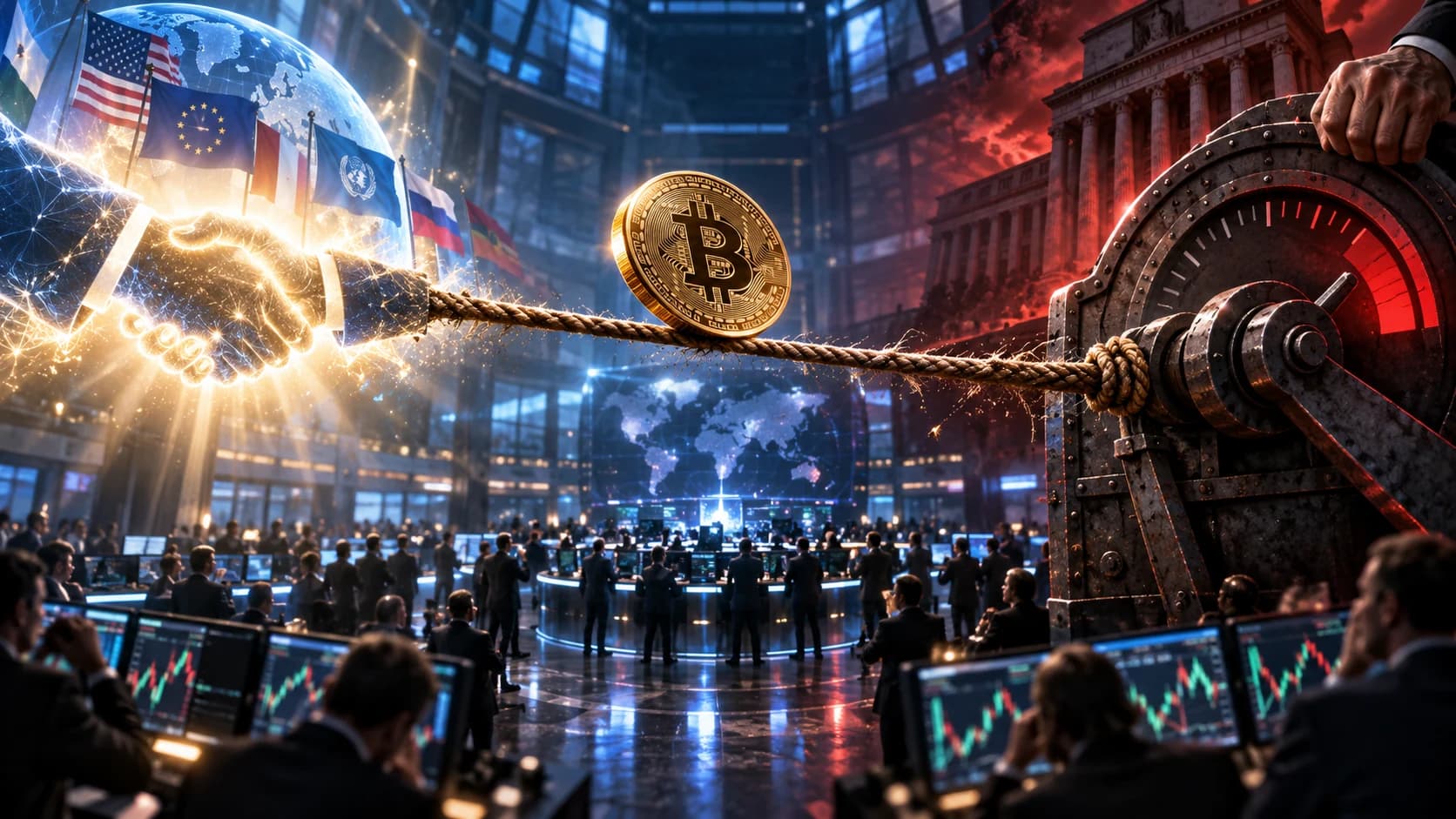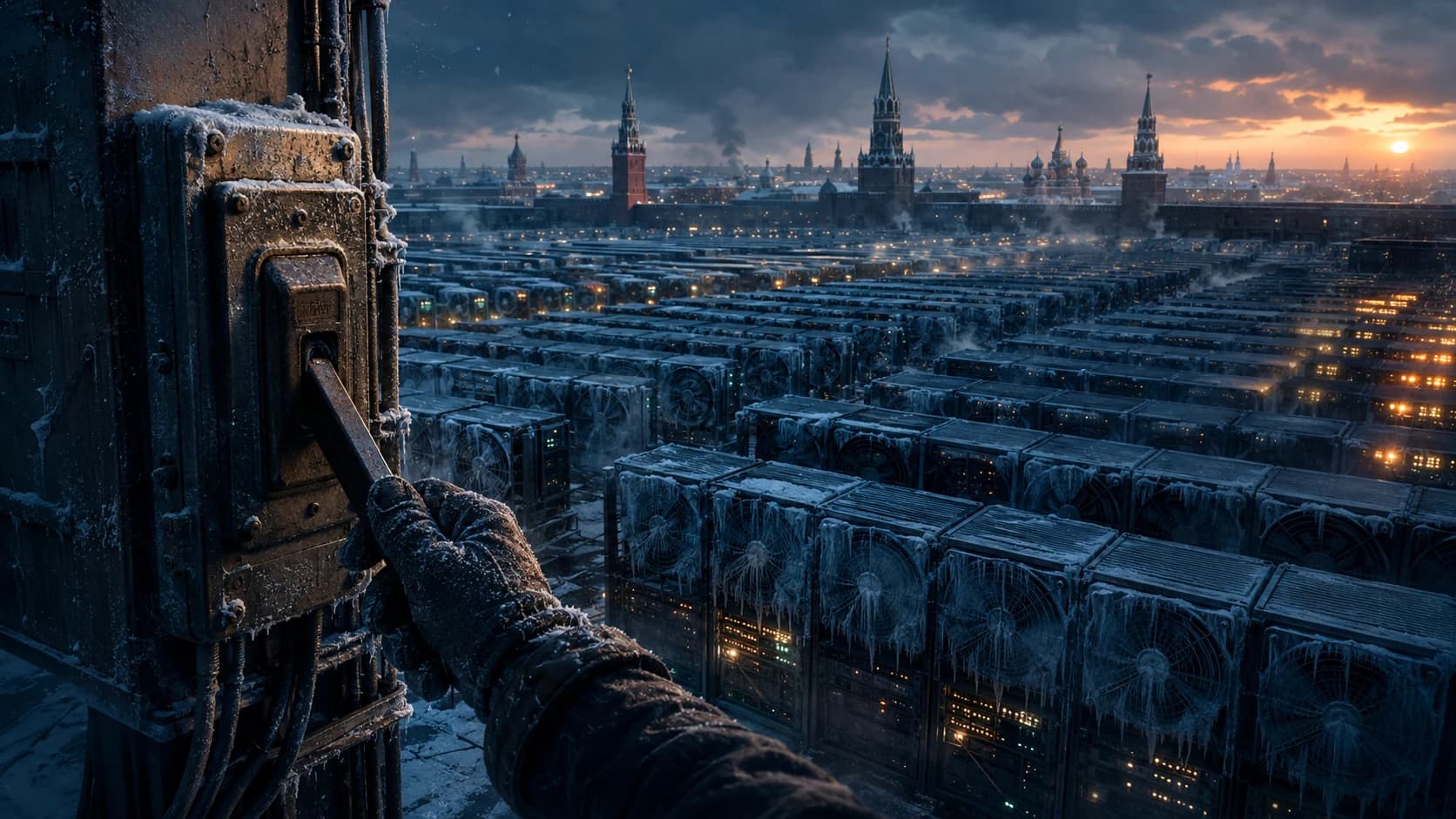
Russia will keep crypto mining prohibited in Moscow, the Moscow Region, and a group of southern and North Caucasus territories until March 2032, extending a restriction that first took hold in late 2024. The measure was flagged on August 1, 2026 by Coin Bureau, citing Russian government sources, and lines up with the country's existing regional mining framework built around seasonal and permanent power limits.
The reasoning is electricity, not ideology. Russian authorities have repeatedly tied mining bans to grid load, arguing that energy-hungry rigs compete with households and industry during peak consumption. Moscow and its surrounding region are among the highest-demand zones in the country, and the southern republics have faced recurring shortages. Extending the ban to 2032 turns what looked like a temporary winter fix into a near-decade policy.
A mining base that keeps shrinking on the map
Russia has spent years near the top of global Bitcoin mining estimates, trailing mainly the United States. Much of that hashrate sits in Siberia and other regions with cheap surplus power, not in the capital. So the direct hashrate hit from a Moscow ban is smaller than the headline suggests. The signal, though, is what matters: the government is comfortable drawing hard lines around where mining can and cannot run, and it is willing to keep those lines in place for years.
That matters for miners who legalized their operations under Russia's 2024 framework, which required registration with the Federal Tax Service and pushed activity toward approved regions. Operators who bet on proximity to Moscow's infrastructure now have their answer through 2032. Capital that might have flowed into data centers near the capital gets redirected, mothballed, or moved to Kazakhstan and other neighbors that have their own patchy record on mining tolerance.
Fear grips the broader market
The news landed in a soft tape. As of August 1, 2026, Bitcoin trades near $62,947, down 2.0% on the day, with Ether around $1,866, also off 2.1%. The Crypto Fear and Greed Index sits at 33, firmly in "Fear." None of that is caused by a regional mining ban, but the backdrop shapes how traders read policy headlines: in a nervous market, restrictive news from a major state gets amplified rather than shrugged off.
For the network itself, a Moscow-specific ban is close to noise. Bitcoin's hashrate has absorbed far larger shocks, including China's 2021 crackdown, and difficulty adjustments smooth out regional exits within weeks. The more durable question is whether Russia's approach hardens further. A government willing to freeze mining in its capital for eight years could just as easily tighten rules on exchanges, custody, or cross-border transfers.
Everyday crypto users feel it indirectly
Ordinary Russians are not mining Bitcoin in their Moscow apartments in meaningful numbers, so the ban does not change daily spending or saving habits by itself. The relevance is regulatory posture. Russia has kept domestic crypto payments heavily restricted while permitting some cross-border settlement for trade, and residents have leaned on stablecoins and offshore tools to move value. Anyone relying on stablecoin rails inside Russia already operates in a gray zone, and a mining ban extension is another reminder that the state prefers control over openness.
Access to mainstream crypto cards remains constrained for Russian residents due to sanctions and issuer policy, which is why coverage of Russia on comparison sites carries heavy caveats. The mining decision does not reopen those doors, but it reinforces the direction of travel: Moscow wants crypto activity visible, registered, and confined to approved corners of the economy.
Overview
Russia extended its crypto mining ban in Moscow, the Moscow Region, and several southern territories to March 2032, citing power grid strain. The capital was never a major share of national hashrate, so the direct network impact is limited, and Bitcoin's price weakness on August 1, 2026 reflects broad market fear rather than this specific rule. The lasting takeaway is posture: Russia is comfortable maintaining multi-year restrictions on where mining runs, and that same instinct for control shapes how residents access exchanges, stablecoins, and cards.