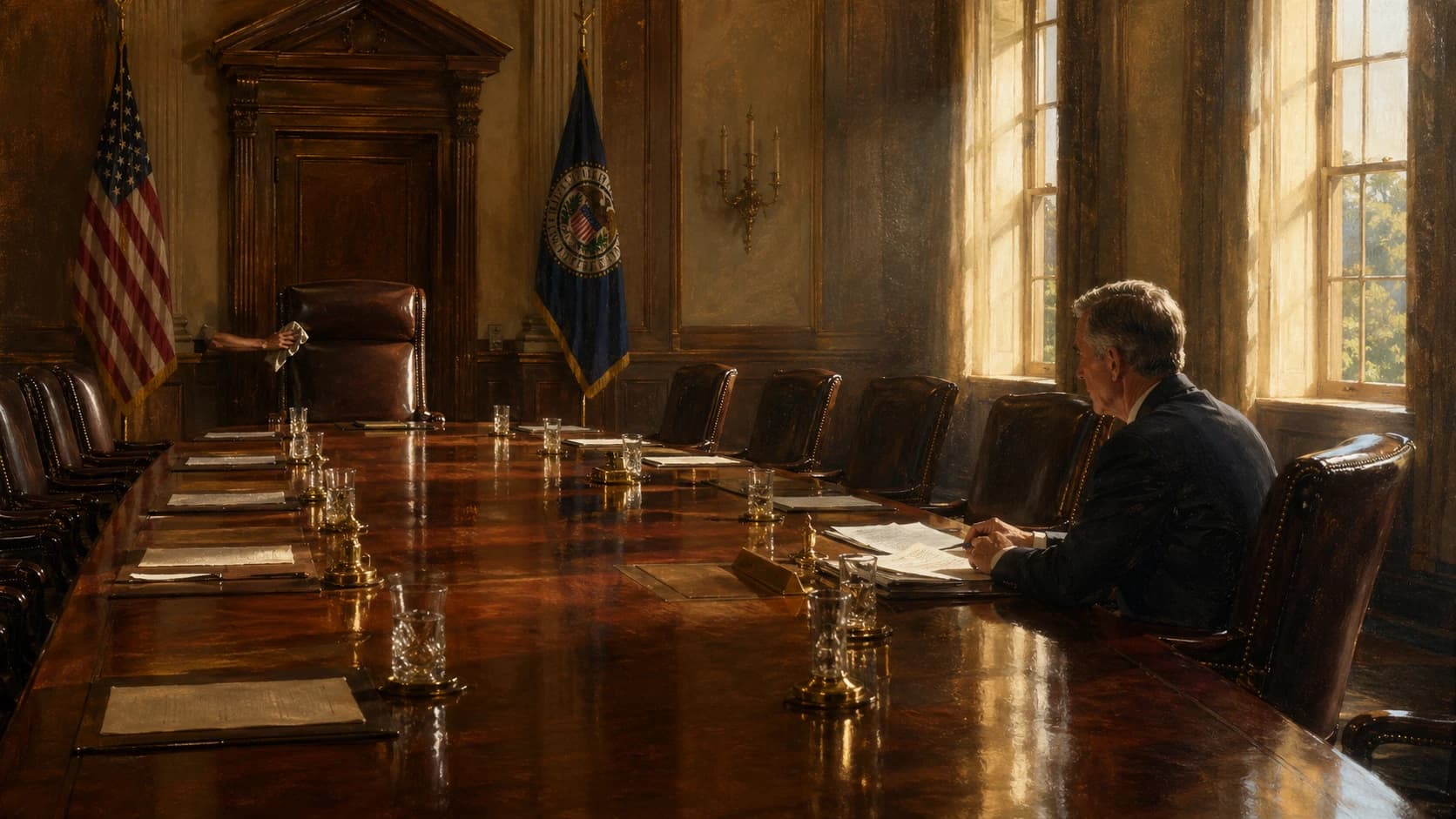
Jerome Powell told reporters at his April 29 press conference that he will not leave the Federal Reserve when his term as chair ends on May 15. Instead, he plans to keep his seat on the Board of Governors, signaling continuity in the central bank's senior ranks even as Kevin Warsh moves toward the chairmanship.
"After my term as chair ends on May 15th, I will continue to serve as a governor for a period of time to be determined," Powell said, in remarks first surfaced by Yahoo Finance and amplified by Watcher Guru. The exchange came at what Yahoo Finance described as "likely his last presser as Fed chair," with Warsh having already cleared the Senate Banking Committee earlier this month.
A chair who does not leave the building
Powell's chair term and his governor term are two different appointments. The chairmanship runs out May 15. His underlying governor seat does not expire until January 2028. Most chairs in the modern era have used the chair end date as a soft exit, even when they technically had years left as governors. Bernanke left in 2014. Yellen left in 2018. Powell choosing to stay is a structural choice, not the default.
Staying on means Powell keeps a vote on the Federal Open Market Committee. That matters for every rate decision after May 15. Warsh will run the meetings, but Powell will sit at the table and cast one of the seven governor votes that count toward policy.
A Warsh board with Powell still in the room
Warsh is widely expected to push for a more rules-based approach to monetary policy and has been vocal about Fed independence in his pre-confirmation appearances. A Warsh-led FOMC with Powell still in the room creates an unusual setup: the new chair will share a board with the chair he is replacing, and the dovish-versus-rules-based split that already produced three dissents at the April meeting now has a senior figure on both sides of the argument.
Markets reacted modestly. As of April 29, 2026, BTC was trading at $75,306 (down 1.1% on the day), ETH at $2,228 (down 2.8%), and the broader CoinMarketCap Fear and Greed index sat at 38, in fear territory. The price action reflected the rate decision itself rather than the governance news. Crypto traders had been watching for a clear dovish signal and did not get one; Powell staying on the board does not change the rate path, only the personality mix that will deliberate it.
Continuity reduces the odds of a sharp policy U-turn
Fed governance is not a typical crypto card story, but the names sitting on the FOMC determine the dollar liquidity environment that crypto trades against. A Warsh-Powell board is more institutionally stable than a Warsh board with a brand-new dissent vacuum, which reduces the probability of the kind of sharp policy U-turn that produces violent moves in BTC and ETH.
The continuity also matters for the Treasury-Fed working relationship on stablecoin and bank-crypto access rules. Powell has signed off on the current posture. Him sticking around makes near-term reversal of that posture less likely, regardless of who chairs the meetings.
Powell did not commit to a duration
Powell did not commit to a duration. "A period of time to be determined" leaves open everything from a few months to the full remainder of his governor term in January 2028. The most-watched question in Washington tonight is whether he intends to stay through the next major dissent cycle or step down quietly once Warsh has the chairmanship under his feet.
There is also no confirmed successor for the eventual governor vacancy Powell will leave when he does step down. The White House has not announced a shortlist, and the Senate Banking Committee has not scheduled additional governor confirmations beyond Warsh.
Overview
Powell's decision to stay on as a governor after his May 15 chair exit changes the composition of the FOMC under Warsh, locks in policy continuity through at least the next several meetings, and removes some of the regime-change risk that crypto desks were pricing in. As of April 29, 2026, BTC sits at $75,306 and ETH at $2,228, with the Fear and Greed index at 38; the immediate market reaction has been muted because the rate path, not the personality mix, is what trading desks are reacting to today.