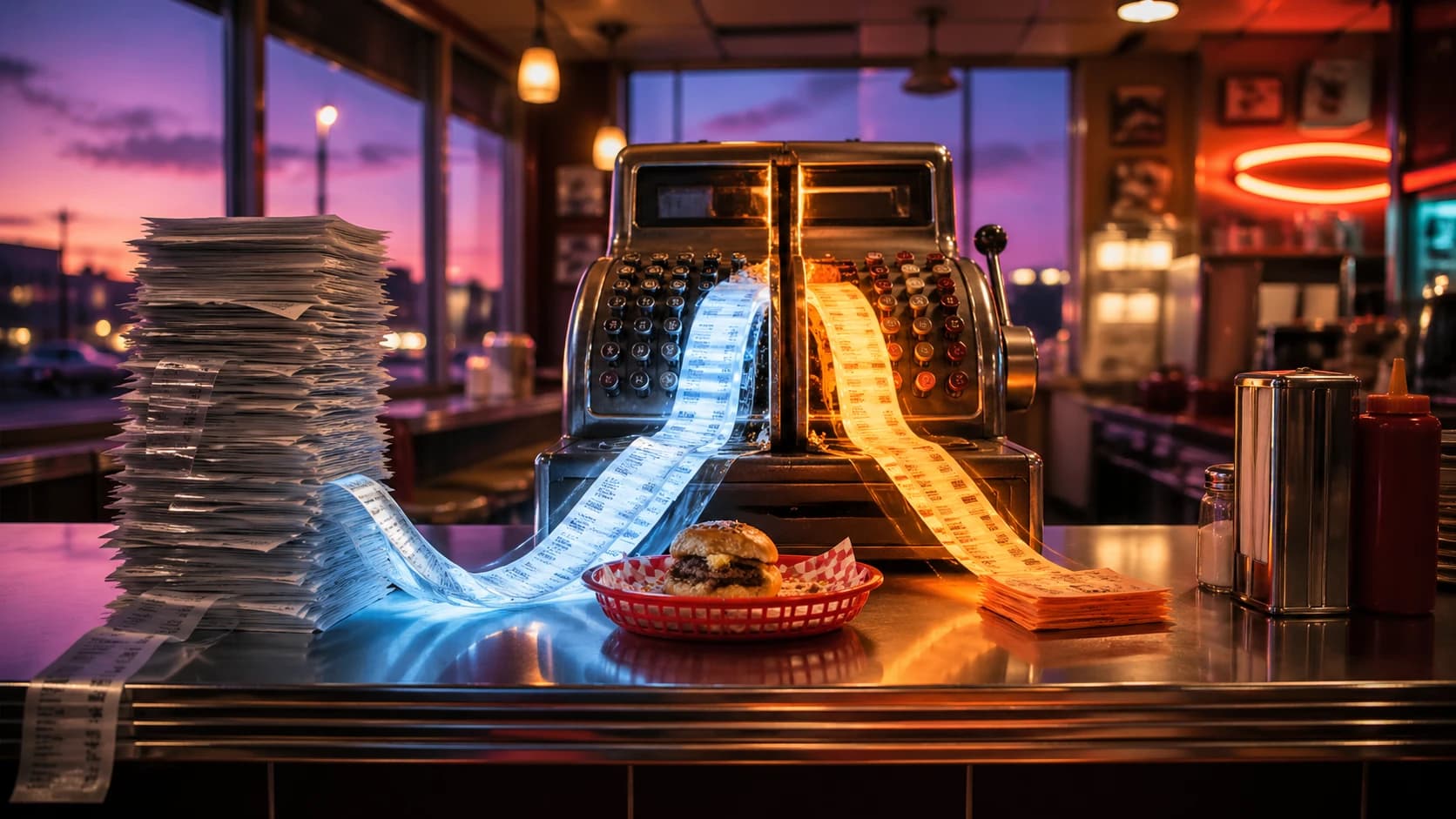
Steak 'n Shake has put a number on the cost gap between Bitcoin and credit cards. The chain says routing payments through Bitcoin's Lightning Network saves roughly 50% versus standard card processing, according to comments amplified by Cointelegraph on April 29, 2026. It is the first time a US restaurant chain of this size has shared concrete merchant data on the savings.
The framing matters. Most Bitcoin payment claims arrive as projections or theoretical math. Steak 'n Shake is reporting after the fact, after running Lightning at scale across its locations.
A blended estimate from a year of running Lightning
The fast food chain enabled Bitcoin payments via Lightning across all US locations in May 2025. Customers scan a QR code, pay in sats, and the merchant receives the value with sub-second settlement. Steak 'n Shake's framing on April 29 is direct: card processors take roughly 2-3% per transaction, while Lightning settles for fractions of a percent.
The 50% figure is a blended estimate across the chain's traffic mix. It captures both the network fee on Lightning and the lack of interchange that normally flows to the issuing bank, the card network, and the acquirer. Bitcoin as of April 29 trades at $75,482, down 0.8% on the day according to CoinMarketCap, but the cost math for Lightning settlement does not move with spot price the way some critics assume.
Inside the three-way split of a card swipe
A typical Visa or Mastercard swipe in the US splits the merchant fee three ways. Interchange goes to the bank that issued the card, usually the largest slice at 1.5-2.2%. Network assessment goes to Visa or Mastercard, around 0.13-0.15%. The acquirer or processor takes the rest, often 0.2-0.5% plus a flat per-transaction fee.
Lightning compresses that stack. There is no issuing bank, no card network assessment, and no acquirer in the same sense. The merchant pays a routing fee on the Lightning Network and a small payment processor margin if they use a service like Strike or OpenNode. The total typically lands well under 1%.
For a restaurant chain pushing thousands of small-ticket transactions per location per day, the difference compounds quickly. A store doing $1.5M in annual card volume at a 2.5% blended rate pays $37,500 in processing. The same volume on Lightning at sub-1% would cost roughly $15,000.
The catch the math does not show
Lightning is not a drop-in replacement. The chain still has to handle the volatile leg if it wants to keep dollars on its balance sheet, which means converting received sats to USD via a payment processor. That conversion adds a spread, usually 0.5-1%, that gets buried in the headline savings figure. Steak 'n Shake has not publicly broken out whether its 50% number is gross of conversion or net of it.
There is also adoption risk. Lightning at the counter only saves money on transactions that actually happen on Lightning. If 1% of customers pay in Bitcoin and 99% still swipe a Visa, the blended processing cost barely budges. Steak 'n Shake has not disclosed what percentage of its transactions now run on Lightning, which is the number that determines whether the 50% claim translates into real bottom-line impact.
The chain's no FX fee angle on Lightning is real for cross-border payments, but the US restaurant context is mostly domestic. The savings story here is interchange compression, not currency conversion.
A reference point for the anti-interchange camp
The data point lands in the middle of a broader fight between merchants and card networks over interchange. The Credit Card Competition Act has stalled in Congress for two years. Major retailers including Walmart and Kroger have publicly complained about rising swipe fees. A chain reporting 50% savings on a working alternative gives that camp a concrete reference point.
For crypto cards specifically, the message is mixed. Most consumer crypto cards still ride Visa or Mastercard rails, which means cardholders pay the same interchange as anyone else, just in crypto-funded form. The merchant savings only show up when the customer pays directly from a Bitcoin or stablecoin wallet, bypassing the card network entirely. That is a different product category than the cards SpendNode tracks.
The number Steak 'n Shake just put on the board is the kind of thing that makes corporate finance teams at other chains take a meeting. Whether any of them follow is the next question.
Overview
Steak 'n Shake reported on April 29, 2026 that Bitcoin Lightning payments cost about half what credit card processing does across its US locations, the first concrete merchant savings figure from a major US chain. The number compresses interchange, network assessment, and acquirer fees that normally total 2-3% into Lightning's sub-1% routing cost. The catch is conversion spreads and Lightning adoption rates, which the chain has not disclosed. For merchant payments, the data point gives the anti-interchange camp its first hard reference at scale.