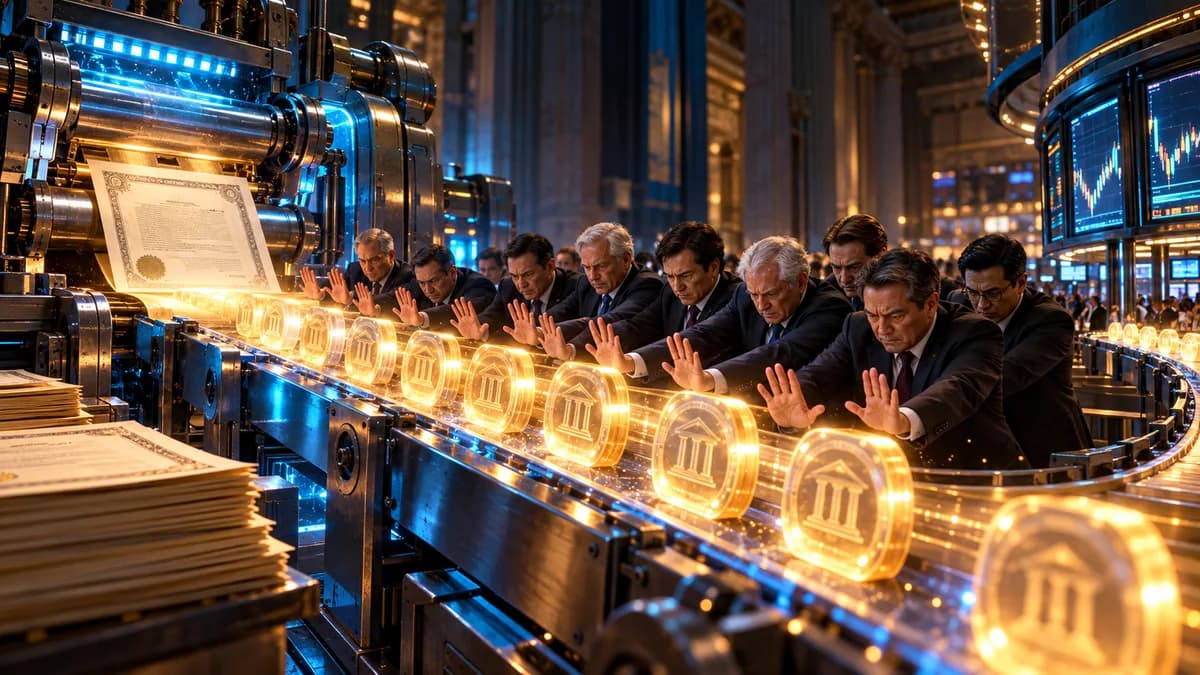
Nine US companies have filed objections to tokenized versions of their shares being traded on OKXICE, according to a report from Wu Blockchain published October 18, 2026. The objections target secondary-market trading of tokens that mirror the companies' listed equity, raising a question the tokenized-stock sector has mostly avoided answering: whether an issuer has any say over tokens built on top of its shares.
The dispute lands in a quiet market. Bitcoin traded at $81,565 as of October 18, 2026, down 0.1% on the day, with the broader market flat and the Fear & Greed index reading a neutral 49. The friction here is not price. It is consent.
The objection issuers have not had before
Tokenized equities have grown fast on the premise that a token tracking a stock is a convenience layer, not a new security. A provider holds or references the underlying share, mints a token that tracks its price, and lets users trade it around the clock. The pitch is access: fractional ownership, no market hours, settlement in stablecoins.
What that pitch skips is whether the company whose name sits on the token wanted to be there. The nine objections reported by Wu Blockchain put that directly on the table. These are not regulators acting on investor-protection grounds. They are the referenced companies themselves saying their equity should not be wrapped and traded on a platform they did not authorize.
That framing matters because it does not depend on securities law to have teeth. A company can raise brand, trademark, and association concerns regardless of how a regulator eventually classifies the token. When the issuer is the objector, the platform cannot resolve the problem by arguing the token is compliant. The complaint is about permission, not paperwork.
A structural gap in the tokenized-stock model
Most tokenized-equity products treat the underlying company as a passive data source. The share price is an input. The issuer is not a counterparty, is not paid, and in many designs is never notified. For years that arrangement drew little attention because volumes were small and the names involved rarely pushed back.
Scale changes that. Tokenized real-world assets have moved from a niche into a segment large exchanges now compete over, and as the referenced names get bigger and the volumes get real, the companies behind them have more reason to care how their equity is represented. Binance's tokenized stock products crossed $1 billion in assets within four months of launch, a sign of how quickly this category can grow once a major venue leans in. The same growth that makes tokenized stocks attractive also makes the unresolved consent question harder to ignore.
OKXICE now has to decide how to handle objections from the very entities its tokens reference. Delisting the nine names concedes that issuer consent is a precondition, which would reshape how every tokenized-stock desk sources its catalog. Keeping them listed invites a longer fight and signals to other companies that objecting is the only way to be heard.
The precedent reaches beyond one platform
The precedent is the point. If issuer objections can force tokens off a venue, every tokenized-equity provider inherits a new gating step: securing, or at least not provoking, the companies whose shares they track. That is a materially different business than treating public share prices as free inputs.
It also sharpens the line between asset classes within the RWA label. Tokenized US Treasuries and money-market products reference instruments with no single corporate owner to object. Tokenized company shares do not have that cover. A treasury token and an equity token get grouped under the same "tokenization" headline, but only one of them has a named counterparty who can show up and say no. The concentration and custody debates around tokenized treasuries are real, but they are not the same problem as a company disowning a token minted against its stock.
For now the facts are narrow: nine US companies, one platform, formal objections, and no resolution reported. The broader signal is larger. The tokenized-stock sector has been building on the assumption that it can represent any public company without asking. Nine issuers just tested that assumption directly, and the answer will set terms for a market that has been growing faster than its rulebook.
Overview
Nine US companies have objected to tokenized trading of their shares on OKXICE, per an October 18, 2026 Wu Blockchain report. The objections come from the referenced companies themselves, not regulators, and center on consent rather than securities classification. With tokenized equities scaling into a competitive segment, the dispute forces an unresolved question into the open: whether issuers have standing over tokens built on their stock. How OKXICE responds will signal whether issuer consent becomes a precondition across the tokenized-stock market.