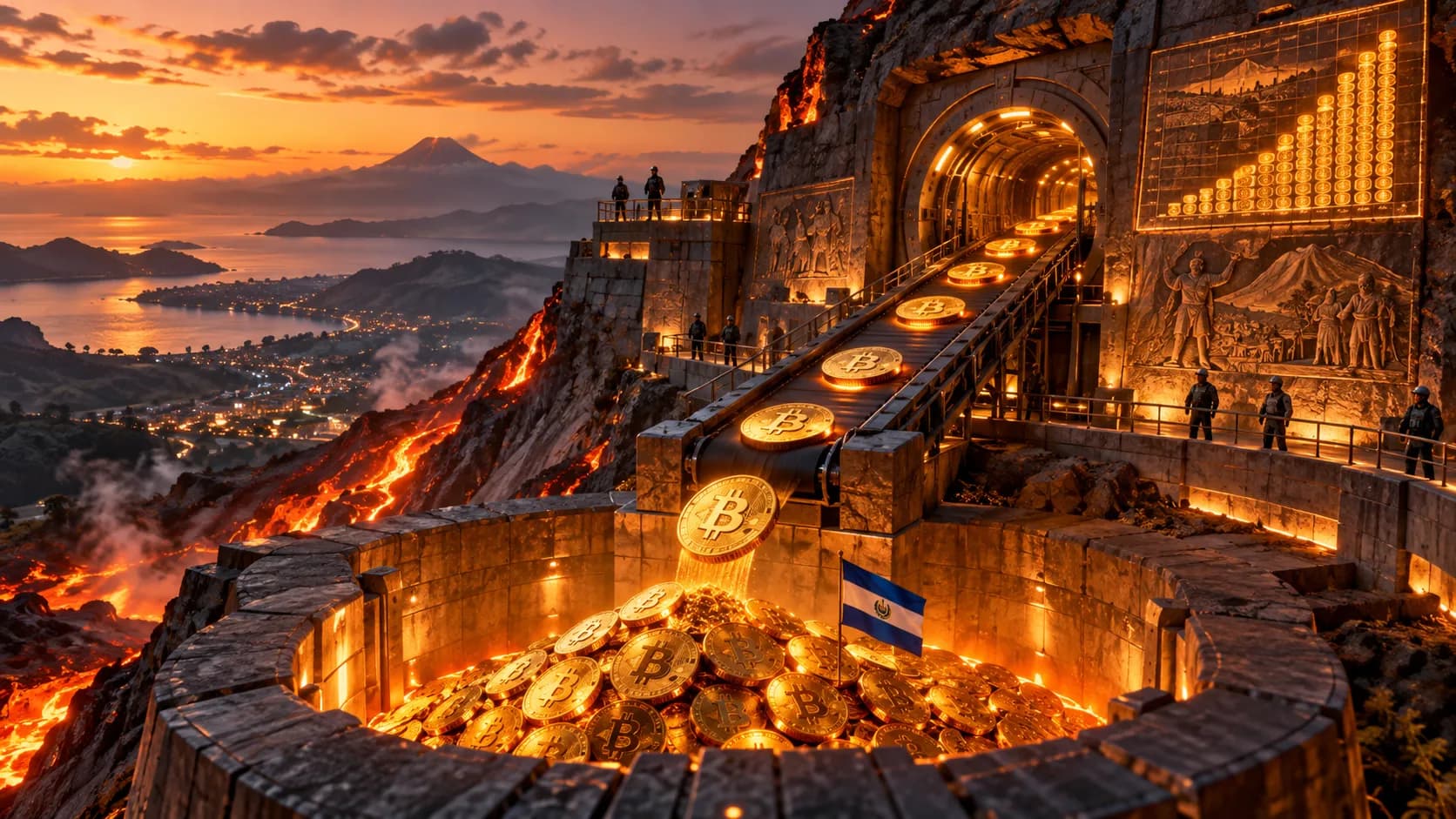
El Salvador's government says its national Bitcoin holdings have moved past 7,800 BTC, according to an October 18, 2026 post from Cointelegraph citing the country's reserve. At Bitcoin's price of about $82,080 as of October 18, 2026, that stack is worth roughly $640 million.
The figure continues a pattern the Salvadoran government has run since it made Bitcoin legal tender in 2021: buy on a schedule, hold through the drawdowns, and report the balance publicly. The reserve has survived a full bear market, a recovery, and the current stretch of sideways trading, with Bitcoin down about 1% over the past seven days and the Fear and Greed Index sitting at a neutral 49.
The size of the position in context
A 7,800 BTC balance puts El Salvador among the larger sovereign Bitcoin holders that disclose their positions. The exact dollar value swings with the market, which is the core feature of holding a volatile asset on a national balance sheet rather than cash or bonds. At $82,080 per coin the reserve clears $640 million. A move back toward six figures would push it well past $780 million; a slide under $60,000 would drag it below $470 million.
That volatility cuts both ways, and it is the whole argument. The government treats the swings as noise against a multi-year accumulation thesis. Critics treat the same swings as a reason a small economy should not denominate part of its reserves in an asset that can lose a third of its value in a quarter. Both readings start from the same number.
Steady buying, not timing
What separates El Salvador's approach from a trader's is the cadence. The state has publicly committed to regular purchases rather than trying to time entries, which turns the reserve into a dollar-cost-averaging program run at national scale. Over a long enough window, that smooths out the entry price and removes the pressure to call tops and bottoms.
It also makes the position legible. Because the balance is reported openly, anyone can track the accumulation against the market price and judge the strategy on its own terms. That transparency is unusual for a sovereign reserve of any kind, and it has made the Salvadoran stack a reference point whenever the question of nation-state Bitcoin buying comes up.
The timing of the latest disclosure lands during a quiet market rather than a rally. Bitcoin at $82,080 is not a euphoric print, and announcing a milestone into neutral sentiment reinforces the message the government has leaned on for years: the buying does not stop because the chart is flat.
State buying alongside the corporate trend
El Salvador is the sovereign face of a broader accumulation story. On the corporate side, businesses have been adding roughly 19,000 Bitcoin a month to treasuries since 2020, and the flows into Bitcoin and digital assets this year have run into the tens of billions. The through-line is the same: large holders treating Bitcoin as a reserve asset to sit on, not a position to trade.
For readers in El Salvador and the wider region, the practical layer sits below the reserve headline. A national Bitcoin balance does not change how an individual spends. That still runs through wallets, exchanges, and the growing set of crypto cards that convert a balance to fiat at the point of sale, where the network spread and conversion costs matter far more to a daily spender than the government's cost basis.
The reserve number is a signal, not a spending tool. It tells you how committed the state is to the asset. It does not tell you what a coffee costs when you tap a card, which is governed by the FX markup and the crypto-to-fiat spread baked into whatever product you use.
Overview
El Salvador reports its national Bitcoin reserve has crossed 7,800 BTC, worth about $640 million with Bitcoin near $82,080 as of October 18, 2026. The milestone extends a steady, publicly disclosed accumulation program the country has run since adopting Bitcoin as legal tender in 2021, and it arrives during neutral market sentiment rather than a rally. The figure sits alongside a wider trend of corporate and institutional balance-sheet buying, though a sovereign reserve has no direct bearing on day-to-day crypto spending.