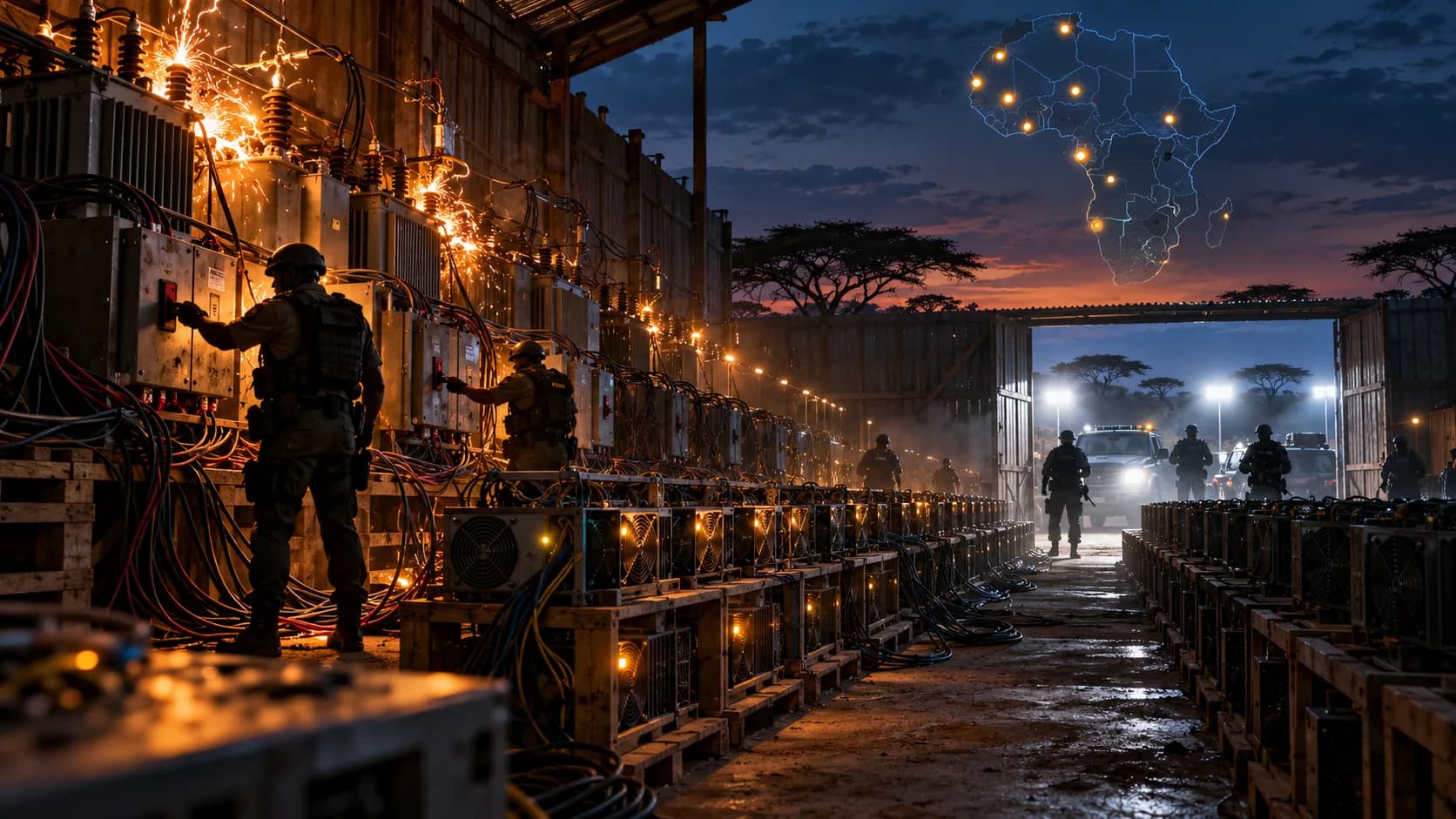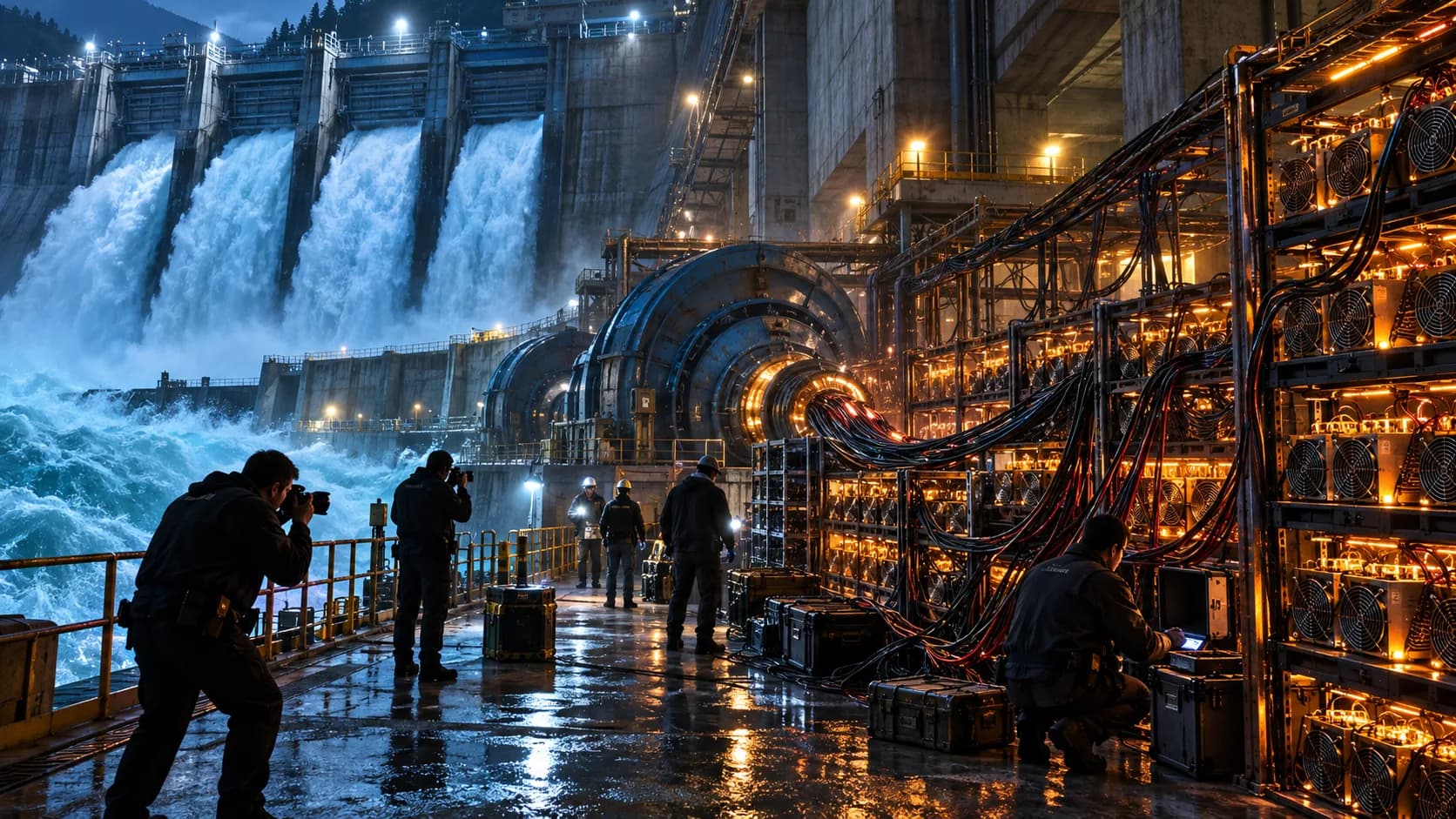
Mexican authorities seized roughly 300 cryptocurrency mining machines that had been connected directly to a hydroelectric dam, tapping the facility's power to run the operation, according to a September 9, 2026 report from Decrypt. Forensic accountants are now tracing who paid for the hardware, and money laundering has not been ruled out.
The case puts a spotlight on the part of crypto mining that rarely makes headlines: the electricity bill. Proof-of-work mining is a contest decided by cheap power, and when miners cannot source it legally, some simply take it. Wiring rigs into a dam is an extreme version of a pattern investigators see in many jurisdictions, from tapped distribution lines to falsified industrial meters.
The economics that drive power theft
Bitcoin mining profitability comes down to two numbers: the price of the coin and the cost of the energy to produce it. With Bitcoin trading around $79,392 as of September 9, 2026, the revenue side looks healthy. The cost side is where operators live or die. Electricity is typically the single largest ongoing expense for a mining operation, and a few cents per kilowatt-hour separates a profitable farm from one running at a loss.
That math explains why an operator would route cables into a hydroelectric plant. Free power turns a marginal operation into a highly profitable one and removes the paper trail that a commercial electricity contract would create. It also shifts the cost onto the utility and, ultimately, the public. A dam diverting output to unmetered rigs is generating revenue for someone while the grid absorbs the loss.
The money laundering angle
The detail that elevates this beyond a simple utility theft is the involvement of forensic accountants. Their job here is to answer a specific question: who financed the hardware. Three hundred machines represent a meaningful capital outlay, and tracing the purchase can expose the people behind an operation that was otherwise designed to leave no footprint.
Mining is attractive to anyone looking to convert questionable funds into clean-looking assets. Coins are mined directly to a wallet the operator controls, with no counterparty, no exchange account, and no customer onboarding. Newly mined Bitcoin carries no transaction history tying it to a prior crime. If the electricity is stolen and the rigs are bought with cash, the resulting coins can look like legitimate mining proceeds. That is the laundering concern investigators appear to be probing, though the report frames it as a line of inquiry rather than a proven charge.
Enforcement follows the hardware, not the blockchain
Illegal mining is hard to police by watching the blockchain. The chain records a block reward, not the theft that powered it. The seizable evidence is physical: the rigs, the cabling, the site, and the financial records behind the purchase. That is why this case was cracked at the dam rather than on-chain, and why the follow-up is an accounting exercise.
For the broader market, the story is a reminder that mining's footprint is grounded in real-world energy systems and the laws that govern them. Countries from Iran to Kazakhstan have run enforcement sweeps against illegal miners drawing on subsidized or stolen power, and Mexico now joins that list with a case that ties the hardware to a state asset.
The takeaway for crypto users
None of this touches the coins already in circulation or the wallets of ordinary holders. A mining bust does not change Bitcoin's supply schedule or network security in any measurable way. The market impact is effectively zero, and the price action on the day reflected ordinary trading rather than any reaction to the seizure.
The value here is as a case study in how illicit crypto activity actually gets caught. It rarely happens through cryptographic wizardry. It happens when someone steals electricity, leaves a hardware purchase trail, and draws the attention of accountants who can follow money the blockchain cannot see. For anyone using crypto legitimately, whether trading, holding, or spending through a crypto card, the lesson is that the regulated edges of the ecosystem, utilities, equipment vendors, and financial records, are where enforcement does its work.
Overview
Mexican authorities seized about 300 crypto mining rigs wired into a hydroelectric dam to steal its power, per a September 9, 2026 Decrypt report. Forensic accountants are tracing who financed the hardware, with money laundering under consideration. The case underscores that cheap or stolen electricity is the quiet foundation of much illegal mining, and that these operations are almost always unwound through physical evidence and financial trails rather than on-chain analysis. There is no measurable impact on Bitcoin's price, supply, or network.