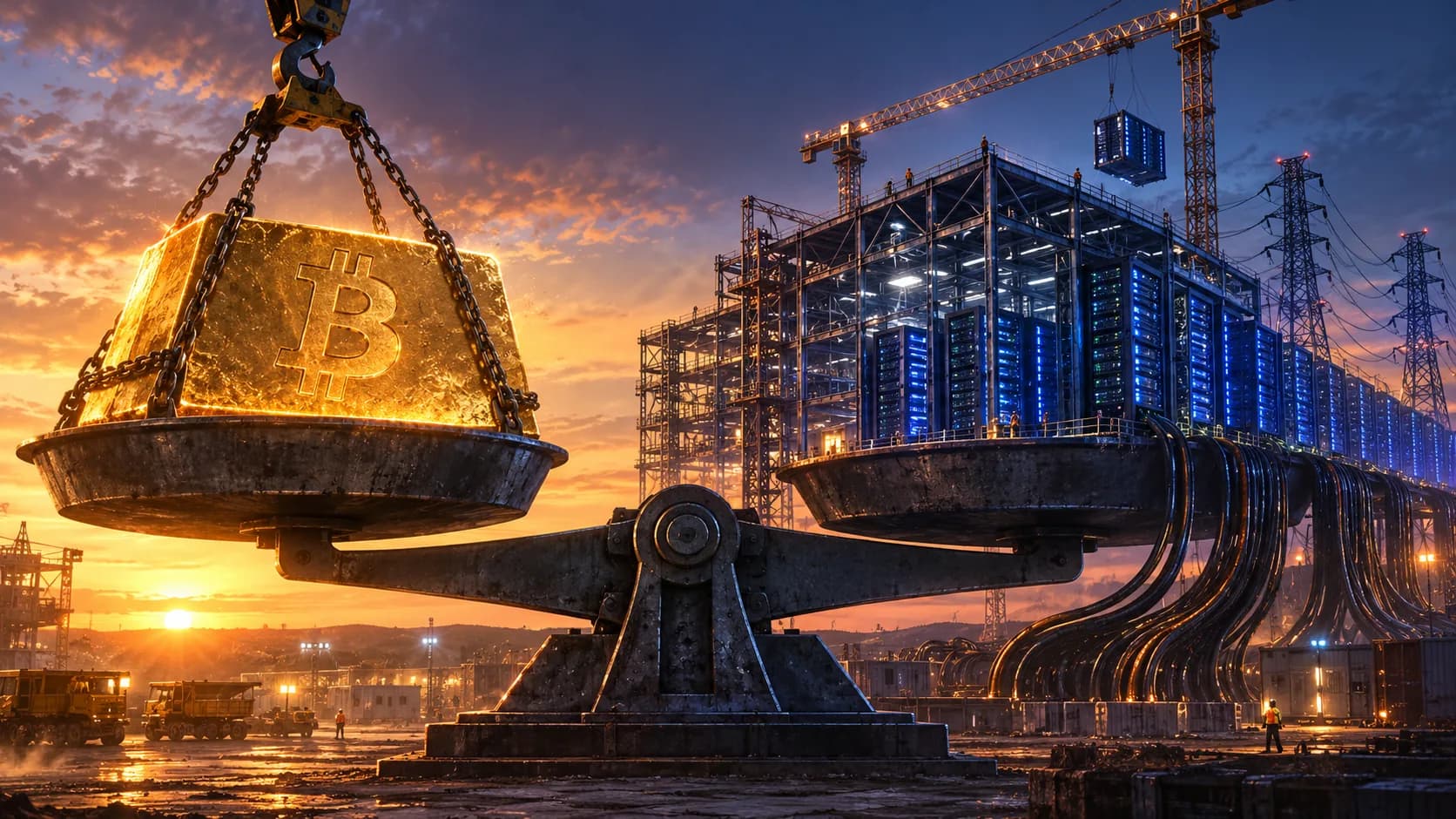
Marathon Digital has pledged 18,750 BTC as collateral to secure $600 million in new loans, with the proceeds earmarked for energy and AI infrastructure expansion. The disclosure was reported by Wu Blockchain on August 9, 2026. At Bitcoin's price of roughly $64,804 as of that date, the pledged coins are worth about $1.2 billion, putting the loan-to-value ratio near 49%.
The structure matters more than the headline number. MARA is not selling Bitcoin to fund growth. It is borrowing against holdings it intends to keep, which lets it raise capital without realizing a taxable event or reducing its coin count.
Collateral over liquidation
For most of the last cycle, public miners raised money by issuing shares or selling the Bitcoin they mined. Both come with a cost. Equity raises dilute existing holders. Coin sales cap the upside if Bitcoin keeps climbing, and they undercut the "we hold" narrative that treasury-heavy miners sell to investors.
A collateralized loan sidesteps both. MARA keeps its 18,750 BTC on the balance sheet, continues to benefit if the price rises, and gets $600 million in cash to deploy now. The trade-off is leverage. If Bitcoin falls far enough, a loan at a 49% starting LTV moves toward the lender's margin thresholds, and the borrower faces either posting more collateral or watching some of the pledged coins get liquidated.
That risk is not theoretical for miners. Several Bitcoin-backed corporate loans this year have carried thin or deferred margin terms precisely because borrowers wanted to avoid forced selling during volatility. The zero-margin-call structure PowerCompute negotiated on its own Bitcoin loan shows how much of the negotiation now happens around what triggers a call, not just the headline rate.
Energy and AI, not more rigs
The stated use of proceeds is telling. MARA is directing the money at energy and AI infrastructure, not simply more mining hardware. That fits a broader pivot across the mining sector, where operators with cheap power and large sites are repurposing capacity for AI compute, which pays in dollars and does not halve every four years.
Bitcoin mining margins compress on a schedule. AI compute demand does not. Elon Musk warned this week that America's power grid may struggle to keep pace with AI's energy appetite, a bottleneck that turns any company holding secured megawatts into a strategic asset. A miner that already controls substations, cooling, and grid interconnects is sitting on exactly the scarce resource that AI buildouts need.
Borrowing against Bitcoin to fund that buildout is a bet that the return on new energy and compute capacity beats the interest cost on the loan, while the collateral itself appreciates. It is a leveraged play on two assets at once.
The risk sitting underneath
Treating Bitcoin as productive collateral rather than a static reserve is now common at the corporate level, but the mechanics are the same ones that catch individual users off guard. A loan against a volatile asset is safe only as long as the asset stays above the liquidation line. When it does not, the lender sells regardless of the borrower's conviction.
Corporate treasuries have already felt this in 2026. SpaceX booked a $540M paper loss on its Bitcoin position earlier this year, a reminder that balance-sheet BTC swings both ways. MARA's loan adds a second layer: the coins are not just marked down in a drawdown, they can be called away.
For everyday crypto users, the parallel is direct. Products that let you borrow cash against BTC, ETH, and other holdings run on the same logic MARA is using at institutional scale. The appeal is keeping your crypto while unlocking spending power. The catch is that a sharp price drop can force liquidation at the worst possible moment. Anyone using a card or credit line backed by crypto collateral, rather than spending stablecoins directly, is carrying that same margin risk in miniature.
Overview
Marathon Digital pledged 18,750 BTC, worth about $1.2 billion at an $64,804 Bitcoin price on August 9, 2026, to secure $600 million in loans for energy and AI infrastructure, a roughly 49% loan-to-value ratio. The move keeps its Bitcoin holdings intact while raising growth capital, and it signals the mining sector's shift toward AI compute as mining margins tighten. The strategy rests on Bitcoin staying well above the loan's liquidation threshold. If it drops, the same leverage that funds the expansion can force MARA to top up collateral or surrender some of the pledged coins.