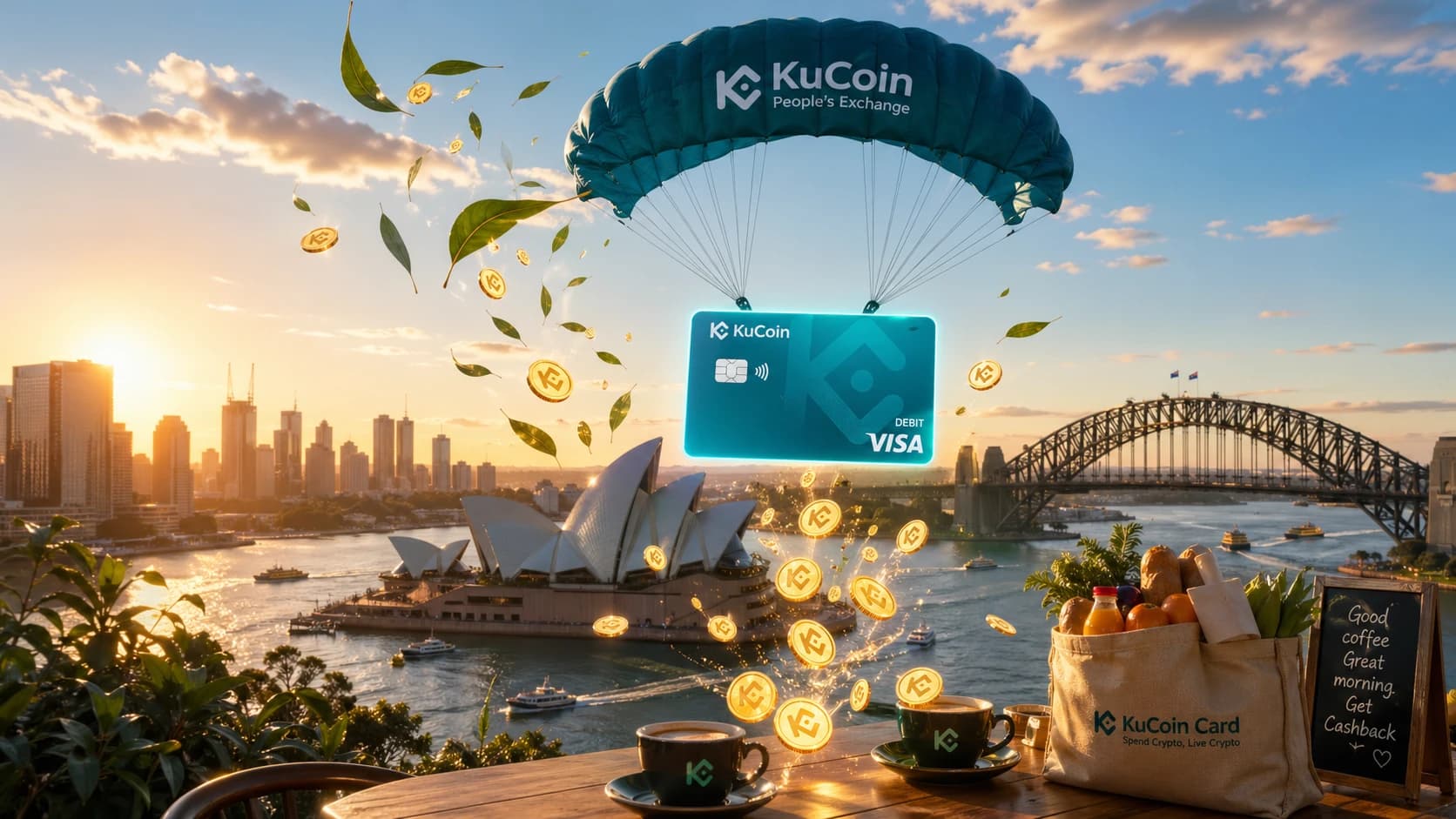
KuCoin announced on April 29, 2026 that its KuCard has officially launched in Australia, replacing the exchange's older points-style rewards with what it called direct cashback at the point of sale. The news came from KuCoin's verified X account at 03:21 UTC and was the first confirmed expansion of the card outside its earlier launch markets.
The exchange framed the change in plain terms: stop earning points, start earning cashback. That positioning matters because a large slice of the Australian crypto card market is currently held by competitors that lean on staking-based or tiered points systems, where the headline rate often hides token price risk and conversion friction.
The launch details and what was left out
KuCoin's announcement focused on three things: that KuCard is live for Australian residents, that rewards are paid as cashback rather than points, and that there is no fee structure spotlighted that would offset the cashback in the announcement post itself. KuCoin did not publish a full fee schedule in the launch tweet, so anyone signing up should pull the in-app disclosures before topping the card up.
The relevant comparison set in Australia includes Crypto.com, Binance, and Coinbase on the centralized side, plus self-custody options like MetaMask for users who would rather spend from their own wallet. Several of those competitors require token staking to unlock higher rates, which has been a sore point for Australian holders watching CRO and similar tokens through volatile cycles.
Cashback at swipe avoids the hidden costs of points programs
The shift from points to cashback is not just marketing. Points programs in crypto cards usually carry two hidden costs. The first is the conversion spread between the points unit and any redeemable asset. The second is exposure: if the points are paid in a native token, a price drop can wipe out the gain before the user redeems.
Cashback paid in crypto at swipe is cleaner. The user knows what they got, knows what asset it is in, and can hold or sell on their own schedule. KuCoin's choice to lead with that distinction in the Australian launch suggests the exchange has read the same complaints that have shown up across forums for the past year.
Australia is becoming a competitive card market
KuCard's arrival in Australia lands at a moment when the country has been tightening its grip on crypto licensing. The Digital Asset Framework Act passed earlier this cycle and pushed exchanges to obtain or align with AFSL-style oversight. KuCoin operating a card product in that environment is a notable signal: it implies the exchange has either secured the right local partnerships or is leaning on a card issuer that already meets local rails requirements. Neither was spelled out in the launch post.
For Australian users, the practical near-term question is whether KuCard will work cleanly with Apple Pay or Google Pay, how it handles AUD top-ups, and what the FX behaviour looks like for travel spending. Those are the three areas where Australian-issued crypto cards typically diverge in user experience, and KuCoin's announcement did not address them directly.
A note on prepaid mechanics: if KuCard runs on a prepaid Visa or Mastercard rail, Australian users should expect occasional pre-authorisation declines at petrol stations, hotels, and car rental counters. That has been a consistent issue for prepaid crypto cards globally, regardless of issuer.
The exchange-card retention play
KuCoin entering Australia with a cashback card fits a wider pattern. Major exchanges have spent the last year treating cards as retention tools rather than side experiments. Holding a user's spending captures wallet share that pure trading flows cannot. It also gives the exchange a direct fiat-out option that does not depend on bank transfer rails alone.
KuCoin specifically has had a turbulent regulatory year in other regions, including a US bar and earlier European license friction. An Australian launch that leans on a clean cashback message is the kind of move that helps reset the brand for users who only know the exchange through headlines.
The operating gaps still to be filled
Three near-term checkpoints matter. First, whether KuCoin publishes a full Australian fee schedule covering ATM withdrawals, FX margin, and top-up cost. Second, whether the cashback rate is uniform or tiered by KCS holdings, since a tiered model would reintroduce the token exposure problem the launch positioning argues against. Third, whether KuCard ends up as a Visa or Mastercard product in Australia, because the network choice affects acceptance at smaller merchants and overseas.
Until the exchange fills those gaps, the launch reads as a clear positioning move with the operating detail still to follow.
Overview
KuCoin launched KuCard in Australia on April 29, 2026, replacing its earlier points-based rewards with direct cashback at the point of sale. The expansion adds a meaningful new option to a tightening Australian crypto card market dominated by staking-based competitors. Key gaps remain around the published fee schedule, FX behaviour, and whether the cashback rate is tiered by KCS exposure.