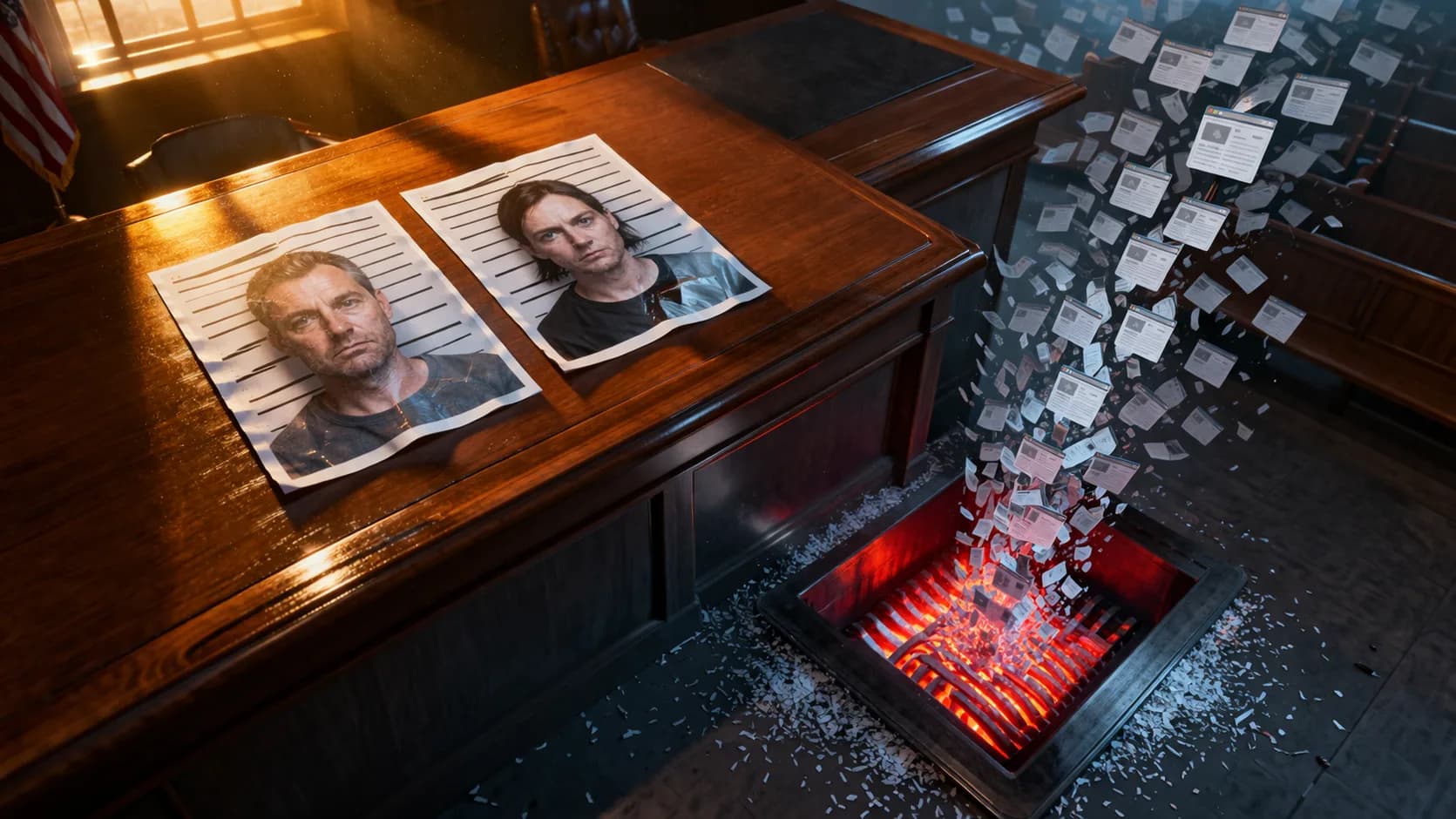
Ireland's Criminal Assets Bureau, with technical support from Europol's European Cybercrime Centre, accessed a Bitcoin wallet containing 500 BTC on March 24, 2026. The wallet belonged to Clifton Collins, a 55-year-old former beekeeper convicted of cannabis cultivation, and had been frozen since its seizure in 2019. The 500 BTC are worth approximately $34 million at current prices. Eleven wallets remain locked, and the total haul across all 12 sits at roughly $418 million.
A Beekeeper, a Fishing Rod Case, and 6,000 BTC
Collins began buying Bitcoin between 2011 and 2012, funding his purchases with proceeds from growing cannabis in rented houses around Dublin and selling it to other criminals. At the time, Bitcoin traded below $15. By the time Irish police caught up with him, Collins had accumulated approximately 6,000 BTC spread across 12 separate wallets.
He stored the private keys in a fishing rod case at a rented property in County Galway. After his arrest, the case disappeared. Collins claimed a break-in at the property was responsible. Investigators suspect a routine property clearance after his arrest is the more likely explanation.
Collins was sentenced to five years in prison, and in late 2020 he surrendered 1.2 million euros in other assets, including 89 BTC, vehicles, and equipment. But the 12 wallets stayed locked. For seven years, the private keys appeared gone, and the Bitcoin sat untouched on the blockchain while its value climbed from 53 million euros at the time of seizure to 360 million euros today.
How Europol Cracked the First Lock
Neither the Criminal Assets Bureau nor Europol has disclosed the exact method used. Europol confirmed it "provided critical support to Bureau investigators and analysts with the provision of highly complex technical expertise and decryption resources vital to the success of the operation." The agency hosted operational meetings at its headquarters in The Hague.
Cryptographic researchers have speculated about two possible vectors. The first is brute-force password cracking: if Collins protected his wallet files with a weak or reusable password, modern GPU clusters can cycle through billions of password combinations. The second is key-reconstruction through flaws in the original key-generation process. Bitcoin wallets created in 2011-2012, before BIP-39 mnemonic standards existed, sometimes used weak entropy sources that can be partially reverse-engineered with enough computational power.
Whatever the method, the breakthrough on one wallet appears to have opened a path to the remaining eleven. Irish authorities have indicated that the same technical approach may give them access to the full stash.
$418 Million in Limbo
The 6,000 BTC across all 12 wallets would make this one of the largest cryptocurrency seizures ever converted by a European law enforcement agency. For context, the U.S. Department of Justice seized 69,370 BTC from the Silk Road in 2020 and has been liquidating them in batches. Germany's federal police sold 50,000 BTC from the Movie2k piracy case in mid-2024, briefly pressuring the market with multi-hundred-million-dollar sell batches.
Ireland faces a different challenge. The Criminal Assets Bureau acknowledged that "the value of crypto assets can be difficult to realise," a reference to the fact that dumping $418 million of BTC onto the open market would itself move the price. Bitcoin's 24-hour trading volume sits at roughly $39.7 billion as of March 25, 2026, with BTC trading at $71,770. A full liquidation of 6,000 BTC would represent about 1% of daily volume, enough to cause visible slippage if executed poorly.
The bureau has not disclosed whether it will sell through an exchange, use an OTC desk, or hold the assets. Previous European seizure sales have used regulated exchanges and OTC brokers to minimize market impact.
Why Criminals Keep Losing Their Keys
The Collins case follows a pattern. Criminals who adopt Bitcoin early for its pseudonymity often fail at the operational security needed to keep it. James Zhong, who stole 50,000 BTC from Silk Road, hid a hardware wallet in a popcorn tin under his bathroom floor. German authorities in the Movie2k case obtained keys after the suspect voluntarily surrendered them during plea negotiations. Stefan Thomas, the legitimate programmer who lost access to 7,002 BTC on an IronKey device, has watched multiple recovery firms attempt and fail to crack his hardware wallet.
The difference in the Collins case is that law enforcement, not the owner, initiated the recovery. That represents a technical capability that did not exist at scale a few years ago. Europol's cybercrime unit has been investing in blockchain forensics and wallet analysis tools, and this is the highest-profile demonstration of those capabilities to date.
For self-custody users, the lesson is straightforward: wallet security from 2011-2012 is not the same as wallet security in 2026. Modern hardware wallets with BIP-39 seed phrases, strong passphrases, and secure element chips are orders of magnitude harder to crack than the early Bitcoin wallet formats that Collins used. The gap between "losing your keys" and "having your keys recovered by someone else" depends entirely on the cryptographic standards of the era.
Overview
Ireland's Criminal Assets Bureau cracked the first of 12 Bitcoin wallets seized from convicted drug dealer Clifton Collins in 2019, accessing 500 BTC worth $34 million. The total haul across all 12 wallets is approximately $418 million at current prices. Europol's European Cybercrime Centre provided the decryption expertise after seven years of the wallets sitting untouched on the blockchain. Collins had stored his private keys in a fishing rod case that disappeared after his arrest. Irish authorities say the same technique may unlock the remaining eleven wallets, which would make this one of the largest crypto-to-fiat conversions by a European law enforcement agency.