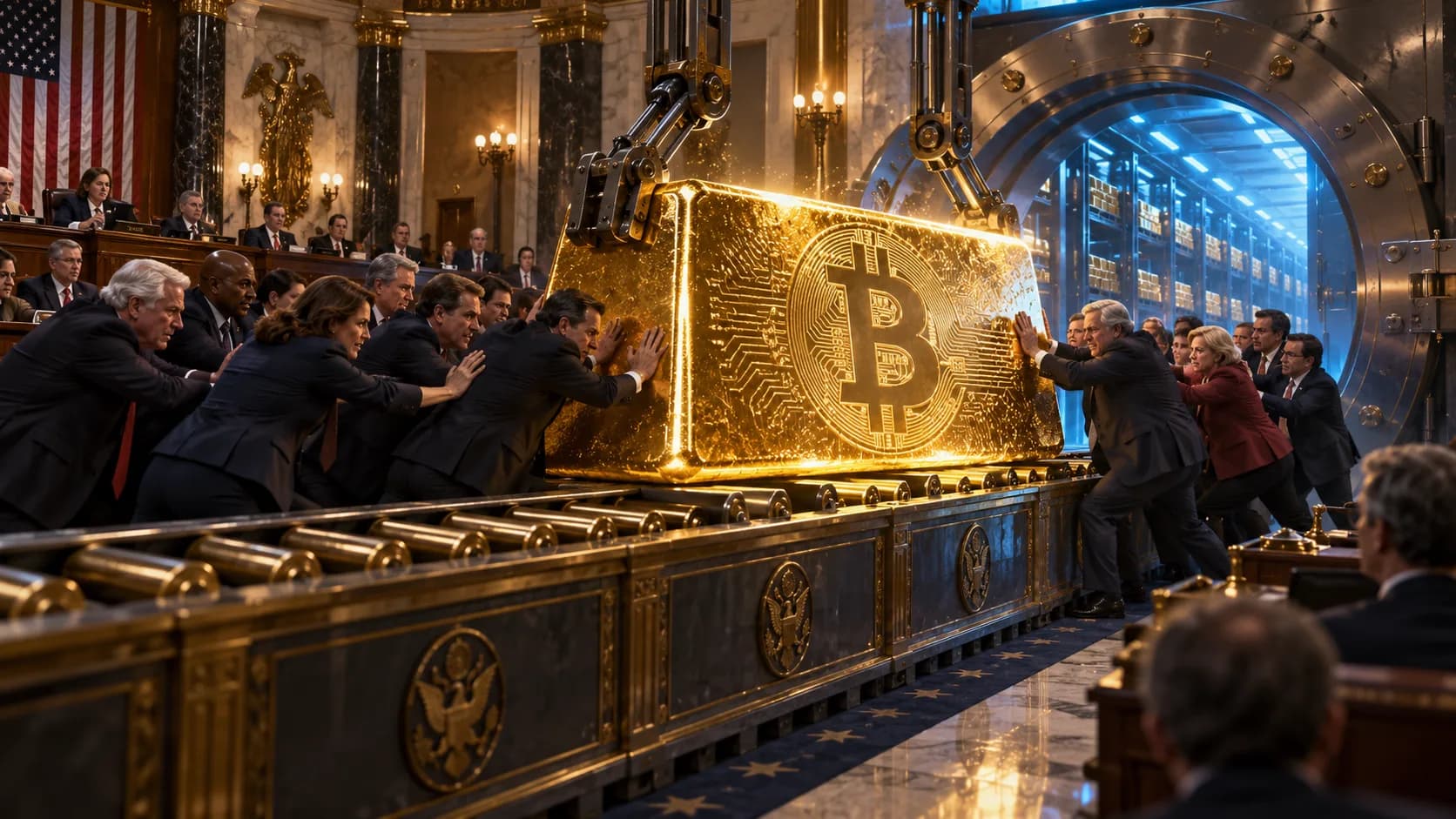
The House Financial Services Committee voted 28 to 21 to advance the Strategic Bitcoin Reserve bill, according to CoinDesk. It is the first bill of its kind to clear a full House committee, a procedural step that moves a US government Bitcoin stockpile from a campaign talking point into active legislation.
The vote came as Bitcoin traded at $76,345, up 0.6% over the prior 24 hours as of September 17, 2026, per CoinMarketCap data. The market's muted reaction is worth reading closely: a committee vote is an early gate, not a law, and traders appear to be pricing it that way rather than front-running a stockpile that does not yet exist.
The distinction a committee vote actually carries
A bill clearing committee is not the same as a bill becoming law. It means the measure survived markup, amendments, and a recorded vote inside the panel that has jurisdiction over it, and can now be scheduled for consideration by the full House. Plenty of bills clear committee and die on the floor or never get a vote at all.
What makes this one notable is the "first of its kind" framing. Proposals for a government Bitcoin reserve have circulated for over a year, but they had lived in press conferences, executive statements, and standalone bills that never moved. Getting a strategic reserve measure through a full committee vote is the first time the concept has passed a real legislative checkpoint rather than an aspirational one. The 28-21 margin also tells you this was not a lopsided consensus; it advanced on a clear partisan or near-partisan split, which matters for its odds on the floor and in the Senate.
The gap between advancing and enacting
To become law, the bill would still need to pass the full House, clear the Senate, and be signed by the president. Each of those stages has killed crypto legislation before. The CLARITY Act's troubled path through the Senate this month is a reminder that even bills with momentum can stall over unrelated fights, ethics language, or a failed cloture vote.
That is the sober way to read a 28-21 committee vote: it removes one of several obstacles, not all of them. For anyone watching this as a potential demand catalyst for Bitcoin, the relevant question is not whether the committee acted but whether leadership schedules a floor vote and whether the votes exist to pass it there.
The stakes if a reserve ever materializes
A federal Bitcoin reserve would put the US government in the position of holding Bitcoin as a strategic asset, alongside or adjacent to reserves like gold. The mechanics matter enormously and are not settled by a committee vote: whether the reserve is funded by purchases, seized assets already in government custody, or a mix; whether it can be sold; and who controls it. None of that is decided today.
The signal, though, is directional. A government that holds Bitcoin as a reserve asset is implicitly treating it as a monetary reserve rather than a speculative instrument or a vehicle for illicit finance. That framing tends to trickle down into how regulators, banks, and payment networks treat the asset, which is where it eventually touches ordinary users. Institutional custody launches, tokenized asset products, and the growing overlap between traditional finance and crypto rails all get easier to justify in a world where the Treasury itself holds the underlying asset.
For everyday holders, the near-term effect is close to zero. You do not gain or lose anything from a committee vote. The longer-term effect, if a reserve is ever funded, would show up as a structural source of demand that does not react to price the way a leveraged trader does, which historically has dampened volatility over time. That is a large "if," stacked on several more.
The read for now
The muted price action is the honest indicator here. Bitcoin's 0.6% move, with the Fear and Greed Index at 63 ("Greed") as of September 17, 2026, suggests the market sees this as a milestone worth noting rather than a done deal worth repricing. The bill has cleared a gate that no similar bill had cleared before. It now faces a full House vote, a Senate that has already proven hostile to crypto bills this session, and a set of unanswered questions about funding and control that a committee markup does not resolve.
This is analysis, not financial advice. A committee vote changes the odds; it does not change the law.
Overview
The House Financial Services Committee advanced the Strategic Bitcoin Reserve bill in a 28-21 vote, the first such measure to clear a full House committee. Bitcoin traded at $76,345 (up 0.6%) on the news as of September 17, 2026, a muted reaction that reflects the long road still ahead: a full House vote, the Senate, and unresolved questions about how any reserve would be funded and controlled.