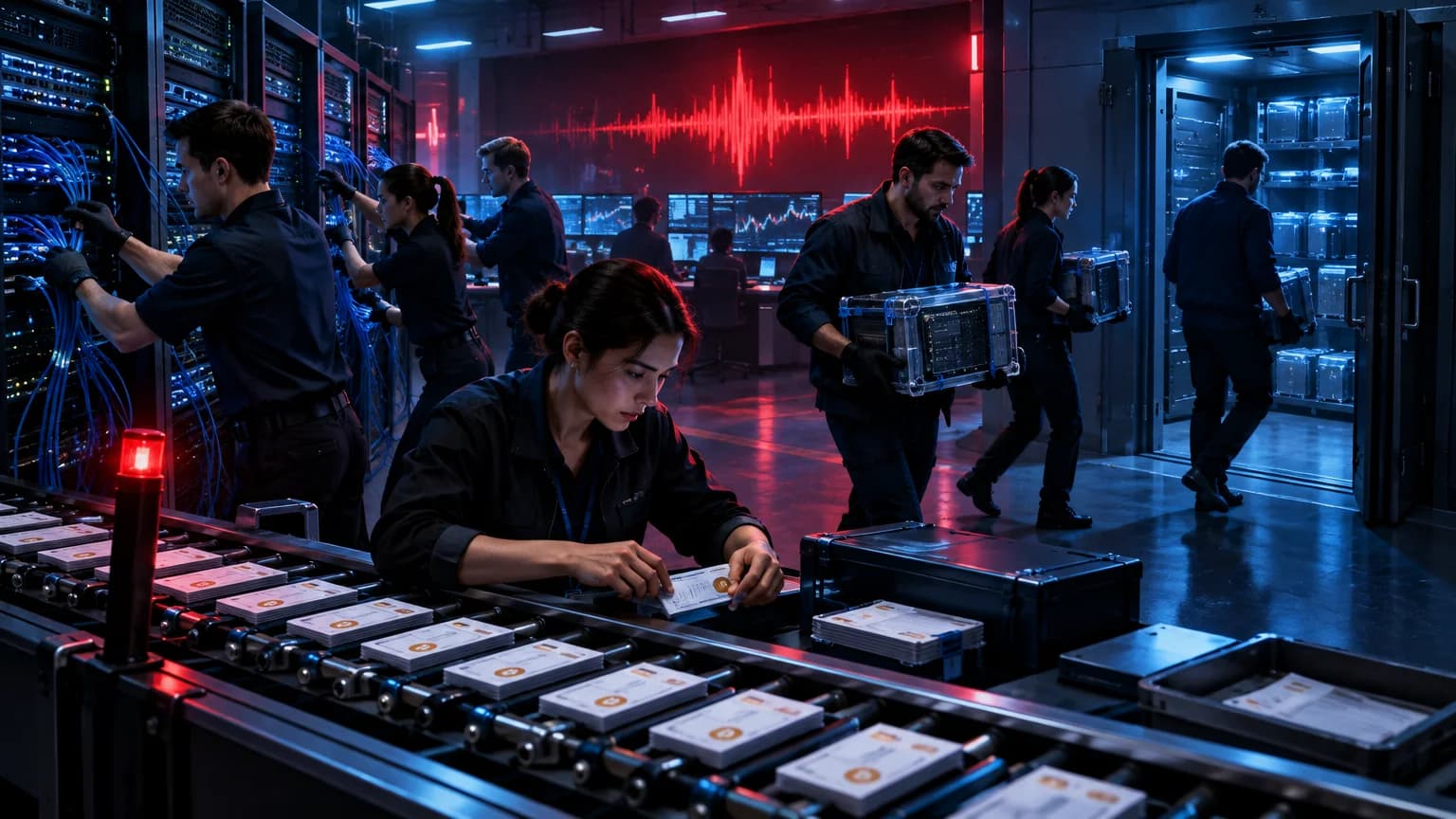
GOPAX, a cryptocurrency exchange in South Korea, suspended trading, deposits and standard withdrawals on November 6 after receiving an email threatening a hack. The exchange is moving customer crypto assets into cold storage. Local reporting by Herald Business said no actual hack or asset loss had been confirmed. At the time of writing, GOPAX had announced no reopening schedule, although customers could submit withdrawal requests through support for manual processing.
The shutdown imposes an immediate cost on customers: they lose ordinary trading and transfer access while GOPAX moves assets and checks their security.
A threatening email triggers successive shutdowns
Herald Business reported that GOPAX received a single email from a party claiming to be a hacker. The exchange had not verified the threat's authenticity when it decided to take protective action.
The restrictions arrived in stages. Deposits and ordinary withdrawals stopped at 2:55 p.m. Korea time, or 05:55 UTC. Trading stopped at 3:53 p.m., or 06:53 UTC. All outstanding unfilled orders were canceled.
That cancellation has a specific consequence for customers with resting orders. Those orders cannot execute during the suspension, and the cancellation means an instruction previously entered into the exchange is no longer a standing plan to buy or sell. A customer returning after trading resumes would need to check the account's order status before assuming an earlier instruction remains active.
GOPAX described its response as preventive. Reuters separately reported that the exchange was transferring most assets held in internet-connected hot wallets into offline storage, citing security concerns and recommendations from South Korean financial regulators.
The reported target is to move all customer crypto assets into cold wallets. The announcement describes the intended destination of those assets, without confirming that every transfer has finished.
Withdrawals move from the app to a manual queue
Customers still have a route to withdraw funds, but the restriction changes the process they must follow.
According to TechFlow's account of the exchange announcement, customers cannot withdraw directly through the website or app during the suspension. They must submit a request by email to customer support. GOPAX will then review and approve requests internally before processing them manually in sequence.
Processing may take longer than usual.
For a customer intending to move assets elsewhere, submitting a request starts a review process, with access dependent on approval and manual processing. Anyone planning around a transfer needs to allow for that approval step and the queue of requests awaiting processing.
The disruption also affects incoming transfers. In an official notice, Coinone warned that cryptocurrency sent from its exchange to GOPAX might not be credited normally because GOPAX had suspended deposits and withdrawals. That warning gives customers at another exchange a concrete reason to postpone sending funds to GOPAX during the outage.
Customers therefore face two separate access problems: those with assets already at GOPAX must use a manual exit process, while people sending assets into GOPAX risk a delay in the deposit appearing in their account.
Offline storage leaves control with GOPAX
Cold storage separates wallet infrastructure from the internet. Moving assets out of hot wallets reduces the amount kept in systems used for online operations, which is the purpose of GOPAX's announced migration.
For customers, however, the location of those assets and the ability to access them are separate questions.
GOPAX continues to control the custody process and withdrawal approvals. Moving customer assets into exchange-managed cold wallets does not give customers control of the signing keys or the ability to bypass the exchange's service restrictions. The manual withdrawal procedure makes that dependence visible.
The shutdown illustrates a practical custody risk: an exchange can restrict access while taking action intended to protect the assets it holds. Customers can experience an interruption even without a confirmed loss.
Readers comparing options involving their own wallet should distinguish control over transaction authorization from the security arrangements a custodian chooses. In this incident, GOPAX decides when and how approved withdrawals proceed.
The exchange's stated sequence is to move assets first and verify their security afterward, according to Herald Business. That leaves the reopening decision dependent on GOPAX's operational checks. Customers have a support route for withdrawal requests, but no published timetable for a return to ordinary service.
Overview
GOPAX responded to a hacking threat by stopping trading, deposits and standard withdrawals, canceling unfilled orders and beginning a move of customer crypto assets into cold storage. No theft had been confirmed in the reporting available at publication.
The immediate consequence is reduced access while the exchange carries out its protective measures. Withdrawal requests remain possible through customer support, subject to internal approval and sequential manual processing. GOPAX has not announced when normal services will resume.