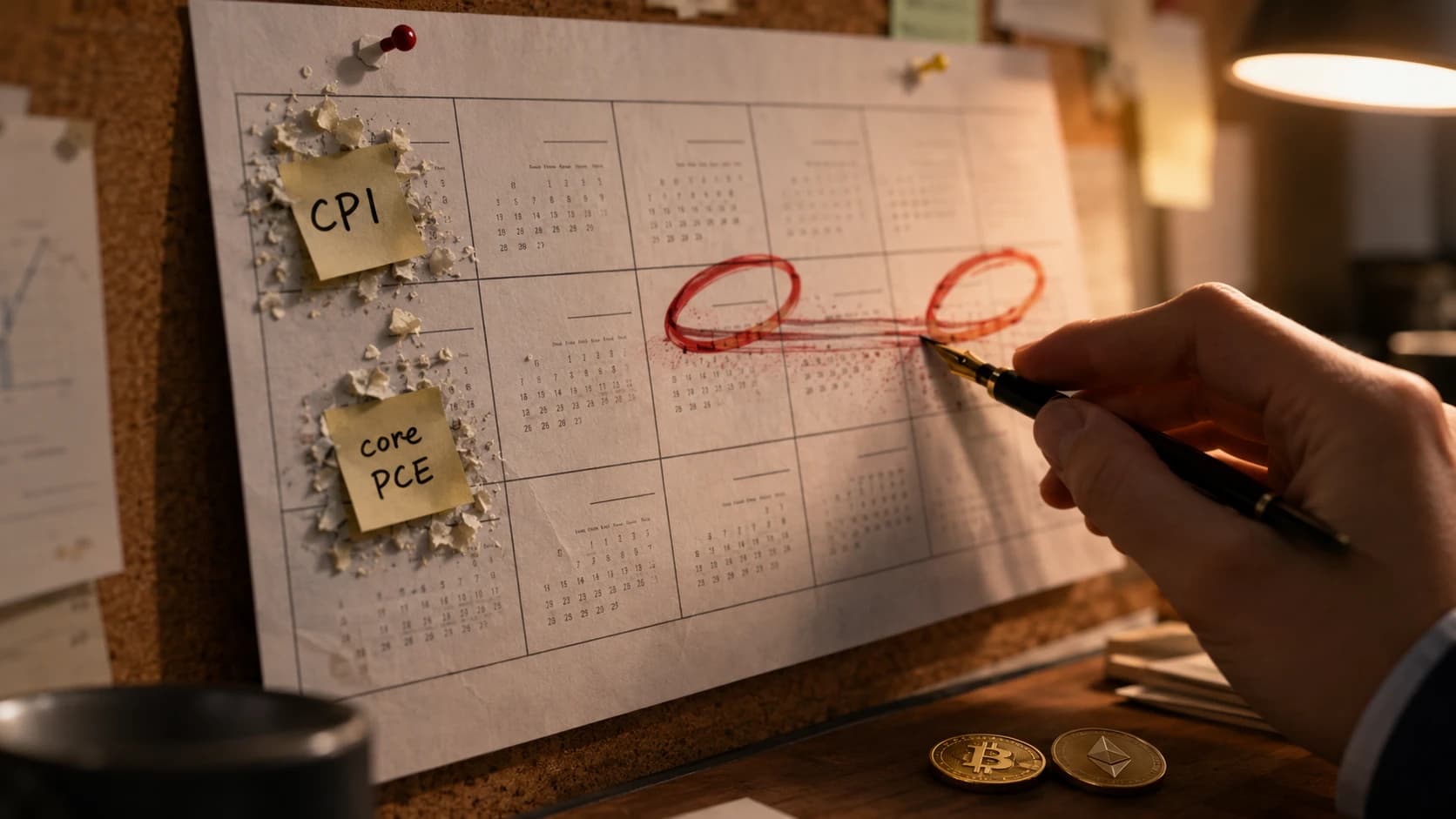
Goldman Sachs has shifted its forecast for the next two Federal Reserve rate cuts back by a quarter, now penciling them in for December 2026 and March 2027. The bank cited inflation readings that have refused to glide lower, according to a Bloomberg post on May 9, 2026. The revision pushes the back end of Goldman's easing path further into next year and tightens the picture for risk assets relying on cheaper money.
Crypto largely shrugged. As of May 9, 2026, Bitcoin sits at $80,299, up 1.1% on the day, with Ethereum at $2,317 (up 1.9%). Solana led the majors with a 6.3% gain to $93.55, while XRP added 3.4% to $1.43 and BNB rose 2.3% to $651.15. The CoinMarketCap Fear and Greed index reads 50, neutral. The mismatch between a hawkish macro update and a green crypto tape is the story.
A quarter slip, not a regime change
Goldman is not abandoning its easing call. The bank is moving it. A one-quarter delay in two cuts means the team still expects inflation to recede enough to justify lower rates, just slower than they thought a few weeks ago. December 2026 and March 2027 are the new targets, replacing earlier September and December estimates.
The trigger is sticky inflation. Recent CPI and core PCE prints have run hotter than the soft landing path required, and tariff pass-through plus services pricing have kept the Fed cautious in public statements. Goldman's note is the latest in a string of Wall Street recalibrations away from the aggressive cut trajectory pencilled in last winter.
For traders, the practical read is straightforward. The cost of capital stays where it is for longer. Companies that need cheap funding to grow, including listed crypto miners and treasury vehicles, face a longer wait before debt service eases.
Crypto's muted reaction
Three factors muted the macro read in crypto markets. The first is that a delay was already partially priced. Fed funds futures had drifted hawkish through April, and the change from September to December is small enough to absorb without a repricing wave. The second is sentiment. Fear and Greed at 50 is neutral, not euphoric, so there is less long positioning to flush out on rate-cut disappointment.
The third is rotation. Solana's 6.3% daily gain and 11.9% weekly print show capital moving toward higher-beta names rather than fleeing the asset class. Spot ETF flows and listed crypto equity flows over the past two weeks have similarly favored selective risk-on inside crypto, not a broad de-risking. The pattern is consistent with traders treating the Fed delay as a known constraint rather than a fresh shock.
The catch for crypto-adjacent companies
Sticky rates do bite somewhere. Public crypto miners with large debt stacks and AI-pivot capex plans, like the kind announced in IREN's $3.4B Nvidia AI deal, depend on credit conditions. A longer high-rate plateau increases the cost of refinancing convertible notes and raises the bar for new equipment financing. Companies executing aggressive treasury accumulation strategies face a similar headwind, since JPMorgan's $30B 2026 buying projection for Strategy assumes continued capital-markets access at workable rates.
Stablecoin yields are the other axis. Higher-for-longer rates keep tokenized Treasury yields attractive, which is part of why on-chain T-bill products keep growing. The flip side is that elevated risk-free yields raise the hurdle for DeFi protocols competing for the same dollars.
Reading the dot plot through Goldman's lens
The Fed's own dot plot at the March 2026 meeting still implied two cuts this year, but committee speakers have grown more hesitant since. Goldman's update aligns the bank with the more cautious end of consensus rather than leading it. Bank of America and Morgan Stanley have already pushed their own forecasts back, though by varying amounts. The cluster of late-2026 to early-2027 calls suggests Wall Street collectively no longer believes the inflation glide path will arrive on schedule.
For crypto specifically, the macro setup matters most through dollar strength and Treasury yields. Higher real yields tend to weigh on non-yielding assets, which has historically included Bitcoin during macro selloffs. The fact that BTC and ETH are absorbing this update without selling off is a sign the asset class is decoupling somewhat from rate-pivot trades that dominated 2024 narratives.
Overview
Goldman now sees Fed rate cuts in December 2026 and March 2027, a quarter later than before, on the back of sticky inflation. Crypto did not react negatively: Bitcoin held above $80,000, Solana led majors with a 6.3% gain, and Fear and Greed stayed neutral. The most exposed group is crypto-adjacent public companies carrying debt, where a longer high-rate plateau pinches refinancing math.