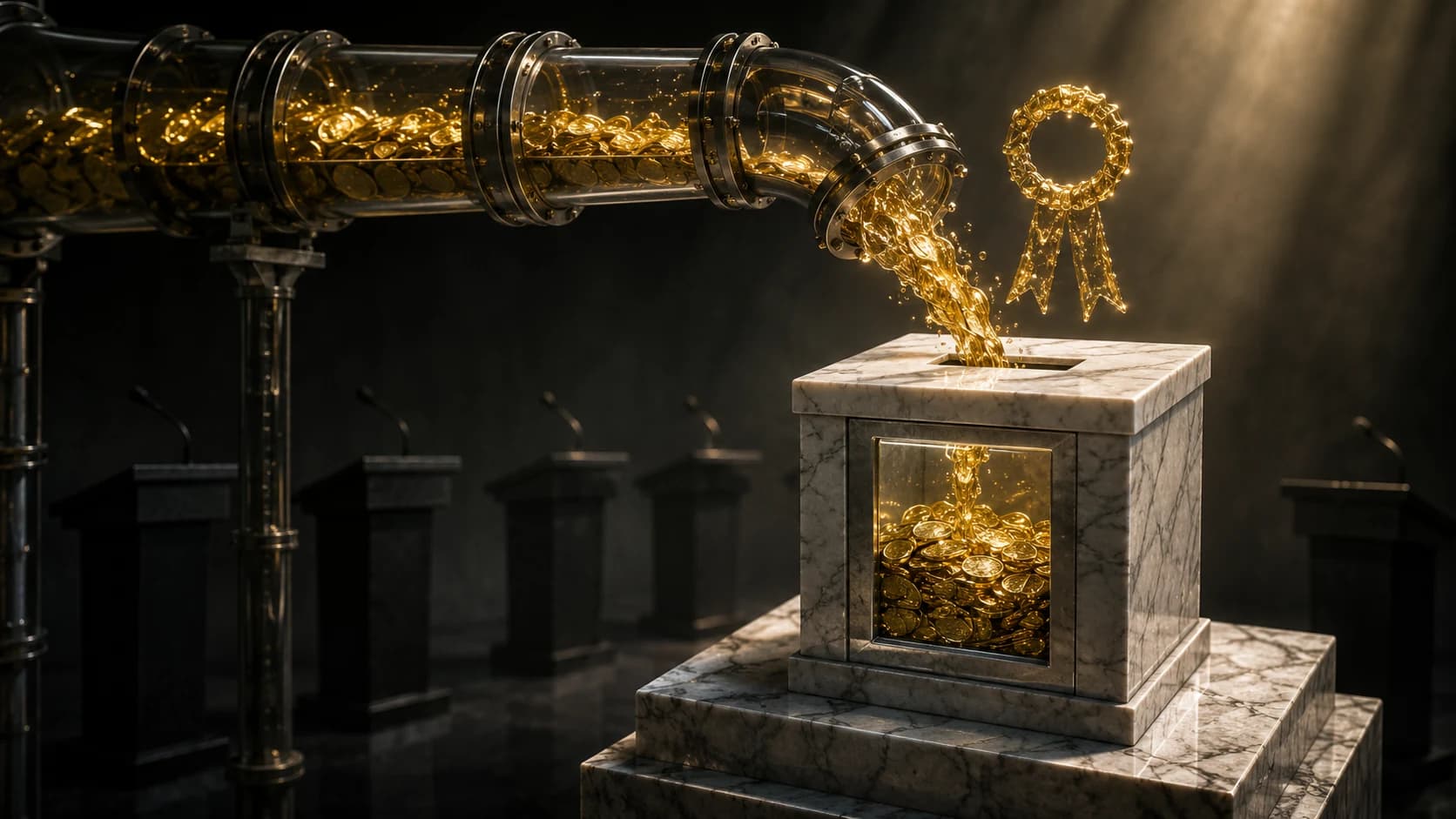
The crypto industry's largest political action committee turned a single House primary into a demonstration of its spending power. Fairshake, the super PAC funded by Coinbase, Ripple, and a16z, put roughly $5.5 million behind Maryland state delegate Adrian Boafo, who won the Democratic primary on Tuesday for the seat long held by retiring Representative Steny Hoyer. CoinDesk reported the result and the spending figure on June 23.
That $5.5 million on one primary candidate is among the largest single-race commitments the PAC has made. Boafo's win was described as a dominant one, and he now advances to a general election in a seat that leans heavily Democratic.
A wider sweep of crypto-aligned candidates
Boafo was not the only Fairshake pick to move forward. Representative Ritchie Torres, a New York Democrat and one of the more vocal crypto supporters in Congress, won his race with around $1.3 million in PAC support. In Maryland, incumbent Representative April McClain Delaney advanced with roughly $516,000 behind her. The PAC also backed Utah Republican incumbent Blake Moore, showing the spending is not tied to a single party.
The pattern matters because Fairshake is not picking long-shot insurgents. It is concentrating money on candidates who are either already in office or strongly favored, which raises the odds that its dollars convert into actual votes in the next Congress. For an industry that spent the last several years losing fights in Washington, backing likely winners is a different strategy than backing a message.
The war chest behind the spending
The Maryland number is large, but it sits against a much bigger balance. Fairshake held about $126 million in reserves as of the end of the prior month, according to CoinDesk. That figure gives the PAC the ability to repeat $5 million commitments across dozens of races without straining its funding, and it signals to candidates on both sides that crypto money is available early and in volume.
Early money is the part that tends to get overlooked. A commitment made before a primary, when a campaign is short on cash and name recognition, buys more influence per dollar than a late general-election ad blitz. Boafo's race is a clean example: the support arrived when it could shape the outcome, not after it was decided.
The legislation these seats will decide
The reason a crypto PAC cares about a Maryland House primary has little to do with Maryland. The next Congress will keep working through the bills that set the rules for stablecoin issuers, exchanges, and on-chain payment systems. Members elected with crypto backing are the ones expected to shape the detail of that legislation, from how stablecoin payments are treated to which agency supervises digital-asset trading.
For anyone using a crypto card or holding a dollar-pegged balance, that regulatory direction is not abstract. Rules written in Washington decide whether a US issuer can offer stablecoin spending, what disclosures apply to rewards, and which products clear compliance for the US market at all. The industry is spending to keep those rules favorable, and primaries are where it is starting.
Pushback on the spending
Not everyone reads the strategy as healthy. Maryland Senator Chris Van Hollen criticized the funding as an "obscene amount of big special-interest money," a line that captures the broader unease about a single industry buying influence in low-turnout primaries. That tension is the political risk for crypto. Wins bought with $5 million checks invite the argument that the resulting policy serves the funders rather than the public.
The counterargument from the industry is that other sectors, from banking to energy, have spent at this scale for decades, and that crypto is simply matching the playing field after years of being outspent. Both readings will follow these candidates into office.
Overview
Fairshake spent about $5.5 million to help Adrian Boafo win a Maryland Democratic House primary on June 23, its largest concentration on a single primary race so far. Ritchie Torres ($1.3 million) and April McClain Delaney ($516,000) also advanced with crypto backing, and the PAC still holds roughly $126 million for the rest of the cycle. The spending is aimed squarely at the lawmakers who will write the next round of stablecoin and market-structure rules, which is why a state-delegate primary drew seven-figure crypto money. Senator Chris Van Hollen called the sums "obscene," a sign the strategy carries reputational cost alongside its results.