
Best Crypto Cards for Digital Nomads (2026)
Zero-FX cards with mobile wallet support for location-independent spending.
Top Cards for Digital Nomads

Curated for Digital Nomads
33 matching cards
Filtered by no fx fee, apple pay, google pay
When every purchase you make is technically a foreign transaction, FX fees stop being a minor nuisance and become a lifestyle tax. Our fee audit found that a traditional bank card charging 2.5% to 3.5% on non-domestic transactions costs a nomad spending $5,000/month roughly $1,500 to $2,100 a year for doing nothing wrong except living somewhere interesting.
Crypto cards with 0% FX markup convert at or near the interbank rate regardless of where you tap. That means your morning coffee in Chiang Mai, your coworking desk in Lisbon, and your apartment in Medellin all cost exactly what they should, no spread, no surprises. The cards on this page all clear that bar.
The real question is which ones also earn you cashback, work with Apple Pay for quick taps at metro turnstiles, and give you a virtual card number the moment you sign up so you are not stuck waiting for a physical card to chase you across time zones.
2026 Digital Nomad Card Options
| Card | Max Cashback | FX Fee | ATM Fee | Network | Apple/Google Pay | Regions |
|---|---|---|---|---|---|---|
| Plutus Visa | 9% | 2.5% | 2.5% | Visa | Yes | EEA |
| Wirex Elite | 8% | 0% | Free tier | Visa | Yes | 35 countries |
| Bitget Card | 8% | 0% (0.9% tx) | 2% | Visa | Google Pay | EEA/APAC |
| COCA | Up to 8% | 0% | Stake $COCA (1% free) | Visa | Yes | 70 countries |
| Coinbase Card | 4% | 0% | 2% | Visa | Yes | US/UK/EEA |
| RedotPay | None | 1.2% | 1.5% | Visa | Yes | 150+ countries |
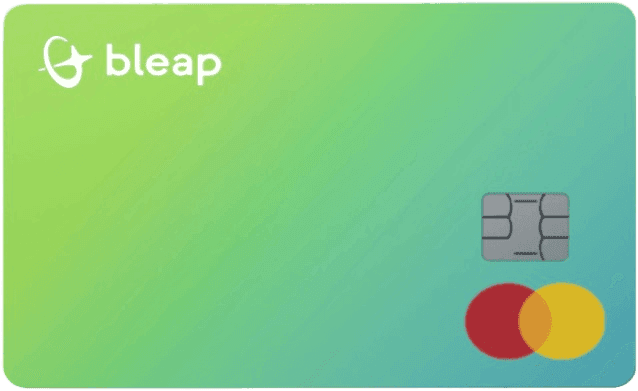
| Bleap Mastercard | 2% | 0% | N/A | Mastercard | Yes | EEA |
| MetaMask Card | Points | 1% cross-border | N/A | Mastercard | Yes | US, EEA, UK, CH, LatAm |
| Ready Lite | 0.5% STRK | 1% | $200/mo free | Mastercard | Yes | EEA/UK |
Most cards charge 0% FX (exceptions: Ready Lite at 1%, Plutus at 2.5% non-domestic). The table highlights the critical columns for nomads: ATM fees (for cash-heavy destinations), card network (carry one Visa and one Mastercard), and regional availability (a card that only works in the EEA is useless in Southeast Asia). Cashback matters, but not if the card does not work where you are going.
How Crypto Card FX Conversion Actually Works
When you tap your card at a street food stall in Bangkok, a sequence of events happens in under three seconds. Understanding this sequence explains why some "0% FX" cards still cost you money.
Step 1: The terminal sends the transaction to the card network (Visa or Mastercard) in Thai baht (THB).
Step 2: The card network converts THB to the card's settlement currency using the network's base exchange rate. Visa and Mastercard publish these rates daily, and they are typically within 0.1-0.3% of the mid-market rate you see on Google.
Step 3: Your card issuer receives the charge in the settlement currency. If your card settles in USD, the charge arrives in USD. If it settles in EUR, the charge arrives in EUR.
Step 4: Your card issuer converts your balance (USDC, USDT, or whatever you loaded) to the settlement currency. A "0% FX" card means no additional markup is added on top of the network rate.
Step 5: Cashback is calculated and distributed in the reward token (BGB, PLU, CRO, etc.).
The Settlement Currency Trap
This is where most nomads lose money without realizing it. Your card has a settlement currency, the base currency that Visa or Mastercard converts to before charging your account. If your card settles in EUR but you are spending in Thai baht, the conversion path is:
THB → EUR (network rate) → deducted from your USDC balance
If your card settles in USD and you are spending in EUR while living in Lisbon:
EUR → USD (network rate) → deducted from your USDC balance
The rule: The fewer conversions, the less you lose. A EUR-settled card in the eurozone has zero conversion. A USD-settled card in Thailand has one conversion (THB → USD). A EUR-settled card in Thailand has the same one conversion (THB → EUR). But a EUR-settled card in the US means your dollar purchases get converted to EUR and back, which can silently add 0.3-0.5% in spread.
| Card | Settlement Currency | Best Regions (No Conversion) | Conversion Regions |
|---|---|---|---|
| Coinbase | USD | US, dollarized countries | Everywhere else |
| Plutus | EUR | Eurozone (20 countries) | Non-EUR countries |
| RedotPay | USD | US, dollarized countries | Everywhere else |
| Wirex | Multi-currency | Most major currencies | Minor currencies |
Dynamic Currency Conversion (DCC): The Most Expensive Trap
Per our latest update, DCC remains the single most expensive mistake in international spending, and it applies to every card, crypto or traditional. When a merchant or ATM offers to charge you in "your home currency" instead of the local currency, they apply their own exchange rate with a 3% to 7% markup. You are paying the merchant for the privilege of a worse exchange rate.
Always choose the local currency. If a terminal asks "Pay in USD?" or "Pay in EUR?", select the local currency option. At restaurants, if the waiter offers to "make it easier" by charging in your home currency, decline. This single habit saves more money per year than almost any card feature. At $5,000/month spending, DCC on even 20% of transactions at a 5% markup costs you $500/year.
What Digital Nomads Need in a Crypto Card
Zero FX markup on every currency - not just EUR or USD
Apple Pay or Google Pay for contactless transit and in-store taps
Instant virtual card - usable the same day you sign up
Stablecoin funding so your spending power does not swing with BTC
No fixed-address requirement after initial KYC verification
Top 4 Cards for Digital Nomads
At $2,000/month across multiple currencies, a 2.5% FX spread costs $600/year before you even count cashback. Every card here charges 0-1% FX markup (most charge 0%; COCA charges 0% on direct stablecoin pairs like USDC to USD and 1% on indirect pairs). COCA scales to 8% cashback at Elite tier (30K $COCA tokens, free Starter tier gets 1%) for nomads willing to stake tokens (locked during membership, 30-day cooldown to unstake).
Plutus offers up to 9% but now charges 2.5% FX on non-domestic transactions and caps eligible spend at GBP 250-1,000/month depending on plan (GBP 6.99-19.99/month subscription required) - making it a eurozone-only domestic card, not a nomad card. Bitget covers the EEA/APAC corridor that most nomads bounce between.
Coinbase is the US nomad default because many US remote workers already keep their trading and stablecoin balances there, so turning that account into a spendable Visa is cleaner than opening a second crypto app mid-trip. Bleap adds self-custody on Mastercard for nomads who prefer not to leave funds on an exchange between countries.
1. COCA Visa Card
Self-Banking: 8% Cashback + 6% APY + 0% FX
2. Bitget Card
Trade and Spend: Up to 8% BGB Cashback for Bitget Traders
3. Coinbase Card (Prepaid Visa)
Safe & Simple: US Regulated Prepaid Visa with Rotating Crypto Rewards
4. Kolo Card
Earn Bitcoin on Every Purchase: 5% BTC Cashback + Visa Platinum + 170+ Countries
What $2,000/Month Looks Like
$240
/month in cashback (based on KAST Pengu Luxe Card at 12%)
Three nomad spending profiles to quantify the real savings:
Profile 1: Budget Nomad in Southeast Asia ($2,500/month)
Living in Chiang Mai or Bali. Mostly restaurants, a coworking membership, accommodation, and local transport. Cash still needed for street food, markets, and motorbike fuel.
| Category | Monthly Spend | Payment Method | Notes |
|---|---|---|---|
| Accommodation | $600 | Card or bank transfer | Airbnb takes card; local landlords often want cash/transfer |
| Food and dining | $500 | 60% card, 40% cash | Street food is cash; restaurants take card |
| Coworking | $150 | Card | Monthly memberships |
| Transport | $150 | Cash | Grab takes card; motorbike rental is cash |
| Subscriptions | $80 | Card | VPN, cloud, streaming |
| Other | $320 | Mixed | Laundry, SIM, miscellaneous |
| ATM withdrawals | $700 | ATM | Cash portion of spending |
| Total | $2,500 |
With traditional bank card (3.5% FX): $1,800 card spend x 3.5% = $63/month FX fees = $756/year
With 0% FX crypto card + 4% cashback: $0 FX fees + $72/month cashback on card spend = +$864/year cashback
Annual swing: $1,620. That is roughly 20 days of living expenses in Chiang Mai.
Profile 2: Mid-Range Nomad Across Europe ($5,000/month)
Splitting time between Lisbon, Barcelona, and Berlin. EUR-zone spending means a EUR-settled card has zero conversion. Mostly card payments with occasional cash for markets.
| Category | Monthly Spend | Payment Method | Notes |
|---|---|---|---|
| Accommodation | $1,500 | Card or transfer | Airbnb or short-term lease |
| Food and dining | $800 | 90% card | Europe is highly card-friendly |
| Coworking | $200 | Card | |
| Transport | $300 | Card | Metro, trains, occasional flights |
| Subscriptions | $100 | Card | VPN, cloud, streaming, tools |
| Social and activities | $400 | Card | Museums, events, drinks |
| Other | $700 | Card | Shopping, health, miscellaneous |
| Total | $5,000 |
With traditional bank card (3.5% FX): $5,000 x 3.5% = $175/month = $2,100/year (if card is non-EUR denominated)
With Coinbase (0% FX, 4% cashback): $0 FX + $200/month cashback = $2,400/year in value (no cap, no subscription fee)
Annual swing: $4,500. Even a free 4% card saves $2,400 in cashback plus $2,100 in FX fees. Note: Plutus is no longer suitable for nomads in Europe due to 2.5% FX on non-EUR transactions (e.g., spending in SEK, PLN, or GBP) and GBP 1,000/month eligible spend cap.
Profile 3: High-Spend Nomad in Dubai and Asia ($10,000/month)
Premium lifestyle, business travel, frequent flights between UAE and Southeast Asia. High card acceptance in Dubai, mixed in Asia.
| Card Strategy | Annual FX Savings | Annual Cashback | Lounge Value | Total Annual Value |
|---|---|---|---|---|
| Wirex Elite ($360/yr) | $4,200 | $9,600 (8%) | $480 (12 visits) | $13,920 |
| Bitget Card (free) | $4,200 | $8,520 (7.1% net) | $0 | $12,720 |
| Crypto.com Icy ($40K stake) | $4,200 | $6,000 (5%) | $480 | $10,680 |
At $10,000/month, the card choice is one of the highest-impact financial decisions a nomad can make. The difference between the best and worst option on this table is $3,720/year, and even the worst option saves $10,200/year compared to a traditional bank card.
Named Scenario: Sven, Developer from Stockholm Based in Lisbon
Setup: Coinbase Card (0% FX, 4% cashback, free) as daily driver. KAST Standard (Visa, global, 4% MOVE) as backup for non-EEA trips (quarterly visits to Thailand). Wise card as emergency fallback.
Monthly flow ($4,500/month):
- Loads $1,100 USDC to Coinbase every Monday
- All EUR spending goes on Coinbase (restaurants, coworking, groceries, transport)
- Quarterly Thailand trips: switches to KAST for 2-3 weeks
- Cash withdrawals in Thailand via Wise (2 large withdrawals per trip)
6-month result:
- Cashback earned: $1,080 (4% on $27,000)
- FX savings vs bank card: $0 (EUR-settled in eurozone)
- Total value: $1,080 in 6 months
"I was paying Handelsbanken 3.5% on everything before. The Coinbase card pays me 4% instead. That is a 7.5% swing on every purchase - and no subscription fees to eat into my returns."
Named Scenario: Jess, Freelance Copywriter Hopping Southeast Asia
Setup: KAST Standard (global coverage, 4% MOVE cashback) as daily driver. RedotPay Virtual (instant issuance, 150+ countries) as backup. Local cash withdrawn from ATMs via Wise.
Monthly flow ($2,800/month):
- Loads $500 USDC to KAST every Monday
- Card payments for restaurants, accommodation, coworking ($1,800/month on card)
- Cash withdrawals for markets, street food, transport, motorbike fuel ($1,000/month)
- Two ATM withdrawals per week via Wise ($250 each, minimizing operator fees)
6-month result:
- Cashback earned: $432 (4% MOVE on $10,800 card spend)
- FX savings vs bank card: $588 (3.5% x $16,800 total spend)
- ATM fees paid: $0 (Wise free tier)
- Total value: $1,020 in 6 months
"The KAST card works everywhere I have been: Chiang Mai, Saigon, Bali, Kuala Lumpur. RedotPay is my backup but I have only needed it twice when KAST was doing maintenance."
Named Scenario: Raj, Startup Founder Splitting Dubai and Bali ($8,000/month)
Setup: Wirex Elite (8% cashback, Priority Pass lounge) as primary. Bitget Card (7.1% net, free) as backup. Wise for ATM withdrawals in Bali.
Monthly flow ($8,000/month):
- $6,000/month on Wirex Elite (client dinners in Dubai, flights, premium accommodation)
- $2,000/month on Bitget Card (everyday spending in Bali, groceries, motorbike, coworking)
- Priority Pass lounge access: 2-3 times/month during Dubai-Bali commute
- Cash in Bali: $400/month via Wise ATM withdrawals
6-month result:
- Wirex cashback: $2,880 (8% on $36,000)
- Bitget cashback: $852 (7.1% on $12,000)
- Lounge savings: $480 (16 visits x $30 saved per visit)
- FX savings vs bank card: $1,680 (3.5% on $48,000)
- Wirex annual fee (prorated): -$180
- Total value: $5,712 in 6 months
"The Wirex lounge access alone justifies the $360/year fee. I fly DXB-DPS twice a month and hit the lounge every time. The 8% cashback on client dinners is just a bonus."
The Cashback Multiplier Effect
FX savings alone are significant. But when you layer cashback on top of zero FX, the total annual value compounds dramatically:
| Monthly Spend | Bank Card Cost (3.5% FX) | 0% FX Only (no CB) | 0% FX + 4% CB | 0% FX + 8% CB |
|---|---|---|---|---|
| $2,500 | -$1,050/yr | $0 | +$1,200/yr | +$2,400/yr |
| $5,000 | -$2,100/yr | $0 | +$2,400/yr | +$4,800/yr |
| $8,000 | -$3,360/yr | $0 | +$3,840/yr | +$7,680/yr |
| $12,000 | -$5,040/yr | $0 | +$5,760/yr | +$11,520/yr |
At $5,000/month, the total annual swing between a traditional bank card (-$2,100) and a crypto card with 8% cashback (+$4,800) is $6,900. For a nomad earning $5,000-$10,000/month, the card choice is worth more than most subscription optimizations or cost-cutting measures combined.
Subscription Management for Nomads
Nomads juggle subscriptions across multiple currencies and regions: VPNs, cloud storage, coworking memberships, streaming services, project management tools. Putting all subscriptions on a single 0% FX crypto card with subscription rebates simplifies billing and stacks savings:
| Subscription | Monthly Cost | Rebated by Plutus? | Rebated by Crypto.com? |
|---|---|---|---|
| Netflix | $15.49 | Yes (1 perk) | Yes (Jade+) |
| Spotify | $10.99 | Yes (1 perk) | Yes (Jade+) |
| Amazon Prime | $14.99 | Yes (1 perk) | Yes (Icy+) |
| Apple One | $19.95 | No (3 perk max on Premium) | No |
| NordVPN | $4.99 | No | No |
| Notion | $10.00 | No | No |
| iCloud+ | $2.99 | No | No |
| Total | $79.41 | $41.47 rebated (3 perks) | $41.47 rebated |
At $80/month in subscriptions, 4% cashback returns $38/year with zero effort. Plutus subscription rebates (3 perks on Premium at GBP 19.99/month) save an additional $498/year on top of that, though the GBP 240/year subscription cost and 2.5% FX on non-EUR transactions make Plutus a poor fit for nomads outside the eurozone.
Multi-Card Strategy for Digital Nomads
The Four Numbers Every Nomad Should Check Before Applying
Before comparing cashback rates or card designs, check these four numbers. They determine whether a card actually works for your lifestyle.
Number 1: FX Markup
The headline number. Every card on this page is at or near 0%. But "near 0%" can mean 0.5% embedded in the spread, which on $5,000/month spending is $25/month or $300/year. True 0% cards like Bitget Card and Coinbase convert at the network rate with nothing added.
Number 2: ATM Fee Structure
In cash-heavy countries (Thailand, Vietnam, Indonesia, Mexico, most of Africa), you will need ATMs. Cards vary enormously:
| Card | ATM Fee | Free Allowance | Strategy |
|---|---|---|---|
| Ready Lite | Variable | $200/mo free | Best free allowance for small withdrawals |
| COCA | Tier-dependent | Varies | Check your tier before traveling |
| Wirex Elite | Free tier | Varies by plan | Good for occasional withdrawals |
| Coinbase | 2% | None | Avoid ATM use, card-only strategy |
| Bitget Card | 2% | None | Avoid ATM use, card-only strategy |
| RedotPay Physical | 1.5% | None | Only physical card has ATM access |
Nomad ATM rule: Withdraw larger amounts less frequently. A $300 withdrawal at 2% costs $6. Five $60 withdrawals at 2% cost $6 plus five ATM operator fees ($3-5 each in Thailand). The first approach costs $6 total, the second costs $21-31 total.
Number 3: Regional Availability
A card with 9% cashback is worthless if it does not work in your destination. This is the most common mistake nomads make: applying for a card that only serves the EEA, then flying to Southeast Asia.
| Region | Best Cards Available |
|---|---|
| EEA only | Plutus, Bleap, Gnosis Pay, Ready |
| EEA + UK | MetaMask, Ready, most EEA cards |
| US only | Coinbase, Gemini |
| Global (100+ countries) | RedotPay, Wirex, COCA, KAST |
| APAC focus | Bitget Card, Gate.io |
If you split time between Europe and Asia, you need at minimum one EEA card (Bleap or Gnosis Pay for 0% FX eurozone cashback) and one multi-currency card (RedotPay for global coverage or Wirex for 35 countries including select APAC). Note: Plutus charges 2.5% FX on non-EUR transactions, making it unsuitable as a nomad's travel card.
Number 4: Virtual Card Availability
When you apply from a coworking space in Bali, you cannot wait two weeks for a physical card to arrive at an address you already left. Cards that issue a virtual card number instantly let you start spending immediately via Apple Pay or Google Pay while the physical card ships to a mail forwarding service or a friend's address back home.
Cards with instant virtual issuance: Bleap, MetaMask, RedotPay Virtual, KAST. Cards requiring physical delivery: most traditional exchange cards.
The Three-Card Nomad Setup
The most effective approach for full-time nomads is a tiered card system:
Card 1: Zero-FX Daily Driver. A 0% FX crypto card loaded with stablecoins handles 80% of your transactions: restaurants, groceries, coworking, transport, online subscriptions. Bitget Card (up to 8%, 0.9% transaction fee), Coinbase (4%, free), or Kraken (1%, 0% fees) are all 0% FX.
Wirex Elite matches at 8% with a $360/year fee and Priority Pass lounge access. Note: Plutus charges 2.5% FX on non-domestic transactions and is not suitable as a nomad daily driver.
Card 2: Self-Custody Backup. Keep MetaMask Card or Bleap as your self-custody option: funds stay in your own wallet until the moment you spend, which matters if you do not fully trust a centralized exchange with your entire travel budget.
If your primary card goes down (network maintenance, fraud flags, random KYC reverification), the backup keeps you spending. One Visa and one Mastercard at minimum.
Card 3: Traditional Fallback. A Wise or Revolut card for the rare situations where crypto cards are declined, for ATM withdrawals in cash-heavy countries, or for emergencies. This is not paranoia: exchange maintenance windows and regional card blocks happen without warning.
Before You Leave: The 30-Day Setup Timeline
Most nomads make the mistake of trying to set up their card stack after arriving abroad. KYC verification requires proof of address from your home country. Physical cards need a delivery address. Setting up while traveling adds weeks of friction that could be avoided.
| Timeline | Action | Why |
|---|---|---|
| Day 1-3 | Apply for 2-3 cards from different issuers | KYC needs home address proof (utility bill, bank statement) |
| Day 4-7 | Complete KYC verification on all cards | Some issuers take 3-5 business days |
| Day 8-14 | Receive physical cards, test domestically | Confirm they work at restaurants, transit, ATMs |
| Day 15-20 | Load stablecoins, set up Apple/Google Pay | Test contactless at 3-4 different merchants |
| Day 21-25 | Save support contacts offline (not just in-app) | You need phone numbers and emails accessible without the app |
| Day 26-30 | Set up mail forwarding for replacement cards | Cards expire, get lost, or get compromised abroad |
Critical: Save these offline (screenshot or notes app): card support phone numbers, email addresses, your card numbers (last 4 digits + expiry), and your exchange support tickets URL. When your phone dies in a Vietnamese village, you need to contact support from a borrowed phone.
The Funding Strategy: Why Stablecoins Win
Fund everything with USDC or USDT. This is not just a volatility hedge, it is a tax strategy and a simplification strategy combined.
Most jurisdictions treat crypto spending as a disposal event. Spending BTC that went from $30,000 to $90,000 triggers a capital gain on each purchase. A $12 lunch generates a taxable event based on your BTC cost basis. Multiply that across 200+ monthly transactions and your tax return becomes a full-time job.
Stablecoin spending at $1.00 in, $1.00 out generates near-zero gain per transaction. When you are filing taxes in Portugal or applying for a digital nomad visa in Croatia, clean transaction records make your life significantly easier.
| Funding Method | Tax Event per Purchase | Volatility Risk | Best For |
|---|---|---|---|
| USDC / USDT | Near-zero gain | None | Everyday spending, clean tax trail |
| BTC / ETH | Capital gain on appreciation | High | Only if dollar-cost-averaging out |
| Native tokens (BGB, PLU) | Capital gain + token risk | Very high | Only if you hold them anyway |
| Fiat top-up | None | None | Traditional cards only |
The stablecoin loading rhythm: Top up your card weekly, not monthly. Loading $5,000 at the start of the month creates unnecessary counterparty risk. If the exchange has an incident in week two, you lose access to $3,000+ of unspent funds. Weekly loads of $1,200-$1,500 limit your exposure to one week of spending at most.
Common Mistakes to Avoid
1. The Double-Conversion Trap
What happens: You use a EUR-settled card in Thailand. Your stablecoin converts to EUR, then the card network converts EUR to THB. You paid a hidden spread on the second conversion despite having a "0% FX" card.
Dollar cost: 0.3-0.5% on every non-EUR transaction. At $3,000/month non-EUR spending, that is $9-$15/month or $108-$180/year in invisible losses.
How to avoid it: Check whether your card settles in the currency you spend most frequently. Coinbase and RedotPay settle in USD (best for dollarized economies and Asia). Plutus and Gnosis Pay settle in EUR (best for eurozone). Wirex supports multi-currency settlement. Match your card to your region.
2. Single Point of Failure
What happens: Your only crypto card gets frozen during a KYC reverification request while you are in a Vietnamese village with no bank branches within 100 kilometers. You have no backup payment method and $20 in local cash.
Dollar cost: Emergency Western Union fees ($15-30 per transfer), inflated tourist-rate currency exchange (5-10% spread), and the stress cost of being stranded without payment access.
How to avoid it: Two cards, two issuers, two networks. One Visa and one Mastercard from different exchanges or providers. Keep a traditional Wise or Revolut card as a third backup. Never put all your travel funds on a single platform.
3. Setting Up Cards After Leaving Home
What happens: You arrive in Bali and apply for a Plutus card. KYC asks for a utility bill at your registered address, which is your parents' house in Manchester. The physical card ships to Manchester. You are stuck with no card for three weeks.
Dollar cost: Three weeks of traditional bank card FX fees ($150-300 depending on spending), plus potential courier fees ($40-80) to forward the card internationally.
How to avoid it: Set up all cards 30 days before departure. Complete KYC with your home address documents. Receive physical cards at home. Test them domestically. Set up a mail forwarding service for replacement cards. Apply for cards with instant virtual issuance (Bleap, MetaMask, RedotPay Virtual, KAST) as your backup from anywhere.
4. Ignoring ATM Fees in Cash-Heavy Countries
What happens: You withdraw $100 from an ATM in Thailand four times a week. Your card charges 2% ($2 per withdrawal) and the Thai ATM charges a 220 THB operator fee ($6). Monthly cost: $128 in fees on $1,600 in withdrawals.
Dollar cost: $128/month or $1,536/year. More than many nomads pay in coworking fees.
How to avoid it: Withdraw larger amounts less frequently. Two $400 withdrawals per week cost $64/month instead of $128/month (same total cash, half the operator fees). Use cards with free ATM allowances (Ready Lite at $200/month free). In some countries, opening a local bank account and doing USDC-to-local-currency transfers is cheaper than ATM withdrawals.
5. Weekend and Holiday Conversion Spreads
What happens: Some cards apply wider conversion spreads on weekends when traditional forex markets are closed. Your Friday purchase converts at mid-market, your Saturday purchase converts at mid-market plus 0.5-1% spread.
Dollar cost: 0.5-1% on all weekend spending. If 30% of your spending falls on weekends (a realistic estimate for nomads who socialize and explore on weekends), that is $15-$30/month at $5,000/month total spend.
How to avoid it: Fund with stablecoins. USDC and USDT markets operate 24/7 with tight spreads regardless of traditional forex hours. Cards that convert from stablecoins (not from volatile crypto or fiat) are not affected by weekend spread widening.
6. Accepting DCC Without Realizing It
What happens: A restaurant terminal in Barcelona shows "Pay in USD $47.50?" and you tap yes because it seems convenient. The merchant's DCC rate includes a 5% markup. The real cost in EUR was $43.80.
Dollar cost: 3-7% on every DCC transaction. If you accept DCC on just 10% of your transactions, at $5,000/month that is $15-$35/month or $180-$420/year.
How to avoid it: Always select "local currency" at every terminal, ATM, and online checkout. If a waiter asks, say "local currency please." If a terminal does not give you a choice and shows your home currency, ask the waiter to re-run it in local currency. Make this automatic and you eliminate the most expensive single fee in international spending.
What Happens When Things Go Wrong Abroad
Four scenarios every nomad should prepare for:
| Scenario | Risk Level | Immediate Action | Prevention |
|---|---|---|---|
| Card declined at checkout | Low | Try backup card (different network) | Carry 2 cards, 2 networks |
| Exchange maintenance (12-24hr) | Medium | Use backup card from different issuer | Never use same issuer for both cards |
| Phone stolen (all apps inaccessible) | High | Use physical card, contact support from borrowed device | Save support contacts offline, enable card lock from web browser |
| KYC reverification (card frozen 3-7 days) | High | Use backup card, upload documents ASAP | Keep passport photos and address proof accessible in cloud storage |
The KYC reverification scenario is the most dangerous for nomads. Some exchanges trigger reverification based on spending patterns, country changes, or random audits. Your card is frozen until you upload fresh documents and a support agent reviews them, which can take 3-7 business days. Having a second card from a different issuer is not optional: it is your financial insurance policy.
Nomad Tax Strategy
Nomads have the most complex tax situation of any crypto card user because residency, source of income, and spending all happen in different jurisdictions.
The 183-Day Rule
Most countries claim tax jurisdiction after 183 days of physical presence in a calendar year. Even if you stay under that threshold everywhere, your citizenship country may still tax worldwide income. The US and Eritrea tax citizens regardless of where they live. Most other countries base taxation on residency, which is typically determined by the 183-day test.
Stablecoin Spending as Tax Strategy
Spending USDC creates a clean, low-gain transaction trail that survives scrutiny from any tax authority. Each transaction generates a near-zero capital gain event. The transactions still need to be reported in most jurisdictions, but the tax impact is negligible compared to spending appreciated BTC or ETH.
Country-Specific Nomad Tax Situations
| Country | Crypto Tax | Digital Nomad Visa | Card Tax Strategy |
|---|---|---|---|
| Portugal | 28% (365-day exemption available) | D7/Digital Nomad | USDC spending, hold 365+ days for exemption |
| UAE | 0% | Remote work visa | Any card, no tax concern |
| Thailand | 15% on remitted income | LTR visa | Keep crypto offshore, spend stablecoins |
| Georgia | 0% for individuals | Visa-free (1 year) | Any card, no tax concern |
| Croatia | 10% (2yr+ hold exempt) | Digital Nomad | Hold stablecoins 2+ years |
| Estonia | 20% on realized gains | e-Residency (not tax residency) | USDC spending, clean records |
| Mexico | 10-35% progressive | Temporary resident | USDC, keep detailed records |
| Colombia | 0-20% progressive | Digital Nomad | Low-rate jurisdiction for moderate earners |
| Malaysia | 0% (no capital gains tax) | DE Rantau | Any card, no tax concern |
The best nomad destinations for crypto card users are those with either zero crypto tax (UAE, Georgia, Malaysia) or long-term holding exemptions (Portugal, Croatia).
Combined with a 0% FX crypto card funded by stablecoins, the total financial optimization is substantial: zero FX fees, 2-9% cashback, and minimal tax on card spending. See our tax-conscious guide for deeper analysis.
Card Selection by Nomad Profile
First-time nomad (3-6 months abroad): KAST Standard (free, 4% MOVE cashback, global) as your primary. Coinbase Card (free, 4%, Visa) as backup if you are US-based. Zero cost to start, zero ongoing fees. Load USDC, tap, earn cashback. Focus on learning the mechanics before committing to premium cards. See our beginners guide.
Full-time Euro-nomad (Lisbon, Barcelona, Berlin circuit): Coinbase (4%, free, 0% FX) or Bitget Card (7.1% net, 0% FX) as your daily driver. Zero FX conversion in the eurozone.
Plutus is an option for eurozone-only nomads who value subscription rebates (3 perks on Premium at GBP 19.99/month), but the 2.5% FX on non-EUR spending and eligible spend cap limit its nomad utility. Add KAST or RedotPay for trips outside the eurozone. See our Europeans guide.
Southeast Asia base (Chiang Mai, Bali, Saigon): RedotPay (150+ countries, instant virtual card) or KAST (Visa, global, 4% MOVE). Cash is still king for street food and transport, so pair with a Wise card for fee-free ATM withdrawals. The main job here is not maximizing cashback. It is having a card that survives the APAC merchant mix of QR payments, cash-heavy stalls, and occasional online top-ups.
Dubai or Singapore base (tax-free zones): Any high-cashback card works since there is no crypto tax. Bitget Card (7.1% net, free) or Crypto.com (up to 5% with CRO staking, global availability) for maximum raw cashback. Note: Wirex is not available in UAE or Singapore. No need to optimize for tax efficiency when the jurisdiction charges 0%.
Latin America (Mexico, Colombia, Argentina): RedotPay for widest coverage. Wirex is available in Argentina and Brazil only (not Mexico or Colombia). Cash is essential outside major cities. Argentina's official vs parallel exchange rate makes crypto cards particularly valuable: you effectively get the market rate instead of the government rate. See our Mexico guide and Colombia guide.
Nomad couple: Two cards from different issuers on different networks. One premium card with lounge access (Wirex Elite or Crypto.com Icy White with guest pass) and one free high-cashback card. See our couples guide for the full two-card strategy.
Nomad with freelance income: Fund cards with client invoice payments converted to USDC. This creates a clean separation between income (fiat received from clients) and spending (USDC loaded to card). See our freelancers guide for invoice-to-card flow.
Final take: Digital nomads lose $1,260-$5,040/year to FX fees on traditional bank cards. A 0% FX crypto card eliminates that entirely. Add 2-9% cashback and the total annual value reaches $2,000-$14,000 depending on spending volume and card choice.
The three-card setup (crypto daily driver + self-custody backup + traditional fallback) covers every scenario from Bangkok street stalls to Berlin tech meetups. Fund with USDC, always pay in local currency, match your card's settlement currency to your primary spending region, and carry cards on two networks. Set up everything before you leave home. Your financial infrastructure should be as mobile as your lifestyle.
Frequently Asked Questions
Which crypto card has the best rate for nomads?
Every card on this page charges 0% FX. The difference is cashback: COCA and Bitget offer up to 8%, Kolo offers 5% BTC cashback, and Coinbase provides USDC rewards. Pick based on which cashback structure fits your spending volume and whether you prefer Visa or Mastercard coverage.
Can I sign up for a card without a permanent address?
You need an address for initial KYC - a friend's address, a registered agent, or a digital nomad visa address all work. After verification, you can use the card anywhere. Virtual cards are usable instantly, no delivery address needed.
Should I fund my card with BTC or stablecoins?
Stablecoins. Every crypto card purchase is a disposal event in most tax jurisdictions. Spending BTC that has appreciated triggers capital gains on each transaction. USDC stays at $1, so the gain per transaction is effectively zero. This also eliminates price volatility between top-up and spend.
What if my crypto card gets frozen while I am abroad?
This is why you carry two cards from different issuers on different networks (one Visa, one Mastercard). Also keep a small emergency cash reserve in local currency. Some nomads maintain a traditional Wise or Revolut card as a third backup. Contact the card's support immediately and never travel with only one payment method.
How do I handle taxes as a nomad using crypto cards?
Every crypto-to-fiat conversion is potentially a taxable event in most jurisdictions. Spending stablecoins simplifies this because USDC/USDT rarely generates capital gains. Most countries claim tax jurisdiction after 183 days of presence. Even if you stay under that threshold everywhere, your citizenship country may still tax worldwide income. Consult a tax professional familiar with nomad residency status.