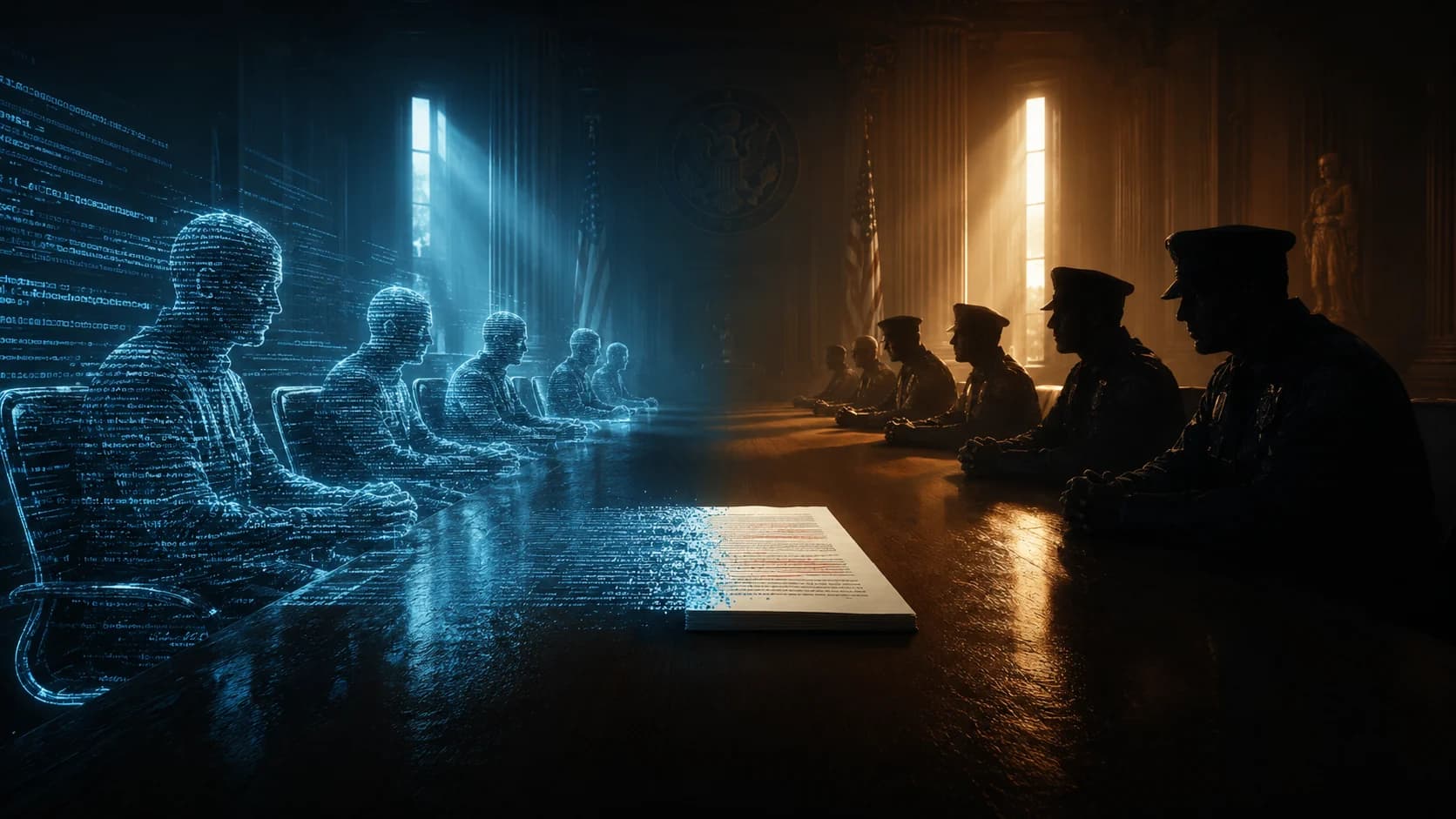
The White House brought together administration officials, lawmakers, and law enforcement groups on Wednesday, June 11, 2026, to work through the parts of the CLARITY Act that police agencies object to, according to reporting from Cointelegraph and several outlets covering the talks. The bill is the leading US effort to set crypto market structure, and the meeting was an attempt to clear the last obstacle before a Senate floor vote.
The disagreement is narrow but consequential. It centers on how the bill treats people who write code.
Developer liability is the contested clause
The provisions under review trace back to the Blockchain Regulatory Certainty Act, which shields software developers and builders of non-custodial tools from being regulated as brokers, exchanges, or money transmitters when they never hold customer funds or control transactions. Crypto advocates argue that publishing code is not the same as running a money business, and that treating it as one would push open-source development offshore or shut it down.
Law enforcement groups have pushed back. Their concern is that the same carve-out could create gaps for money laundering, fraud, and sanctions evasion, making it harder to bring cases when funds move through self-custody software and decentralized systems that no single company operates. The June 11 meeting was set up to find language that protects honest developers without handing bad actors a shield.
The White House has framed the bill as compatible with enforcement rather than opposed to it. White House crypto adviser Witt has defended the CLARITY Act as "pro-law enforcement," per reporting from The Block, arguing the protections target builders, not criminals.
Senate votes remain the harder problem
The legislation cleared the Senate Banking Committee on May 14, 2026, by a 15-9 vote. Getting it across the full Senate is a different math problem. Several Democrats have signaled they will not back the bill on the floor until the law enforcement objections are settled.
Senator Angela Alsobrooks has withheld support pending resolution of the ethics provisions and other open disputes, according to coverage of the negotiations. With a thin margin, a handful of holdouts is enough to stall a floor vote, which is why the administration is spending political capital on closed-door sessions with police groups rather than leaving the fight to committee testimony.
Prediction markets have grown skeptical
Traders have repriced the odds as the friction has surfaced. On Polymarket, the probability of the CLARITY Act passing within 2026 sat at 47 percent as of June 9, 2026, down sharply from 74 percent a month earlier, per data cited by Yahoo Finance. That 27-point drop tracks the emergence of the law enforcement and ethics objections as public sticking points.
This is speculative market sentiment, not a forecast, and prediction-market prices swing on headlines. Treat the number as a read on trader mood, not financial advice or a guarantee of the outcome. Still, the direction is clear: the market that was treating passage as likely a month ago now sees it closer to a coin flip.
The regulatory overhang has not moved spot prices much. Bitcoin traded at $63,313, up 1.9 percent on the day as of June 12, 2026, with the Crypto Fear & Greed Index pinned at 18, or "extreme fear," a reading driven by broader market conditions rather than this bill specifically.
Non-custodial spending has a direct stake
The developer-liability question is not an abstract one for anyone who spends from their own wallet. Cards and apps that let users pay directly from a non-custodial setup rely on software that no central operator custodies. If the final language treats those builders as regulated money transmitters, the legal footing for spend-from-your-wallet products in the United States gets murkier. If the protections survive intact, the model gets clearer cover.
The bill does not change anything for card holders today. What it does is set the rules that decide which non-custodial products can operate onshore tomorrow, which is why the exact wording coming out of these meetings matters more than the headline that a meeting happened.
Overview
The White House met law enforcement groups on June 11, 2026, to resolve objections to the CLARITY Act, with developer protections from the Blockchain Regulatory Certainty Act the central dispute. The bill passed the Senate Banking Committee 15-9 on May 14, but several Democrats, including Senator Angela Alsobrooks, are withholding floor support until the law enforcement and ethics concerns are addressed. Polymarket now prices 2026 passage at 47 percent, down from 74 percent a month earlier. The fight over how the law treats non-custodial software developers is the part with the most direct bearing on self-custody and wallet-based spending in the US.