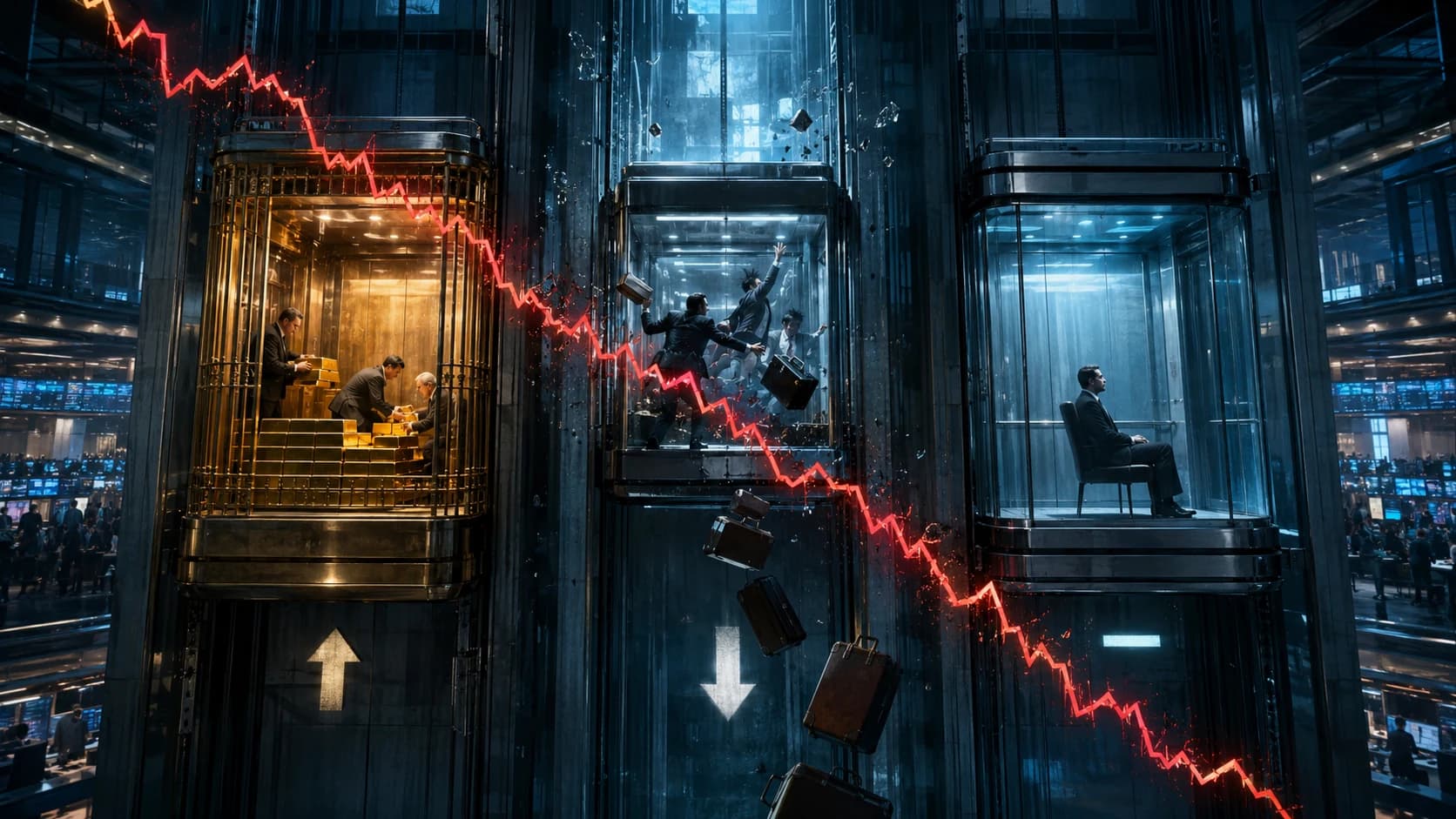
Bitcoin dropped 14.2% in the second quarter of 2026, but reported institutional holdings of US-listed Bitcoin ETFs rose 7.5% over the same window, according to a CryptoSlate analysis of 13F filings published August 19, 2026. The gap between those two numbers is the story. A falling price did not push every large holder in the same direction. It split them.
The split ran along institution type. Banks and long-only allocators added to positions into the drop. A cohort of hedge funds cut exposure. Sovereign and long-horizon holders mostly sat still. One shock, three responses, filed to the same regulator in the same quarter.
The price fell while the share count rose
The two figures measure different things, which is why they can move in opposite directions. The 14.2% decline is a price move. The 7.5% increase in reported holdings is a change in the number of shares institutions disclosed owning, aggregated from quarterly 13F filings. Institutions can own more of a fund whose price fell if they bought shares faster than the price dropped.
That is what the filings show. As of the latest snapshot, Bitcoin trades near $64,443 as of August 19, 2026, up 0.24% on the day, with the Fear and Greed Index at 41, in neutral territory, per CoinMarketCap. The Q2 filings capture a period before that stabilization, when the tape was heavier and the marginal decision for each desk was whether to treat the drawdown as a discount or a warning.
Banks leaned in, hedge funds leaned out
The clearest divergence is between banks and hedge funds. Banks and bank-affiliated wealth arms, the same names that spent 2025 building out custody and model-portfolio access, added to their Bitcoin ETF positions through the decline. That fits a mandate driven by client allocation and long holding periods rather than quarter-to-quarter price calls. Recent filings from large asset managers lifting their spot ETF stakes line up with this side of the split.
Hedge funds went the other way. As a group they trimmed, consistent with a playbook that manages drawdown risk and momentum rather than accumulating into weakness. A 14% quarterly fall is exactly the kind of move that trips risk limits and trend signals, and the 13F data reflects that. The two cohorts were not disagreeing about Bitcoin as an asset so much as running different mandates against the same chart.
Sovereign and long-horizon holders barely moved
The third group did the least. Sovereign holders and other long-horizon owners, the ones with no redemption calendar and no benchmark to beat each quarter, largely held their positions steady through the drop. That inertia is itself a signal. Holders with the longest time horizons treated a 14.2% quarterly move as noise, not a reason to act. Their stillness is what kept the aggregate holdings number positive even as hedge funds sold.
A single quarter of 13F data carries real limits. Filings are backward-looking, disclosed with a lag, and cover only reportable US institutional positions, so they miss offshore desks, retail, and anything held outside the ETF wrapper. The 7.5% figure is a reported-holdings change, not a claim about total market demand. Read it as a snapshot of how disclosed institutions repositioned, not a full census of who bought the dip.
The takeaway is dispersion, not consensus
The useful read here is that "institutions" is not one trade. Through a double-digit drawdown, the largest reportable holders moved in three directions at once, and the aggregate masked the disagreement underneath. For anyone tracking institutional conviction as a directional tell, that dispersion matters more than the net number. The banks that added and the hedge funds that cut were both acting rationally on their own mandates, and Q2 is the quarter that made the difference visible.
Overview
Bitcoin fell 14.2% in Q2 2026 while reported institutional Bitcoin ETF holdings rose 7.5%, per CryptoSlate's read of 13F filings. Banks and long-only allocators added into the drop, hedge funds trimmed, and sovereign holders held steady. Bitcoin trades near $64,443 as of August 19, 2026, with sentiment neutral at 41. The headline drawdown hid a market where the biggest players disagreed on what the dip meant, and the aggregate holdings figure stayed positive because the longest-horizon holders refused to sell.