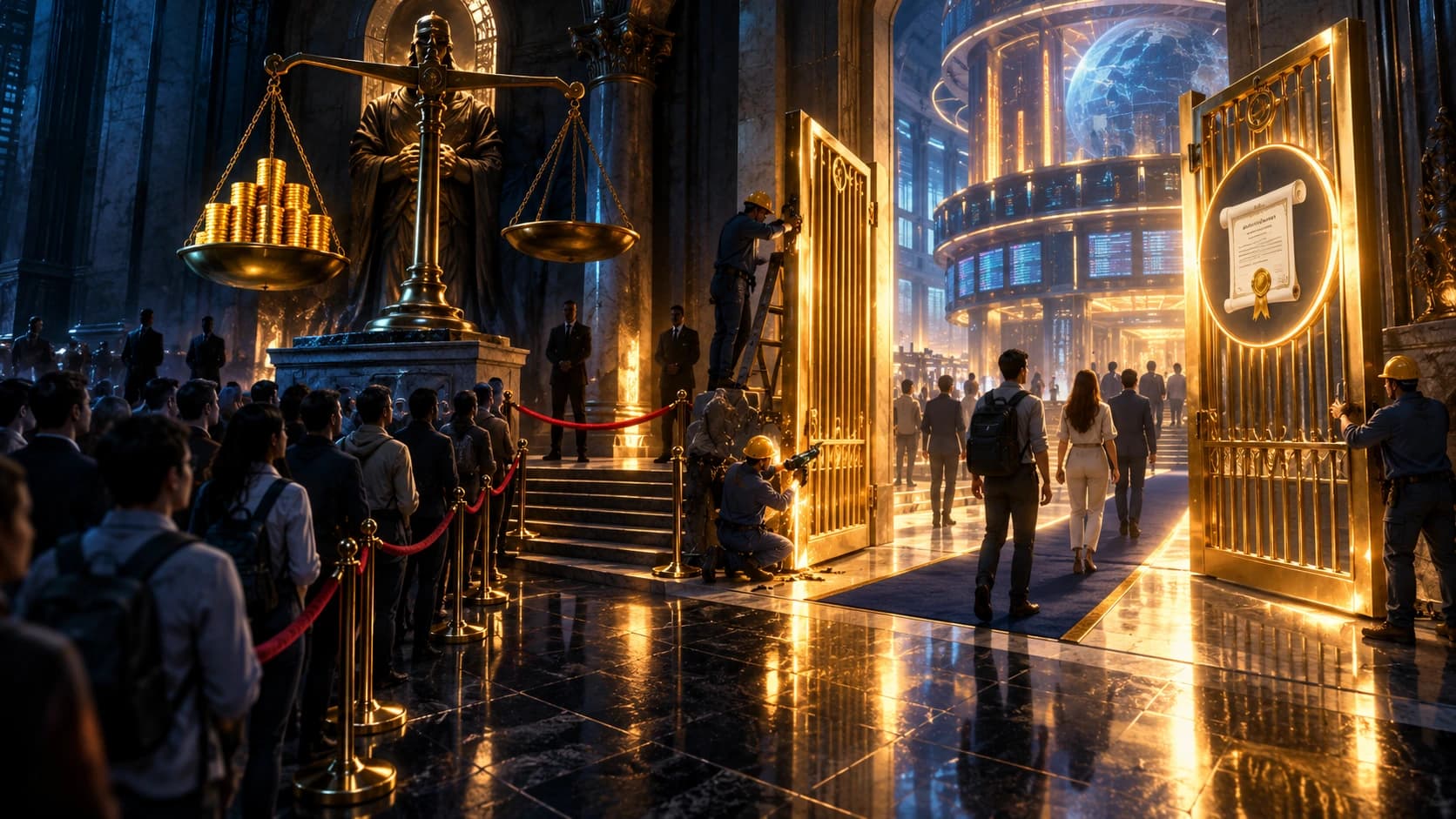
An Abu Dhabi royal has moved to take a large minority position in the venture behind World Liberty Financial's planned crypto bank, according to a Wall Street Journal report relayed by Cointelegraph on August 28, 2026. The report says a group tied to Sheikh Tahnoon bin Zayed Al Nahyan backs a 49% stake in the holding company that sits above World Liberty's banking ambitions.
The figure matters because 49% is a deliberate line. It hands a Gulf investor economic weight without formal control, a structure often used when a US venture wants foreign capital but needs to keep majority ownership domestic. For a project already carrying the political charge of a sitting president's family name, the ownership math is not a footnote.
A Gulf power broker steps into dollar-token banking
Sheikh Tahnoon is one of the most active state-linked dealmakers in the Gulf. His network runs large technology and investment vehicles out of Abu Dhabi, and those vehicles have already touched crypto through USD1, World Liberty's dollar-pegged stablecoin. An Abu Dhabi fund used USD1 to help settle a multibillion-dollar investment into Binance earlier in this cycle, so the relationship between the emirate and this token predates the reported bank stake.
Backing the holding company is a different order of commitment than routing one transaction through a stablecoin. A bank stake is a bet on the franchise: the charter, the deposit base, the payment rails, and the regulatory standing that comes with them. Sovereign-linked money rarely takes a 49% position in a banking entity for a quick trade.
The banking piece already has a foundation
World Liberty is not starting the bank idea from zero. The group's USD1 stablecoin secured an OCC trust charter earlier this month, which gives the token a federally recognized issuer wrapper and a supervisory relationship with a US bank regulator. A trust charter is not a full national bank license, but it is the kind of credential that makes a follow-on banking venture credible to institutional partners.
Layer the reported Abu Dhabi stake on top of that charter and the shape of the plan gets clearer. A regulated dollar stablecoin plus a chartered banking entity plus deep Gulf capital is a stack aimed at moving dollars on-chain at scale, with a foot in both US oversight and Middle East liquidity. That combination is the current template for anyone trying to build dollar-backed stablecoin rails with staying power.
Political exposure cuts both ways
The Trump connection is the reason this deal draws attention beyond crypto trade press, and it is also its main risk. A venture carrying the sitting president's name, taking a large stake from a Gulf royal whose government has active business before the US, invites conflict-of-interest scrutiny that a normal fintech would never face. Lawmakers who have already questioned World Liberty's dealings are unlikely to let a foreign-linked bank stake pass quietly.
For the United States, the episode also lands in the middle of a live stablecoin policy fight. Congress and regulators are still setting the terms for dollar tokens under the GENIUS Act framework, including identity and issuer rules that would govern exactly this kind of entity. A high-profile, politically connected issuer pulling in foreign sovereign capital is the sort of case that tends to sharpen the rulemaking rather than settle it.
Backdrop of a hot market
The report lands with crypto risk appetite running high. As of August 28, 2026, Bitcoin trades near $79,703, up 1.2% on the day and 6.4% over the week, while the CoinMarketCap Fear and Greed Index sits at 81, or "extreme greed." Solana leads the majors, up 5.8% in 24 hours to about $106.94. A market this warm tends to reward franchise-building announcements, and a Gulf-backed bank tied to a US political brand is exactly the kind of headline that fits the mood.
None of this changes anything a card holder can spend today. There is no product, no launch date, and no consumer offering attached to the reported stake. What it signals is where sovereign capital thinks the next round of dollar infrastructure gets built: regulated stablecoins, chartered banks, and the on-chain plumbing between them. Abu Dhabi's role as a crypto capital hub has been growing for years, and a near-half stake in a US crypto bank is a large marker of intent.
Treat the figure as reported, not confirmed by the companies. The Wall Street Journal is the primary source, World Liberty and the Abu Dhabi group have not published matching disclosures, and the exact holding structure could shift before anything closes.
Overview
The Wall Street Journal reports that a group tied to Sheikh Tahnoon of Abu Dhabi backs a 49% stake in the holding company behind World Liberty Financial's planned crypto bank. The stake builds on World Liberty's recent OCC trust charter for its USD1 stablecoin and deepens an existing link between Abu Dhabi and the token. The deal carries clear political exposure given the Trump family connection and lands amid an unsettled US stablecoin rulebook. No consumer product is attached yet, and the figures remain reported rather than officially confirmed.